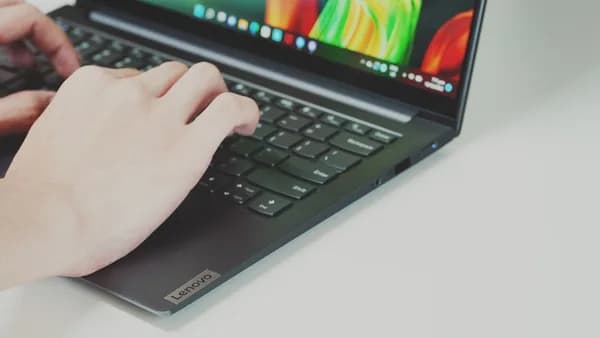
Lenovo is claiming more than 32 hours of battery life from a 64 Wh battery in a new 16-inch ThinkPad E16 Gen 4 — a number that matters more than the usual processor refresh.
The new model has begun appearing internationally with Intel Panther Lake chips, up to 32 GB of DDR5-5600 RAM, optional Wi-Fi 7, and a 120 Hz display option, according to Notebookcheck. The bigger signal is positioning: Lenovo is putting a newer Intel platform into the E-series, not just reserving it for more expensive ThinkPad lines — the same downmarket pressure behind Lenovo’s Yoga Pro 9i deal, Lenovo’s 1.06kg IdeaPad, and cheap Xiaomi Mini LED TVs.
That makes the ThinkPad E16 Gen 4 a test of how far “affordable business laptop” specs can stretch before the premium tiers start looking harder to justify.
Lenovo Pushes Panther Lake Down Into the ThinkPad E-Series
The ThinkPad E16 Gen 4 sits below Lenovo’s higher-end 16-inch ThinkPads, but this launch gives it several headline specs that would not feel out of place in pricier machines.
Notebookcheck reports that Lenovo has moved this generation to Intel’s Panther Lake platform, starting with the Core Ultra 5 325 and configurable up to the Core Ultra 7 356H. It does not use the more powerful Core Ultra X variants.
That distinction matters. Lenovo is not turning the E16 into a workstation-class ThinkPad. It is using Panther Lake to refresh a value-oriented business machine while still protecting room above it for models with stronger silicon, premium laptop displays, higher memory ceilings, or more premium construction.
The pricing context reinforces that positioning. Current starting prices are listed as:
| Market | Starting price listed by Notebookcheck |
|---|---|
| Hong Kong | HKD 12,074 |
| Australia | AUD 1,862 |
| Malaysia | MYR 5,745 |
| Singapore | SGD 2,525 (~$1,976) |
For reference, Notebookcheck says Lenovo charges at least SGD 4,092 (~$3,203) for the ThinkPad P16s i Gen 5 in Singapore. That gap is the point. The E16 Gen 4 gives buyers access to a newer platform and large-screen ThinkPad format without stepping into P-series pricing.
For readers tracking how Intel chips are filtering into different product classes, this sits alongside MLXIO’s coverage of 10GbE hitting Beelink’s budget Wildcat Lake mini PCs, Dell’s 48GB Wildcat Lake laptops, and the OneXPlayer 3 Arc G3 Extreme: different devices, same broader question of where new Intel platforms show up first.
The Spec Sheet Raises the Floor for a Cheaper 16-Inch ThinkPad
The E16 Gen 4’s core configuration options are straightforward but meaningful.
Lenovo lists 16 GB or 32 GB of DDR5-5600 RAM, plus 256 GB, 512 GB, or 1 TB of PCIe 4.0 storage through an M.2 2242 drive. Connectivity options include Wi-Fi 6E or Wi-Fi 7. Battery choices are 48 Wh or 64 Wh.
The display stack is where Lenovo draws a clear line between base and upgraded configurations.
By default, the laptop ships with a 1200p IPS panel that peaks at 60 Hz and covers 45% NTSC. The upgrade path reaches a 1600p, 120 Hz IPS panel with 100% sRGB coverage and 400 nits peak brightness.
That creates two very different versions of the same laptop:
| Component | Base option | Higher option |
|---|---|---|
| Display | 1200p IPS, 60 Hz, 45% NTSC | 1600p IPS, 120 Hz, 100% sRGB, 400 nits |
| RAM | 16 GB DDR5-5600 | 32 GB DDR5-5600 |
| Storage | 256 GB PCIe 4.0 | Up to 1 TB PCIe 4.0 |
| Battery | 48 Wh | 64 Wh |
| Wireless | Wi-Fi 6E | Wi-Fi 7 |
MLXIO analysis: the upgraded display and 32 GB RAM option are the configurations that make this machine interesting. The base display’s 45% NTSC coverage signals a cost-controlled panel. The 1600p/120 Hz/100% sRGB option is the version that better fits the “modern large-screen productivity laptop” pitch.
The 32-Hour Battery Claim Needs Real-World Testing
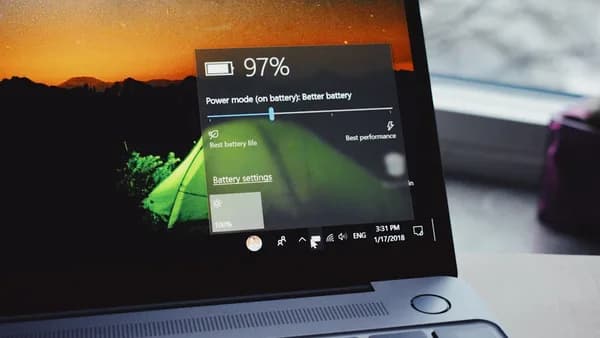
The most aggressive number in Lenovo’s configuration sheet is battery life.
“the latter of which is rated to last over 32 hours in official battery life tests.”
That “latter” refers to the 64 Wh battery. On paper, more than 32 hours from a 16-inch machine is eye-catching. In practice, official battery tests often reflect controlled, light-use conditions that do not mirror a full workday of browser tabs, video calls, background sync, higher brightness, and mixed productivity apps.
The display choice will matter. A 120 Hz panel can make daily use feel smoother, but the source does not say whether Lenovo’s battery rating was achieved with the 60 Hz base screen, the 120 Hz upgraded screen, or a specific brightness and workload profile.
The right questions are not whether the official claim is “true” in isolation. They are more practical:
- Web endurance: How long does it last under browser-heavy work?
- Video playback: Does the 64 Wh model sustain long media sessions?
- Standby drain: Does it hold charge overnight?
- Battery performance: Does Panther Lake maintain speed away from the charger?
- Display penalty: How much runtime does 120 Hz cost versus 60 Hz?
Until independent reviews answer those, the 32-hour figure should be treated as a best-case marker, not a buying guarantee.
Lenovo’s E-Series Is Moving Closer to the Middle
The E-series has long been Lenovo’s lower-cost ThinkPad lane: ThinkPad branding, business-oriented basics, and fewer premium flourishes than the T, X, or P families.
This launch does not erase that hierarchy. The E16 Gen 4 still appears carefully segmented. The source does not mention premium materials, workstation graphics, top-tier enterprise features, or the kind of display options Lenovo saves for more expensive systems.
But the configuration mix is creeping upward. 32 GB RAM, Wi-Fi 7, a 120 Hz panel, and Panther Lake are not throwaway specs. They make the E16 Gen 4 more than a bare-minimum office laptop, especially if Lenovo brings broader availability and the expected up to 64 GB of RAM to more markets later.
Notebookcheck says the model “should reach more markets with up to 64 GB of RAM,” but timing remains unknown. That is an important caveat. Today’s launch is still region-limited, with availability cited in Hong Kong, Australia, Malaysia, and Singapore.
The adjacent ThinkBook 16 Gen 9 IPL also shows Lenovo using Panther Lake in mainstream 16-inch machines. Notebookcheck separately reported that model with Core Ultra 5 325 and Core Ultra 7 355 options, up to 32 GB DDR5-5600 RAM, 48 Wh or 71 Wh batteries, and a 120 Hz display option. That suggests the E16 Gen 4 is not an isolated experiment inside Lenovo’s 16-inch lineup.
Who Benefits From This Configuration — and Who Should Skip It
The likely winners are buyers who want a large-screen ThinkPad with modern internals but do not need a mobile workstation.
Freelancers, students, and small-business users may find the E16 Gen 4 attractive if regional pricing stays below Lenovo’s premium 16-inch ThinkPads. The 32 GB RAM option gives more headroom than entry-level configurations. The optional 1600p 120 Hz display makes the machine more appealing for long daily use than the base panel.
Corporate buyers will look at it differently. The question is not only specs per dollar. It is whether the lower-cost ThinkPad tier fits deployment needs, support expectations, configuration consistency, repair logistics, and security requirements. The source does not provide enough detail to judge those areas.
The machine is also not aimed at everyone. Based on the supplied specs, buyers needing workstation-class graphics, confirmed color-critical display performance beyond 100% sRGB, or maximum enterprise positioning may still land higher in Lenovo’s lineup.
MLXIO analysis: Lenovo appears to be narrowing the gap between “affordable business laptop” and “well-equipped productivity machine.” But it has not collapsed the gap entirely. The base display, lack of Core Ultra X options, and uncertainty around broader availability keep the E16 Gen 4 from looking like a premium ThinkPad replacement.
The Next Test Is Proof, Not Specs
The ThinkPad E16 Gen 4’s appeal depends on the configurations Lenovo actually sells in each market.
If the best version — 32 GB RAM, 64 Wh battery, Wi-Fi 7, and the 1600p 120 Hz display — carries a modest premium over the base model, it could become one of Lenovo’s more compelling large-screen business laptops. If those upgrades push pricing too close to higher-end ThinkPads, the value case weakens.
The unresolved pieces are clear:
- Availability: Lenovo has not said when more markets will get the E16 Gen 4.
- Memory ceiling: The source says broader availability should eventually include up to 64 GB of RAM, but timing is unknown.
- Battery reality: Independent tests need to challenge the 32-hour official claim.
- Panel quality: The upgraded display sounds far stronger than the base option, but real measurements will matter.
- Thermals: Panther Lake performance in a lower-cost 16-inch chassis still needs review.
The watch item is simple: if Lenovo delivers the upgraded E16 Gen 4 at E-series pricing, with battery life and thermals that hold up outside official tests, this model could reset expectations for what a cheaper 16-inch ThinkPad should include. If the best specs remain limited, expensive, or regionally scarce, it will look more like a sharp configuration sheet than a broader shift in Lenovo’s business laptop strategy.
The Bottom Line
- Lenovo is bringing Intel Panther Lake chips to a more affordable ThinkPad tier.
- The claimed 32-plus-hour battery life could make the E16 Gen 4 unusually competitive for business users.
- Premium ThinkPad models may face tougher value comparisons if lower-tier machines keep gaining high-end specs.