Can Intel Arc G3 Extreme make the OneXPlayer 3 stand out before OneXPlayer even names a price?
OneXPlayer has confirmed a new Windows gaming handheld with Intel Arc G3 Extreme, an 8.8-inch 144 Hz OLED screen, and a global Indiegogo launch planned for “in mid-to-late June 2026,” according to Notebookcheck. That makes OneXPlayer the first company cited by Notebookcheck as officially launching an Arc G3 series gaming handheld, putting Intel’s new graphics branding directly into the handheld PC race.
Can OneXPlayer turn an Arc G3 Extreme spec sheet into a real June launch?
The confirmed device is the OneXPlayer 3, and the headline is simple: Intel Arc G3 Extreme plus OLED plus 144 Hz VRR in a Windows handheld.
OneXPlayer says the device is headed to Indiegogo in mid-to-late June 2026. The company has not disclosed pricing, retail partners, regional shipping details, memory options, storage tiers, or a firm order date beyond that campaign window.
OneXPlayer has confirmed the OneXPlayer 3 is scheduled to launch on Indiegogo “in mid-to-late June 2026.”
The confirmed hardware list is already unusually specific in some areas and silent in others.
| OneXPlayer 3 detail | Status |
|---|---|
| Processor/GPU platform | Intel Arc G3 Extreme confirmed |
| Display | 8.8-inch OLED, 144 Hz VRR, native landscape confirmed |
| Battery | 85 Wh built-in battery confirmed |
| Controls | Hall effect joysticks confirmed |
| Ports/expansion | 3.5 mm jack, USB Type-A, USB4, microSD card slot, mini SSD expansion confirmed |
| Price | Not disclosed |
| Memory/storage configurations | Not disclosed |
| Screen resolution | Not disclosed |
The timing matters because details about MSI’s reported Claw 8 EX emerged toward the end of last month with the same Arc G3 Extreme branding. Notebookcheck says MSI may price that device for up to €1,599 in the Eurozone, but OneXPlayer has not said whether the OneXPlayer 3 will undercut, match, or exceed that level.
This follows MLXIO’s earlier coverage of how the May 28 leak threw Intel Arc G3 into the handheld race. OneXPlayer has now moved that discussion from leak territory into a named product with a launch window.
Does the 144 Hz OLED panel matter more than the chip?
The 8.8-inch OLED screen may be the spec that most visibly separates the OneXPlayer 3 from lower-end handheld PCs. A 144 Hz VRR panel gives the device a premium display target: smoother motion when games can push higher frame rates, stronger contrast from OLED HDR displays, and refresh-rate flexibility that matters on a battery-powered gaming machine.
OneXPlayer also says the panel uses native landscape orientation. That detail matters because some handheld displays have historically depended on portrait-origin panels rotated in software, which can create quirks in certain games or interfaces. The supplied source does not claim the OneXPlayer 3 avoids all such issues, but native landscape is a meaningful design signal.
The 85 Wh built-in battery is the other major number. Capacity alone does not tell buyers how long the device will last, especially with an OLED panel and Intel Arc G3 Extreme hardware pulling power under gaming loads. But it does show OneXPlayer is not treating battery size as an afterthought.
For comparison inside OneXPlayer’s own lineup, Notebookcheck notes that the OneXPlayer 3 has a built-in battery, unlike the recent OneXFly Apex, which the source lists at $2,899 on Amazon at the time of publication. That does not make the OneXPlayer 3 cheaper, longer-lasting, or more practical by default. It only clarifies that OneXPlayer has chosen a different battery approach here.
The controls also aim at durability. Hall effect joysticks use magnetic sensing rather than traditional contact-based potentiometers, a design commonly used to reduce the risk of stick drift over time. That is not a performance claim. It is a reliability-oriented hardware choice.
Readers tracking OLED hardware across portable PCs can compare the display emphasis here with MLXIO’s coverage of the 1,100-nit OLED HP OmniBook X Flip 16 and Apple’s OLED MacBook Pro leak. The OneXPlayer 3 is a different class of device, but the display pitch is clearly central.
Can detachable controllers make this more than another slab handheld?
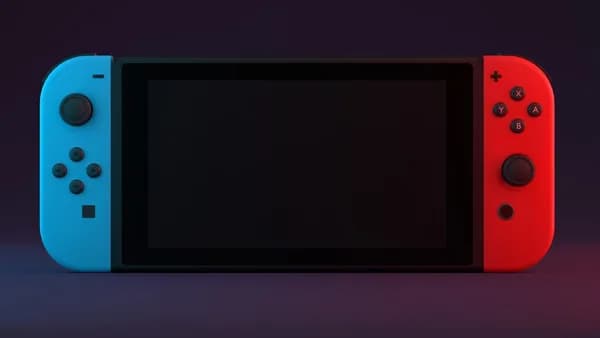
OneXPlayer is also building the OneXPlayer 3 around detachable controllers, a design choice Notebookcheck frames as a rival move against the Legion Go 2.
That choice changes the device’s use cases. The source says the controller connector includes a built-in touchpad, and OneXPlayer has added a Nintendo Switch-like kickstand so the handheld can be used in a laptop-style mode with a detachable keyboard accessory.
Those details point to a hybrid pitch: handheld gaming first, tabletop or light productivity second. The source does not provide weight, dimensions, keyboard pricing, hinge design, or whether the keyboard accessory will ship in the box.
The connector touchpad may be especially relevant under Windows, where desktop navigation can still be awkward on handheld hardware. But that is an inference from the control layout, not a tested conclusion. Until reviewers handle the device, the quality of the detachable mechanism, touchpad placement, and controller rigidity remains unknown.
The comparison set from the source is narrow but useful:
| Device | Source-backed comparison point |
|---|---|
| OneXPlayer 3 | Detachable controllers, built-in touchpad connector, kickstand, detachable keyboard accessory support |
| Legion Go 2 | Named by Notebookcheck as the detachable-controller rival target |
| OneXPlayer X2 Mini Pro | Also cited as supporting detachable controllers |
| OneXFly Apex | Cited as using a different battery approach than OneXPlayer 3 |
Will Intel Arc G3 Extreme help or raise harder questions?
The Intel Arc G3 Extreme branding gives OneXPlayer 3 its sharpest technical hook. It also raises the hardest testing questions.
Real-world handheld performance will depend on power limits, cooling design, driver behavior, and game-level optimization. Notebookcheck’s source material does not include benchmarks, thermal data, fan noise figures, wattage targets, or frame-rate claims, so any performance ranking would be premature.
Windows compatibility should give users access to broad PC game libraries and launchers. It may also bring familiar handheld friction around interface scaling, sleep behavior, and power management. Those issues cannot be judged from the spec sheet.
The MSI context adds pressure. If the reported Claw 8 EX also uses Arc G3 Extreme, then OneXPlayer is not just selling a new handheld. It is helping set expectations for Intel’s next handheld graphics story before independent testing has caught up.
Which missing details will decide whether buyers wait or walk?
The OneXPlayer 3 announcement leaves the biggest commercial questions unanswered: price, configuration tiers, screen resolution, regional availability, shipping timing, and preorder mechanics.
Battery life will be the first practical test. An 85 Wh pack sounds promising, but the number only matters once measured against the 144 Hz OLED panel, Arc G3 Extreme power draw, cooling limits, and Windows behavior under sustained play.
Hands-on reviews will need to focus on:
- Sustained performance: How the Arc G3 Extreme behaves after long sessions.
- Thermals: Whether the chassis stays comfortable under load.
- Fan noise: Whether cooling becomes distracting.
- Display quality: How the OLED panel handles brightness, VRR, and motion.
- Controls: Whether the detachable controllers feel rigid and precise.
- Windows experience: How well the touchpad connector, kickstand, and keyboard accessory work outside games.
June gives OneXPlayer time to build interest. It also gives buyers a reason to wait for the Indiegogo page, final configurations, and independent testing before deciding whether the OneXPlayer 3 is a serious premium handheld or just an impressive spec list waiting for proof.
The Bottom Line
- OneXPlayer 3 puts Intel Arc G3 Extreme into the Windows handheld gaming race with an official global launch window.
- The 8.8-inch 144 Hz OLED display and 85 Wh battery suggest a premium handheld positioning.
- Key buying details like price, storage options, and screen resolution remain unknown ahead of the Indiegogo launch.