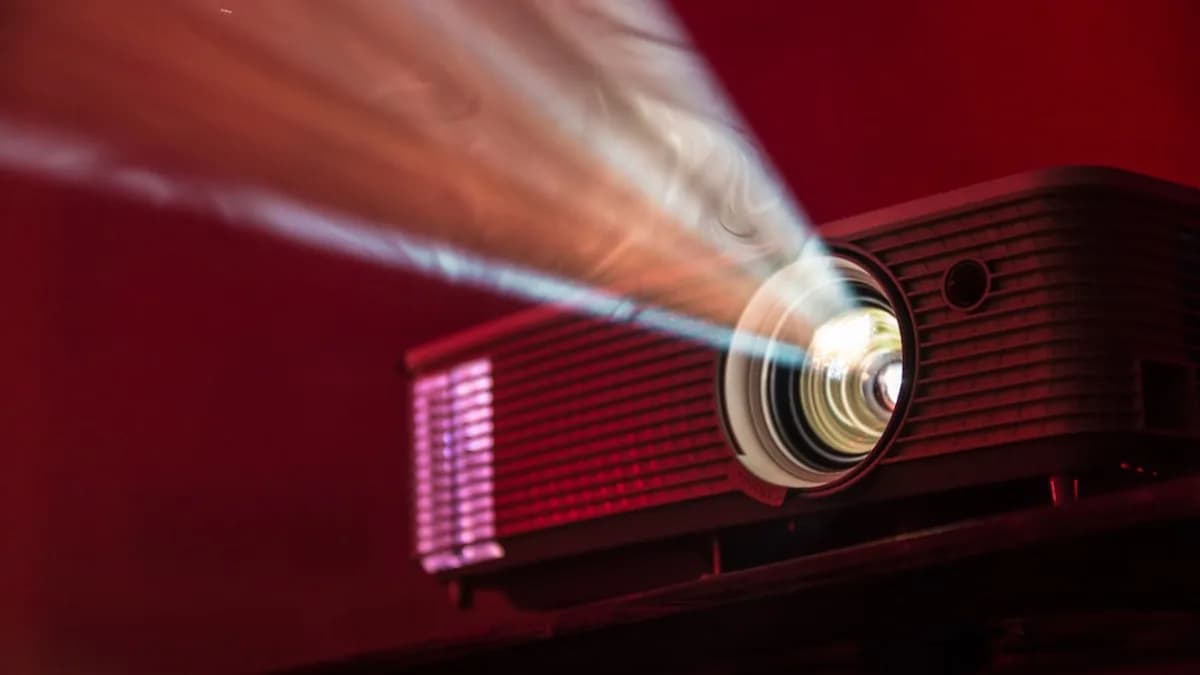
Pixorien Z01 is being pitched as a portable 2K projector for flexible viewing, with the main appeal centered on battery-powered operation and an extendable mounting design.
The newly launched projector is presented as a compact, self-contained option for temporary viewing setups, according to Notebookcheck. The core sell is simple: a portable projector with a built-in battery, an extendable mount, and a marketed high-image-quality image claim.
Pixorien Z01 promises portability, with key performance details still unclear
The Pixorien Z01 targets buyers who want a large temporary screen without installing a fixed projector or carrying a separate mounting setup. Its positioning is built around portability rather than a traditional home-theater installation.
That sounds flexible. The reality is more conditional.
The available source material establishes the broad product pitch, but it does not provide enough independent performance detail to confirm how well the Z01 will work across different rooms, lighting conditions, or viewing distances. That matters because portable projectors often live or die by practical setup details, not just the headline label on the product page.
The headline claims are strongest at a broad level:
- Projection claim: marketed around a 2K image-quality pitch
- Power setup: built-in battery for cordless operation
- Mounting design: extendable structure intended to simplify placement
- Use case: portable viewing without a fixed projector installation
- Product status: newly launched portable projector
The tension is the product’s main story. Pixorien is selling convenience and image quality. The source material supports the convenience pitch more clearly than the image-quality claim.
Built-in battery and extendable mount solve one setup problem
The Z01’s most practical feature may not be its resolution. It is the physical design.
An extendable mount gives the projector its own adjustable support, which could reduce the usual friction of portable projection: finding a table, stacking books, or carrying a separate stand. For a device meant to move between rooms or temporary viewing spaces, that kind of built-in positioning aid is a meaningful part of the pitch.
The built-in battery also changes where the projector can be placed. A cordless projector can sit away from a wall outlet, which is useful for temporary rooms, travel setups, presentations, or outdoor viewing where power access is awkward.
Still, the presence of a battery alone does not reveal runtime. The supplied source does not provide operating time, charging time, or performance under battery power. Those gaps matter because brightness, speakers, wireless playback, and onboard processing can all affect how long a portable projector remains useful away from an outlet.
A quick read of the promise-versus-reality split:
| Pixorien Z01 pitch | Source-backed reality |
|---|---|
| Portable screen anywhere | Built-in battery supports cordless operation |
| Flexible positioning | Extendable mount is intended to simplify setup |
| High image quality | Marketed with a 2K image claim |
| Temporary viewing | Portable form factor is the main use case |
| Self-contained setup | Battery and mount reduce reliance on nearby power or separate support gear |
Battery-powered hardware often raises the same buyer question: how much mobility does the battery actually deliver in real use? The Z01 is a projector rather than a laptop, tablet, or phone, but the calculation is similar. A built-in battery is useful only if it can support the viewing sessions buyers actually want, and that still needs clearer real-world testing.
The 2K label is the spec buyers should treat carefully
The Z01’s visual pitch rests on 2K projection, but the available source material does not provide independent image testing. That makes the label worth treating as a marketing claim rather than proof of measured performance.
That does not automatically make the projector weak. It does mean buyers should avoid treating the “2K” label as a complete answer to image-quality questions.
Projector quality depends on more than pixel count. Brightness, contrast, focus behavior, color accuracy, image uniformity, fan noise, heat behavior, and processing all affect the final viewing experience. The supplied source does not establish those details in a way that allows firm conclusions.
That is especially important for a portable projector. A device designed to be moved around will face changing wall surfaces, viewing distances, ambient light levels, and placement angles. Even a strong resolution claim cannot guarantee a good image if the rest of the optical and setup experience is inconsistent.
The source does not provide measured brightness, contrast ratio, color accuracy, acoustic testing, thermal behavior, or battery-runtime testing. Those are not small omissions for a projector. They are the difference between a spec-sheet win and a good living-room experience.
Built-in design choices make the Z01 more self-contained
The Z01’s built-in battery and extendable mount give it a more self-contained angle than a basic compact projector that still needs a power cable and a separate stand for every setup.
That matters because portable projectors are often used in imperfect spaces. A living room, bedroom, office wall, campsite, or shared accommodation may not offer the right table height or a convenient outlet. The Z01’s design appears aimed at reducing those setup barriers.
The extendable mount is the more distinctive part of that formula. If it works well, it could make the projector easier to aim and reposition without adding another accessory to the bag. If it feels unstable, too limited, or awkward to adjust, the same feature could become a weak point. The available source confirms the design direction, but not the real-world stability.
The battery-powered setup has the same open question. Cordless use is valuable, but runtime and charging behavior are central to whether that value holds up. Without those details, the safest reading is that the Z01 is promising mobility, while the practical limits of that mobility remain unverified.
That is the broader pattern within this specific product: the Z01 has some of the right portable-projector ingredients, but most performance claims still need measurement.
Independent tests will decide whether the Z01’s pitch holds up
The next important step is independent testing. Until measured results are available, the Z01 should be viewed as a portable projector with an appealing design concept and unresolved execution questions.
The most important checks are straightforward:
- Image quality: whether the marketed 2K pitch translates into a visibly sharp, clean picture
- Brightness: whether the projector remains useful outside very dark rooms
- Battery runtime: how long cordless playback lasts in realistic viewing conditions
- Mount stability: whether the extendable design holds alignment without wobble or drift
- Setup experience: whether the projector is easy to place, aim, and adjust
If the hardware performs close to its pitch, the Z01 could appeal to buyers who value cordless placement and built-in mounting over a conventional projector setup. If brightness, runtime, stability, or image clarity disappoint, the design may prove more convenient on paper than in everyday use.
Key Takeaways
- The Pixorien Z01 is aimed at buyers who want a portable projector without a fixed installation.
- Its built-in battery and extendable mount could make temporary viewing setups easier.
- Key performance details remain unclear, so real-world image quality and usability still need independent testing.