A recently surfaced Sony patent points to a sharper idea than another app prompt: PlayStation Network already supports 2-step verification and passkeys, yet reports of compromised accounts and unauthorized purchases have not gone away.
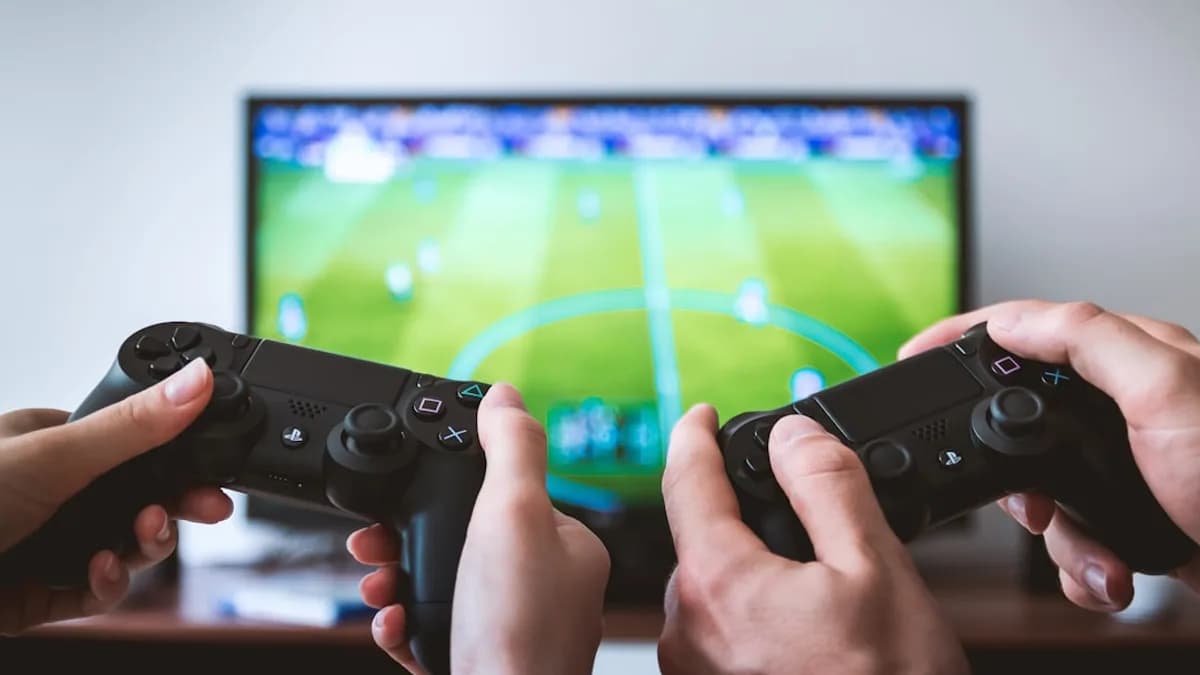
The patent, first spotted by RespawnFirst and covered by Notebookcheck, suggests Sony is exploring whether a DualSense PS5 controller — or a successor — could become part of the PSN sign-in chain itself.
That would change the role of the controller. It would no longer be only an input device. It could become a local identity checkpoint.
MLXIO analysis: the real tension is not whether this could improve account protection. It likely could, if implemented carefully. The bigger question is whether Sony uses controller authentication as optional security, purchase confirmation, or a required layer that makes proprietary hardware central to accessing what users already bought.
Sony patent pushes DualSense from controller to identity gate
Public reporting on the patent describes a system where the controller plays a more active role in account access, rather than leaving authentication entirely to a password, phone app, or console prompt.
The exact technical flow is not fully established in the supplied source material. What is supported is the broader direction: Sony appears to be looking at whether the controller can help verify that the right user, device, and PlayStation setup are present during sign-in.
That is a meaningful design choice. Sony is not only asking whether a phone or passkey can authenticate the user. It is asking whether the controller can become part of the trusted local environment around a PlayStation account.
The current PSN model already includes software-based defenses. Sony offers 2SV and passkeys. The PlayStation app can access stored passkeys, which can reduce dependence on passwords. But the patent moves the trust boundary closer to the living room.
MLXIO analysis: if Sony treats the controller as a possession factor, attackers would need more than a reused password, a stolen email session, or customer-support persuasion. They would need access to trusted hardware tied to the account environment. That is a higher bar — but it also means the controller becomes more important than many players expect.
The possible login chain: console, controller, phone, PSN
The broad concept is straightforward: Sony is exploring a login model where the controller is not passive. Instead, it may help confirm that the person trying to access a PSN account is operating from a trusted PlayStation setup.
A cautious version of that system could involve several layers:
- Console request: A PS5 or another Sony console begins a sign-in or verification flow.
- Controller involvement: The DualSense or future controller becomes part of the account check.
- Trusted device check: A phone, passkey, or other approved device may still handle user approval.
- Local confirmation: The system looks for evidence that the account holder’s trusted devices are present.
- Account access: The console completes login or authorizes a sensitive action only after the required checks pass.
That creates a different shape from a normal login. A password proves knowledge. A passkey proves possession of a device and local approval. A controller-driven login could add another possession factor tied to the PlayStation hardware environment.
| PSN security method | What it proves | Main weakness surfaced by the source |
|---|---|---|
| Password | User knows the secret | Compromised logins and reused credentials remain concerns |
| 2SV | User can approve a second step | Does not necessarily stop recovery abuse |
| Passkeys | User controls a trusted device | Notebookcheck says concerns remain despite passkeys |
| Controller-based login | User has trusted PlayStation hardware involved | Lost or broken controller could block play without fallback |
This is where the patent becomes more interesting than a simple anti-hacking feature.
Sony could implement it in several ways:
- Optional high-security mode for users worried about account theft.
- Purchase confirmation before buying PS5 games or changing payment settings.
- Account recovery verification when support needs stronger proof that a claimant controls the console setup.
- Family controls where a parent’s trusted device approves purchases.
- Primary-console login where the controller is required only for sensitive actions, not every session.
The harshest version would be mandatory controller authentication for PSN access. That would strengthen proof of possession, but it would also create obvious failure points.
June 19 reporting leaves the fraud math unanswered
Notebookcheck’s June 19 article gives the security problem shape, but not scale. It cites concerns around compromised logins and passwords, unauthorized purchases, and account takeovers. It does not provide figures for affected accounts, chargebacks, refunds, support cases, or total PSN exposure.
That absence matters.
If even a small share of PSN accounts are compromised, Sony faces more than user anger. Digital accounts can hold payment methods, subscriptions, libraries, trophies, and resale value. A stolen PSN account can become a fraud vehicle, a resale asset, or a hostage.
But MLXIO will not invent the numbers. The supplied source material does not include PlayStation monthly active users, current PlayStation Plus subscribers, unauthorized purchase totals, or fraud-cost estimates. Any claim that this patent responds to a quantified spike would go beyond the evidence.
The supported claim is narrower and still important: Sony already offers modern login protections, and reports of account compromise persist anyway. That is enough to explain why a hardware-linked authentication patent would be attractive.
A controller check could cut off one class of attack: remote account access by someone who lacks the physical PlayStation setup. It would be less useful against another class: account recovery abuse, if human processes can still override technical protections.
That distinction is central.
A 2020 DualSense patent shows Sony has circled controller identity before
This is not the first time Sony has explored the controller as an identity device. A 2020 report from GameRant described a Sony Interactive Entertainment patent filed in February and later published, which suggested the DualSense could use sensors to identify who picked it up.
That older idea focused on user recognition. The controller would transmit telemetry data to the PS5, allowing the console to identify the person holding it. The stated security logic was practical: users often sign into their own accounts on another PlayStation, which may require entering passwords in front of other people or remembering to log out later.
The newer patent appears different. It does not just infer who is holding the controller. It treats the controller as a more direct part of the sign-in or account-security process.
MLXIO analysis: Sony appears to be circling the same broad problem from two directions. One approach asks, “Can the controller identify the player?” The newer approach asks, “Can the controller help prove the right trusted setup is present?” The second is likely cleaner for account security because it can be tied to explicit authentication flows rather than passive recognition.
There is still a caution flag. Like other Sony patents, this may never ship. Notebookcheck says the latest concept may never become reality. Patent filings show what a company wants legal room to explore, not what it has committed to launch.
Account recovery could remain the weakest door if support can override the lock
The patent may make PSN sign-ins harder to fake, but account recovery remains a separate problem for any login system.
The supplied source material supports a general concern around compromised accounts and unauthorized access, but it does not establish a detailed recovery-abuse flow. It does not prove that customer support gives attackers passwords, nor does it provide enough detail to assign blame to specific support practices.
That still leaves an important security question.
If Sony adds DualSense verification only at login, attackers may still target recovery channels. If support can remove passkeys, disable 2SV, change emails, or reset access without strong proof, the controller becomes a stronger front door attached to a weaker side entrance.
A better implementation would connect controller proof to high-risk recovery events. For example, Sony could require hardware-linked confirmation before major account changes. The patent source does not say Sony will do that. But the described direction could support that kind of security model.
MLXIO analysis: the highest-value version of this patent is not “use your controller to sign in faster.” It is “make account recovery harder to abuse.” That would target the kind of weakness that often survives even when passwords, 2SV, and passkeys improve.
Mandatory DualSense checks would split players, parents, and accessory makers
For players, the upside is clear. A physical controller requirement could make unauthorized purchases and account resale harder. A scammer with a password would still lack the trusted controller near the trusted account setup.
The downside is just as concrete. Notebookcheck says a missing or malfunctioning DualSense could interrupt playtime if users have no other sign-in method. That is not a minor edge case. Controllers break, drift, get borrowed, get sold with used consoles, or sit in another room with a dead battery.
Parents and family account managers could see both sides. Controller approval could reduce unwanted purchases by children. It could also complicate households where multiple people share one console, swap controllers, or use different accounts across the same hardware.
Sony’s incentives are obvious enough to analyze, even without hard fraud numbers. Less account abuse means fewer support disputes, fewer refund fights, and less reputational drag. It could also make official PlayStation controllers more strategically important. If the controller becomes part of identity, not just input, third-party alternatives face a new hurdle.
That would matter for the broader controller market. We have already seen how feature gaps can separate official hardware from other ways to play, as in MLXIO’s coverage of DualSense Bluetooth haptics and Sony’s PC gap. A security layer would raise the stakes further because missing features would not only affect feel. They could affect access.
Accessibility is another fault line. Some players rely on specialized controllers or adapted setups. A mandatory DualSense login would need backup paths or certification support for non-standard devices. Otherwise, stronger security could become an access barrier.
Remote Play and third-party pads become harder questions if the controller is the key
The patent’s proximity model sounds natural for a PS5 in a living room. It becomes messier when the user is away from the console.
Remote Play, mobile access, PC play, future handheld devices, and streaming scenarios all weaken the assumption that the trusted controller sits near the console. The available source material does not explain how Sony would handle remote sessions.
That creates practical questions:
- Remote Play: Does the controller need to be near the phone, the console, or both?
- Used consoles: How does a buyer remove a prior trusted controller without triggering account risk?
- Replacement hardware: What happens after a controller is lost, repaired, or replaced?
- Third-party pads: Would licensed controllers get the same authentication rights?
- Accessibility devices: Would Sony support adapted hardware in the same security flow?
The accessory market could feel the pressure. Coverage like MLXIO’s piece on 8BitDo’s AliExpress controller sale shows how price and compatibility keep third-party controllers relevant. If Sony ties sensitive PSN functions to official-controller identity, compatibility stops being only a gameplay issue.
Sony can reduce friction if it designs the system as layered security rather than a hard gate. Backup methods, trusted devices, support escalation rules, and certified non-Sony peripherals would all matter. The patent does not confirm any of those safeguards.
Sony’s next decision: optional shield or proprietary checkpoint
The most plausible near-term version is not a universal mandatory login wall. That would create support headaches, accessibility concerns, and user backlash if people get locked out because a controller fails.
A more workable path is narrower:
- High-risk action checks for purchases, email changes, passkey removal, and account recovery.
- Opt-in protection for users who want stronger PSN security.
- Family purchase approval using controller-linked verification.
- Next-generation controller support if Sony reserves the full feature set for future hardware.
MLXIO analysis: controller authentication makes the most sense when it blocks account damage, not ordinary play. If Sony uses it to confirm a purchase or stop a suspicious recovery attempt, users may see it as protection. If Sony uses it to make every PSN login dependent on proprietary hardware, the same technology starts to look like platform control.
The evidence that would strengthen the bullish security case: Sony tying controller proof to account recovery, offering fallback methods, and supporting accessibility and certified third-party devices.
The evidence that would weaken it: mandatory PSN access checks with no clear backup, limited support for non-Sony controllers, or customer-service overrides that still let attackers bypass every technical layer.
The winning version is simple: make hacked PSN accounts harder to exploit without making legitimate PlayStation users feel locked out of the games, saves, and purchases they already own.
Impact Analysis
- Sony is exploring whether PlayStation hardware itself can become part of account authentication.
- The approach could reduce account compromise and unauthorized purchases if implemented carefully.
- Making controller authentication mandatory could raise access concerns for users who already bought digital games.