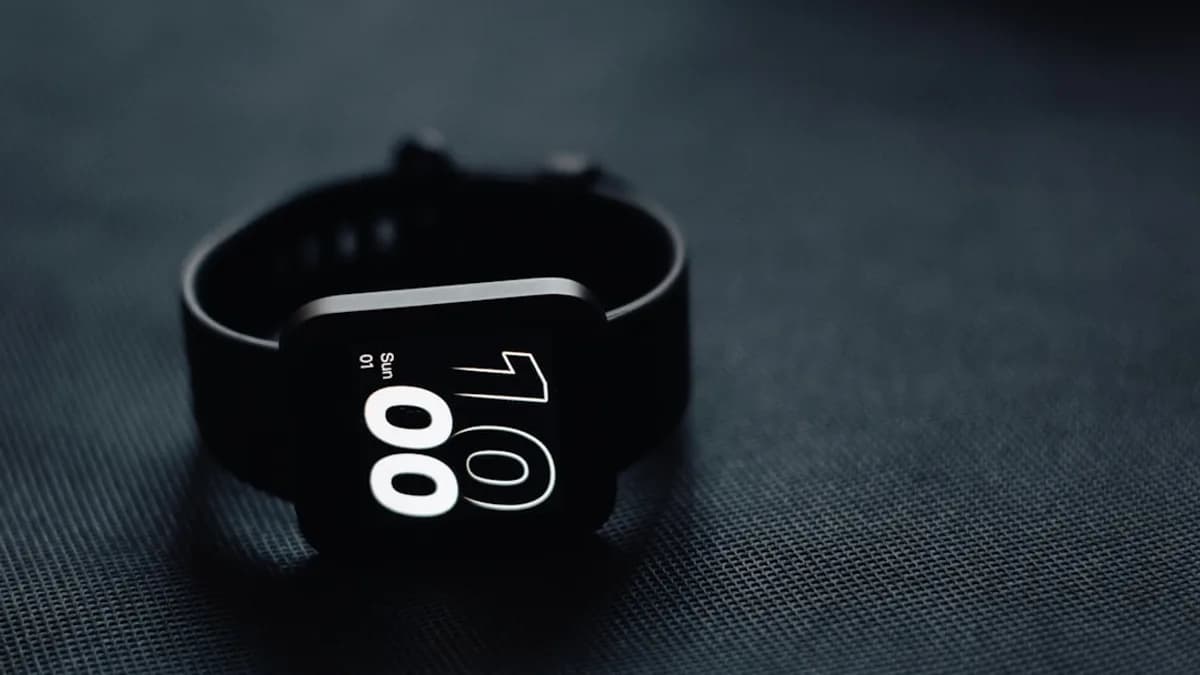
Casio has turned the F-91W’s no-frills silhouette into a connected step-tracking watch without pushing it into smartwatch territory. That is the real signal behind the new F-B100W: Bluetooth, activity logs, and app syncing are being added to one of the most familiar cheap-watch shapes on the planet, not to a premium wearable platform.
The F-B100W series is now officially listed on Casio Japan, with preorders live and shipping scheduled for August 2026, according to Notebookcheck. At ¥8,800, or roughly $55, the watch lands well below the earlier $70-$100 leak estimate tied to Casioblog renders.
That price matters. Casio is not selling a miniature smartphone for the wrist. It is selling a familiar digital watch that quietly counts steps and keeps a life-log history through an app. MLXIO analysis: the F-B100W looks less like a smartwatch rival and more like a pressure test for how much connected utility Casio can add before the classic digital-watch formula breaks.
Casio’s ¥8,800 Price Changes the F-B100W From Nostalgia Drop to Mass-Market Experiment
The confirmed launch package is simple: Bluetooth, step tracking, three colorways, and a Japan listing with preorders open. The models are F-B100W-1AJF, F-B100W-1BJF, and F-B100W-3AJF. The first two are black variants with subtle finish differences, while the third comes in muted sage green.
| F-B100W detail | Confirmed information |
|---|---|
| Price | ¥8,800, roughly $55 |
| Launch timing | Shipping slated for August 2026 |
| Colorways | F-B100W-1AJF, F-B100W-1BJF, F-B100W-3AJF |
| Connectivity | Bluetooth with Casio companion app support |
| Activity tools | Step counter and app-linked life-log history |
| Battery life | Around two years |
| Dimensions | 41.9 x 38.1 x 8.8 mm |
| Weight | 26 grams |
The price is the strategic hinge. At ¥8,800, Casio undercuts the leaked $70-$100 range and keeps the F-B100W close to the brand’s affordable digital-watch identity. That makes the Bluetooth upgrade feel like an extension of the old formula, not a luxury upsell.
The feature set is deliberately narrow. Based on the supplied launch material, the core pitch is Bluetooth-connected step tracking with app-linked logging rather than a budget AMOLED smartwatch-style toolset. Some finer details may depend on Casio’s regional listing and companion-app implementation.
That restraint is the point. Casio is adding just enough intelligence to make the watch useful in 2026 while keeping the interface, weight, and battery expectations closer to a traditional digital watch.
The F-91W Shape Gives Bluetooth a Cultural Shortcut
The F-91W silhouette has remained broadly intact since 1991, and Notebookcheck notes that Casio has mostly changed it at the edges over time through moves like recycled straps and translucent cases. The F-B100W is different because it adds a functional layer: Bluetooth.
That gives Casio an advantage most connected wearables do not have. The shape already means something. It signals cheap, light, durable, and unpretentious. MLXIO analysis: putting step tracking inside that form lowers the psychological barrier for buyers who do not want a screen-heavy device but still want basic activity data.
The F-B100W also has older design DNA behind it. Related reports connect the line to the F-100, introduced in 1978 as Casio’s first fully plastic-cased watch. That matters because the F-B100W is not just borrowing nostalgia from the F-91W era; it is working inside a longer Casio template: plastic case, low weight, low fuss, high everyday utility.
Casio collectors will likely care about the details. The 41.9 x 38.1 x 8.8 mm case and 26-gram weight preserve the compact logic of the original digital-watch format. The resin strap is made partly from biomass plastic, which adds a material update without changing the basic wearing experience.
For readers following Casio’s broader product moves, MLXIO has also covered the lottery-gated Mother 3 G-Shock release and the Full-Metal Casio A1000SP-7 global launch. The F-B100W sits in a different lane: cheaper, lighter, and more function-first.
Bluetooth Makes the F-B100W More Useful, But Not Necessarily Smarter in the Modern Sense
Casio’s most interesting decision is what it did not add. The F-B100W is not presented as a feature-stacked smartwatch. It has no source-confirmed advanced health sensor suite, no formal app platform, and no rechargeable battery claim. Power comes from a setup rated around two years, which fits the watch’s low-maintenance pitch.
That creates a clear buyer split.
- Best fit: People who want step tracking, basic app-linked logs, alarms, and a light watch.
- Weak fit: Buyers who want advanced sports metrics, richer health monitoring, or a full-screen app experience.
- Collector question: Whether Bluetooth improves the classic Casio charm or dilutes it.
- Preorder risk: App quality and regional availability remain key unknowns from the supplied material.
The Real Test Is Whether Casio Can Keep the App Invisible Until It Is Needed
The F-B100W’s promise depends on balance. If the app is useful for life-log history but stays out of the way, the watch keeps its Casio identity. If the app becomes central to the experience, the product risks feeling like a compromised smartwatch with a tiny LCD.
MLXIO analysis: the strongest version of this product is not “cheap smartwatch.” It is “classic Casio with memory.” The step counter and app-linked history add a feedback loop to a watch people already understand. That is a narrow proposition, but it is also clean.
The open questions are practical. Casio Japan has the watches listed and preorders live, but the supplied material does not confirm international rollout timing. It also does not show how well the companion app handles long-term life-log data, syncing reliability, or privacy controls.
August 2026 Will Show Whether Low-Cost Bluetooth Belongs in Casio’s Classics
The F-B100W gives Casio a low-risk way to test connected features inside a familiar format. If buyers respond to ¥8,800 Bluetooth step tracking in an F-91W-like body, Casio has a clear path to repeat the formula across other classic digital shapes. If buyers ignore the app features or object to Bluetooth in a purist design, the lesson is just as clear.
The evidence to watch is concrete: preorder momentum on Casio Japan, any official non-Japan listings, real-world battery behavior, app reviews, and whether the F-B100W-1AJF, F-B100W-1BJF, and F-B100W-3AJF remain easy to buy after the August 2026 shipping window opens.
If Casio gets those basics right, the F-B100W could make the budget connected watch feel less like a downgraded smartwatch and more like a deliberate alternative: fewer features, fewer distractions, and just enough Bluetooth to matter.
The Bottom Line
- Casio is adding Bluetooth and step tracking to a classic cheap-watch format without turning it into a full smartwatch.
- The confirmed roughly $55 price undercuts the earlier $70-$100 leak estimate and supports broader mass-market appeal.
- With app-linked life-log history and around two years of battery life, the F-B100W tests demand for low-maintenance connected watches.