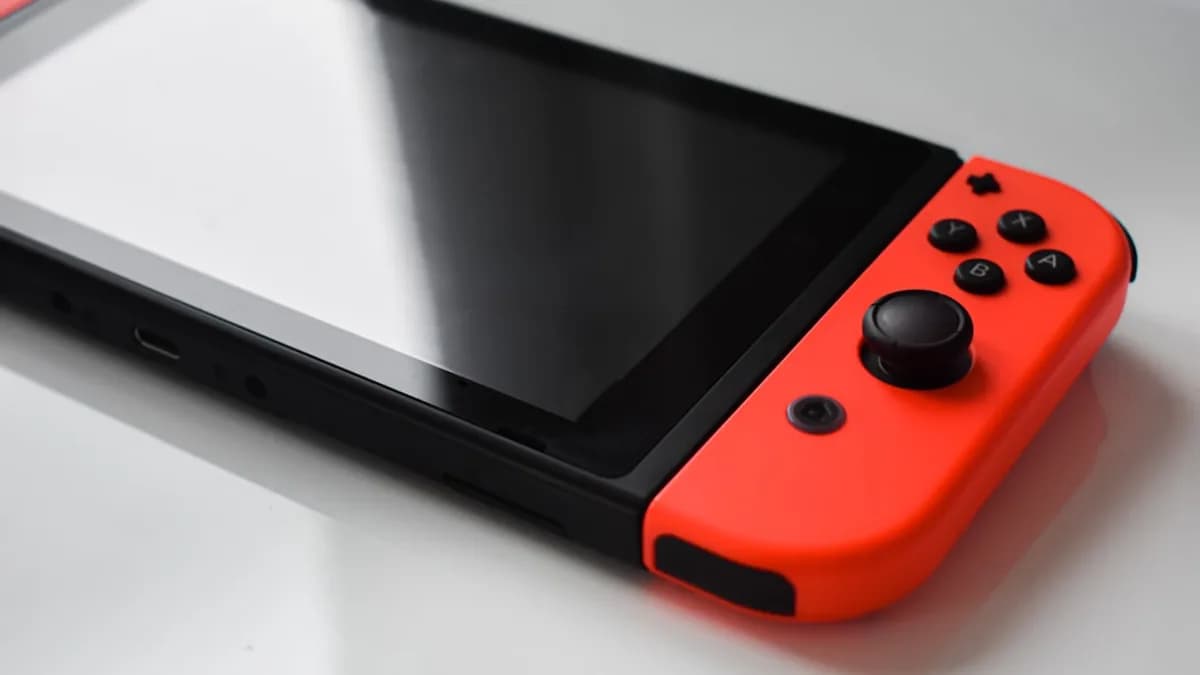
Retroid Pocket Nova is being sold first on its screen, not its chipset — and that tells handheld buyers exactly where Retroid wants attention before price, battery, or performance enter the conversation.
Retroid has revealed the Pocket Nova’s design and display specifications after an earlier tease of a new 4:3 handheld, according to Notebookcheck. The confirmed package: a 4.5-inch AMOLED panel, 1280 × 960 resolution, 120Hz refresh rate, a frosted translucent shell, clear D-pad and ABXY buttons, symmetrical thumbsticks with RGB rings, and two front-facing speakers.
Retroid Pocket Nova’s design reveal shifts handheld polish to the front
The Pocket Nova teaser is not just “new device, new shell.” It shows Retroid leaning into Pocket Nova colors and visual finish before the deeper spec sheet arrives. That matters because the company has disclosed the parts buyers can judge instantly: screen shape, panel type, control symmetry, speaker placement, and the overall console-like presentation.
The question for builders is simple: can industrial design carry interest long enough before the processor, battery, RAM, storage, thermals, and price are confirmed?
Retroid’s visible choices point to a device meant to feel more premium than a bare-bones retro handheld, much like the Pocket Micro 2’s glass-forward design. The frosted translucent shell plays into the collector appeal of see-through hardware. The clear D-pad and ABXY buttons reinforce that look. The RGB rings around the symmetrical thumbsticks make the Nova read as a modern portable, not just a nostalgia box.
That said, one image can only answer so much. It can set expectations around hand feel, bezel treatment, and control balance. It cannot prove comfort, build quality, input latency, or whether the shell looks as good in production units as it does in a reveal image.
For a similar teaser-first hardware dynamic, see MLXIO’s coverage of No Specs, No Price: Pocket Micro 2 Dares Fans to Care and Pocket Micro 2’s $239 price, which track the same tension: makers want attention early, while buyers still need the numbers that decide value.
The 4.5-inch AMOLED makes 4:3 gaming the headline
Retroid has confirmed the Pocket Nova will use a 4.5-inch AMOLED display with 1280 × 960 resolution and a 120Hz refresh rate. The aspect ratio is the key part. 1280 × 960 is a clean 4:3 resolution, so Retroid is not merely fitting old content into a modern panel shape. It is building the display around that format.
Who benefits most? Retro-focused players are the obvious audience, because many older console and arcade libraries were designed around 4:3 output. A native 4:3 handheld can avoid the awkward trade-off common on widescreen devices: pillarboxing, stretching, or wasting screen area.
But the screen choice also raises practical questions. A 120Hz AMOLED panel can make menus and supported games feel smoother, but Retroid has not disclosed the battery capacity, chipset, brightness, or software behavior. Without those, nobody can judge whether the higher refresh rate is a real everyday advantage or a spec that gets dialed down to preserve endurance.
The missing brightness figure also matters. AMOLED alone does not tell buyers how the Pocket Nova will perform outdoors, under bright room lighting, or during long sessions at lower brightness. Retroid has given the shape and speed of the display. It has not yet given the full viewing story.
The numbers that decide whether Pocket Nova feels premium
The display data is enough for a limited comparison with the discontinued Pocket Mini V2, but not enough for a full value call.
| Device | Display size | Panel | Resolution | Refresh rate | MLXIO calculated pixel density |
|---|---|---|---|---|---|
| Retroid Pocket Nova | 4.5 inches | AMOLED | 1280 × 960 | 120Hz | ~356 ppi |
| Pocket Mini V2 | 3.92 inches | OLED | 1240 × 1080 | 60Hz | ~420 ppi |
MLXIO calculation: the Nova has a larger and faster screen, but lower pixel density than the Pocket Mini V2 based on the disclosed size and resolution. That does not automatically make it worse. At handheld viewing distances, size, aspect ratio, refresh rate, color quality, brightness, and scaling behavior can matter more than raw ppi.
The buyer question: does Retroid’s bigger 4.5-inch 4:3 panel create a better play experience than a smaller, denser OLED?
That answer depends on the missing numbers. Battery capacity will determine whether 120Hz is sustainable. Weight and thickness will decide whether the device feels pocketable or merely compact. Thermals will matter once Retroid discloses the processor. Screen-to-body ratio cannot be judged precisely from the supplied specs.
There is also no confirmed Pocket Nova price. Retroid’s current official store listings show other handhelds across a wide spread, including the Retroid Pocket Classic from $99.00, Retroid Pocket 4/4Pro from $139.00, Retroid Pocket 5 at $199.00, Retroid Pocket Flip 2 from $179.00, and Retroid Pocket 6 from $244.00. Those prices frame Retroid’s broader range, but they do not establish where Nova will land.
Retroid’s design language now looks less like a parts list
The supplied record supports one clean comparison: Pocket Nova versus Pocket Mini V2. The Nova moves from the Mini V2’s smaller 3.92-inch 60Hz OLED toward a larger 4.5-inch 120Hz AMOLED while keeping a compact 4:3 identity.
That says something about Retroid’s product direction. The company is no longer teasing only affordability or baseline emulation utility. It is putting presentation first: translucent casing, illuminated stick rings, front speakers, and a high-refresh AMOLED panel.
The design question for existing Retroid owners is sharper: is this a meaningful hardware step, or just a more attractive shell around still-unknown internals?
Until Retroid confirms the chipset and battery, the Nova’s maturity is mostly visual. The symmetrical thumbsticks may appeal to players who want a balanced modern layout, while the clear D-pad and ABXY buttons keep the retro signal intact. Two front-facing speakers are also a visible usability choice, though audio quality remains untested.
The risk is imbalance. If the internals lag the screen, Nova could feel like a panel-led device rather than a complete upgrade. If the processor, thermals, and battery match the display ambition, the reveal will look less like cosmetics and more like early positioning.
Players, tinkerers, and rival brands will read the teaser differently
Retro players will focus on the 4:3 panel first. They will care about scaling, latency, D-pad feel, and whether the larger display improves comfort without making the device bulky. The source confirms the screen geometry. It does not confirm the controls’ tactile quality.
Tinkerers will wait for the parts Retroid has not named. Which processor? How much memory and storage? What battery size? What software stack? Those details decide how far the device can be pushed beyond the clean screen pitch.
The question competitors and accessory makers may ask: is Retroid aiming at an aggressive value tier, or a more polished midrange handheld?
Notebookcheck says further specs are expected to arrive over time, likely in pieces, similar to how Ayaneo is handling the upcoming Pocket Micro 2. That drip-feed strategy keeps attention alive, but it also forces buyers to evaluate incomplete hardware. The same caution applies outside handhelds too: MLXIO’s OnePlus N6 Bets on India With No Specs on the Table shows how limited early disclosures can create interest without resolving purchase decisions.
Pocket Nova’s real test is the spec sheet Retroid has not shown yet
The Pocket Nova reveal is meaningful, but not decisive. A 4.5-inch 1280 × 960 120Hz AMOLED display is a strong starting point for a compact 4:3 handheld. The design looks more polished than a purely utilitarian retro device. The front-facing speakers and symmetrical sticks suggest Retroid is thinking beyond the minimum viable handheld.
But buyers should not treat this as enough for a preorder decision unless they are comfortable with unanswered basics. Price, chipset, battery life, weight, dimensions, thermals, software, storage, and launch timing remain undisclosed in the supplied material.
The scenario to watch is straightforward. If Retroid pairs this display with competitive internals and a price that fits its existing handheld range, Pocket Nova could pressure budget handheld makers to improve panel quality instead of leaning only on processor bumps. If pricing climbs or the internals disappoint, the screen may become the device’s best feature rather than proof of a balanced upgrade.
For now, the Pocket Nova is a strong display reveal attached to an unfinished value equation. The next evidence that matters will be the processor, battery capacity, dimensions, and price. Those will confirm whether Retroid has built a polished 4:3 contender — or simply shown the prettiest part first.
Key Takeaways
- Retroid is emphasizing the Pocket Nova’s display and design before revealing performance-critical specs.
- The 4.5-inch AMOLED 4:3 screen with 120Hz refresh targets buyers who value premium retro handheld visuals.
- Key details like chipset, battery, RAM, storage, thermals, and price are still unknown.