Ayaneo is trying to sell the Konkr Pocket Advance on a harder promise than raw power: that a Game Boy Advance-shaped Android handheld can feel faithful to retro games while stretching beyond Nintendo’s old portable. The company revealed new display, size, connectivity and software details during a product sharing session, according to Notebookcheck, but left the most commercially decisive specs off the table.
That makes the Konkr Pocket Advance a revealing product before it is a complete one. Ayaneo has shown enough to define the device’s identity: compact, horizontal, retro-coded, Android-based, and built around a screen that strongly favors Game Boy Advance presentation. It has not shown enough to define its value.
Ayaneo is using the Game Boy Advance silhouette to sell more than nostalgia
The Konkr Pocket Advance is explicitly modeled after Nintendo’s Game Boy Advance, and Ayaneo is not being subtle about it. The horizontal layout, compact proportions and launch colors — Navy Blue and Coral Orange — all point toward a device meant to trigger recognition before a buyer even checks the spec sheet.
That design choice matters because Ayaneo is not only showing a nostalgia object. The company also showed the handheld running GBA games and a classic God of War game, with the menu indicating emulation support for systems up to PS2. That puts the device in a different lane from a simple tribute handheld. It is shaped around one era, but marketed as a broader emulation machine.
MLXIO analysis: the tension is obvious. A GBA-inspired shell creates a clear emotional hook, but broader console support creates harder expectations around controls, scaling, performance and battery life. If the Konkr Pocket Advance is judged only as a modern GBA, the bar is one thing. If Ayaneo wants buyers to treat it as a pocketable multi-console Android handheld, the unanswered hardware specs become much more important.
For readers tracking how small devices live or die by form factor, the same design-first question runs through adjacent hardware like A 4-Inch E-Reader? Boox Picco Bets on Pocket Focus. Pocketable does not automatically mean practical.
The 3.5-inch 960 × 640 screen makes the Advance a GBA-first device
Ayaneo revealed a 3.5-inch high definition LCD panel with a 960 × 640 resolution and 3:2 aspect ratio. That is the most important confirmed spec so far because it tells us what the Konkr Pocket Advance is prioritizing visually.
Ayaneo says the display can:
“accurately restore the details of retro game graphics through 4x point-to-point display technology.”
That claim is especially relevant for Game Boy Advance emulation, because a 3:2 panel aligns with the GBA’s wide-screen identity better than the taller displays used by many general-purpose retro handhelds. The 960 × 640 resolution also gives Ayaneo a clean scaling story for GBA content, at least on paper.
The counterpoint is that multi-console support complicates the screen story. A display optimized around one system’s geometry may be less naturally suited to other retro consoles. That does not make the choice wrong; it makes Ayaneo’s software presentation more important. Menus, scaling options and aspect-ratio handling will decide whether this feels focused or cramped.
| Confirmed detail | Konkr Pocket Advance |
|---|---|
| Display size | 3.5-inch LCD |
| Resolution | 960 × 640 |
| Aspect ratio | 3:2 |
| Launch colors | Navy Blue, Coral Orange |
| Operating system | Android pre-installed |
| Storage expansion | microSD card slot |
| Charging/data port | USB 2.0 Type-C with PD fast charging |
| Wireless | Wi-Fi 5, Bluetooth 5.0 |
| Audio | Audio jack |
The weight figure undercuts the pure pocket-console fantasy
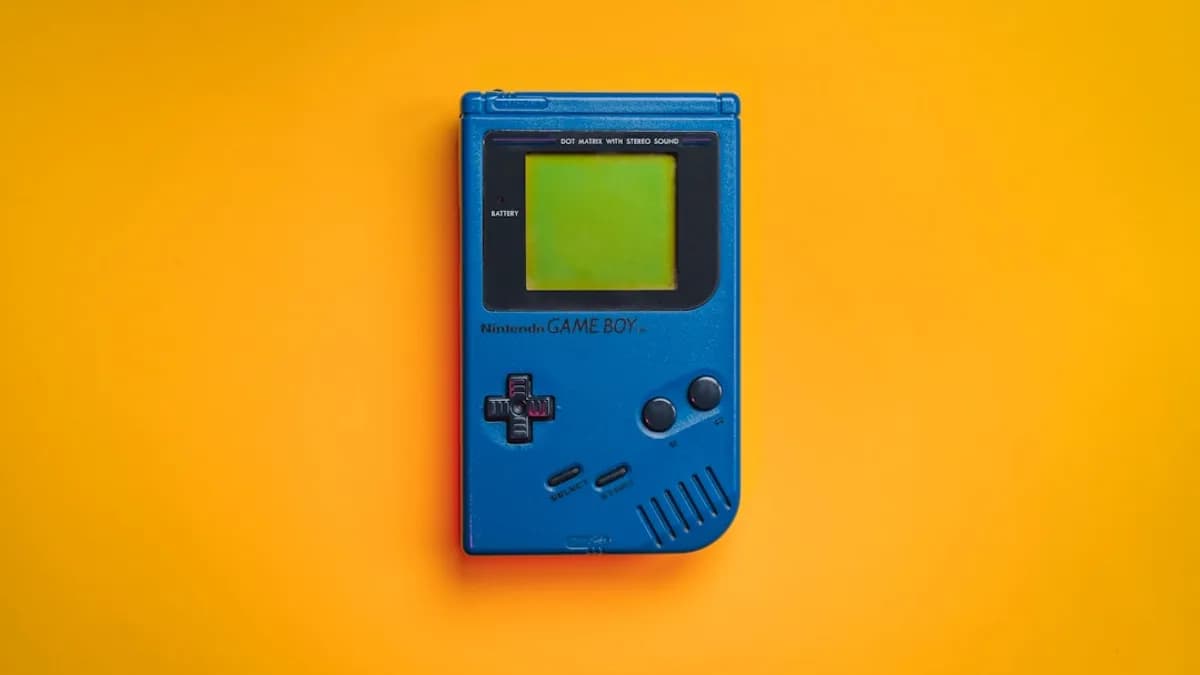
The Konkr Pocket Advance measures 151.3 × 82.4 × 22 mm and weighs approximately 224 grams. Notebookcheck notes that this is almost double the original Game Boy Advance, which weighed 140 grams, or 188 grams with two AA batteries.
That comparison is useful because nostalgia can distort memory. The Advance may look like a smaller, simpler machine, but its confirmed weight places it above the old device even when the original is counted with batteries. That does not mean it will feel heavy. It means Ayaneo’s ergonomics need to justify the added mass.
Small differences matter here. At this size, 22 mm thickness can affect whether the device slides into a jacket pocket or becomes a bag device. 224 grams may still be comfortable for short sessions, but long-session comfort will depend on grip shape, button placement and balance. Ayaneo has shown the silhouette. It has not yet shown whether the device disappears in the hand.
This is where handheld makers often win or lose buyers before software enters the conversation. A similar tradeoff appears in dedicated gaming accessories, where reducing bulk can be as important as adding capability, as seen in 10ms Dongle Lets Lenovo Legion C700 Ditch Handheld Bloat.
The livestream demo sells flexibility, but demos do not prove the hard parts
Ayaneo’s product sharing session showed Arthur, the company’s CEO, playing several GBA games and a classic God of War game. The brief menu view suggested the Konkr Pocket Advance can emulate multiple consoles up to PS2.
That is the strongest argument for the device as more than a GBA homage. Ayaneo is positioning the Advance around flexibility: a familiar retro body, Android software, and a front end that can organize games across systems. The confirmed software stack includes AYASpace, AYAHome, and AYASetting, covering retro game management, launcher behavior and handheld settings.
But a livestream is not a review. It does not answer the questions that decide whether emulation feels good: frame pacing, input latency, scaling quality, sleep behavior, heat, battery drain and control consistency across systems. Those are not confirmed weaknesses. They are simply still untested.
The strongest version of Ayaneo’s argument is that the device does not need to be a specs monster if the screen, controls and software are tuned tightly around retro play. The weakest version is that it becomes a familiar-looking shell with too many promised use cases and not enough disclosed hardware to judge them.
Android gives Ayaneo a polished software path, but also raises support questions
The Konkr Pocket Advance will ship with Android pre-installed. That gives Ayaneo room to build a more curated experience through AYASpace, AYAHome, and AYASetting, rather than leaving users inside a plain app drawer.
For a retro handheld, that matters. The front end is part of the product. If it can present libraries cleanly, preserve per-system settings, and make display modes easy to change, the Advance’s GBA-inspired hardware could feel coherent even when running games from other consoles.
The counterpoint is that Ayaneo has not disclosed processor, RAM, storage, or battery capacity. Those omissions limit any serious performance judgment. Support for Wi-Fi 5, Bluetooth 5.0, microSD, an audio jack, and PD fast charging answers practical questions, but not the main one: how far this device can go before the retro shell outruns the internals.
Price, chipset and battery capacity will decide whether the Advance has a real lane
Ayaneo has not announced the release date or price for the Konkr Pocket Advance. It also has not revealed the processor, RAM, storage configurations or battery capacity. Those are not minor blanks. They are the difference between a focused retro handheld and an overpromised Android device.
MLXIO analysis: the next reveal needs to answer three questions cleanly.
- Performance: Which chipset is inside, and does it support Ayaneo’s implied emulation range without turning PS2 support into a menu checkbox?
- Endurance: What battery capacity is Ayaneo using, and how long can the handheld run under real emulation loads?
- Value: Does the final price match the device’s focused GBA-style design, or push buyers to compare it with more capable hardware?
The evidence that would strengthen Ayaneo’s case is straightforward: transparent chipset details, battery figures, pricing, and real demonstrations of scaling across GBA and non-GBA systems. The evidence that would weaken it would be a high price paired with vague performance claims and limited battery disclosure.
For now, the Konkr Pocket Advance is most convincing as a design thesis. Ayaneo has the shape, screen ratio and software frame to make a modern GBA-style handheld feel intentional. The next test is whether the missing specs turn that nostalgia into a coherent product, or expose it as a familiar silhouette waiting for a reason to exist.
Key Takeaways
- Ayaneo is positioning the Konkr Pocket Advance as both a nostalgic GBA-style device and a broader Android emulation handheld.
- Support up to PS2 raises expectations for performance, controls, scaling and battery life.
- Key buying factors remain unclear because Ayaneo has not yet revealed the most commercially decisive specs.