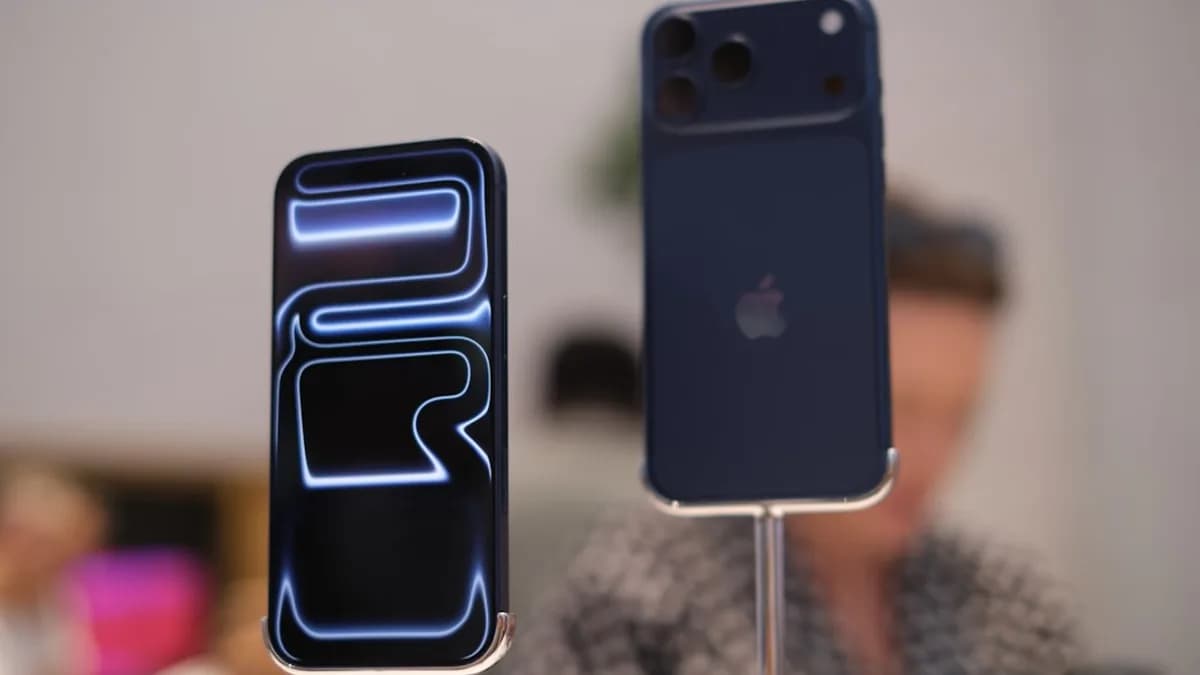
A rumored around $2,000 iPhone Ultra may still debut in September 2026, turning Apple’s first foldable iPhone from a delay story into a test of how far the company can push the top of the iPhone range.
Supply chain sources now expect Apple’s first foldable iPhone — described in reports as the iPhone Ultra or iPhone Fold — to be unveiled in September alongside the iPhone 18 Pro lineup, according to 9to5Mac . That matters because earlier reports had pointed to a possible slip into December or even early 2027.
This is not just about a date on Apple’s calendar. If the latest supplier signals hold, Apple is preparing to introduce its most expensive iPhone ever inside Apple’s fall launch window that anchors its flagship cycle.
September Is Now the Core iPhone Ultra Signal
The launch-timing debate has shifted fast.
A Barclays investor note in March suggested the foldable iPhone launch could be pushed into December. A later Nikkei Asia report pointed to engineering problems that could move the device into early 2027. Then the tone changed.
Bloomberg’s Mark Gurman reportedly backed the idea of a later launch, but described the device as only:
“a little bit delayed”
That wording implied something closer to October than December. Leaker Fixed Focus Digital went further, saying the most likely scenario was a simultaneous launch with the iPhone 18 Pro, with any delay capped at one month. The same leaker later described delay claims as “fake.”
Now suppliers are adding weight to the September case. DigiTimes, citing China Securities Journal, reported that an Apple supplier recently began delivering components in small batches for the foldable iPhone.
“The supplier reportedly received guidance indicating that the device is scheduled to be unveiled in September”
A second supply-chain source cited in the same report said it had received no indication of a delay.
Component Deliveries Suggest Momentum, Not Certainty
Small-batch component deliveries are a meaningful signal, but they are not a retail launch guarantee.
They can point to progress in supplier readiness, early production coordination, and Apple’s internal launch planning. They can also coexist with constrained volumes, staggered shipping, or a formal announcement that precedes wide availability.
Apple has done this before. The iPhone X, iPhone XR, and iPhone 14 Plus all went on sale later in the year than the traditional September schedule. So a September unveiling does not automatically mean customers get the device in September.
| Scenario | Source-supported basis | Practical meaning |
|---|---|---|
| September reveal, September sales | Supplier guidance reportedly points to September | Cleanest launch beside iPhone 18 Pro |
| September reveal, October sales | Gurman’s “a little bit delayed” wording; Fixed Focus Digital’s “one month at most” claim | Apple keeps launch-event momentum while buying production time |
| December or early 2027 slip | Earlier Barclays and Nikkei Asia reports | Still possible, but less aligned with newer supplier signals |
The risk is clear: foldables are harder to ship than conventional phones. The supplied reports specifically mention concerns around engineering problems, display creasing, hinge durability, pre-assembly yield issues, and surface-mount technology complications.
That is enough to explain why this product keeps generating conflicting reports. A foldable iPhone does not merely need to work. It needs to meet Apple’s reliability bar at a price expected to sit far above the rest of the lineup.
The $2,000 Rumor Makes This a Margin and Positioning Test
The most aggressive claim in the related reporting is the rumored price: around $2,000.
That number, if accurate, would place the iPhone Ultra above the Pro Max tier and make it Apple’s clearest attempt to create a new iPhone ceiling. The device is also expected to feature a 7.8-inch inner display, 5.5-inch cover display, A20 chip, C2 modem, Touch ID power button instead of Face ID, and two rear cameras, according to related reporting summarized in the supplied material.
The strategic logic is obvious, though still an MLXIO interpretation: Apple does not need the first foldable iPhone to outsell the Pro line. It needs the device to make the most expensive iPhone feel legitimate.
That matters for the broader portfolio. A $2,000 foldable can make the iPhone 18 Pro Max look less extreme by comparison, even if the Ultra ships in limited quantities. It also gives Apple a halo product at the top of the lineup without forcing every premium buyer into an untested form factor.
For readers tracking the software side of Apple’s 2026 cycle, this timing sits near other iPhone platform questions, including iOS 27 Reopens Apple’s iPhone Icon Fight After One Year and Apple Axes 16 Devices, Spares Every iPhone on iOS 27. Those are not proof of the foldable launch date. They do show why Apple’s hardware timing and software direction are being read together.
Apple’s Late Foldable Entry Depends on Execution, Not Novelty
The supplied source material does not provide enough competitor detail to support a full Samsung-Google-Huawei comparison. So the sharper point is narrower: Apple is not being judged on being first.
It is being judged on whether the foldable arrives polished enough to justify the Ultra name and the rumored price.
The reports identify the exact pressure points. Display creasing has reportedly been largely resolved, while hinge reliability has remained a concern in some leaks. Another report points away from hinge problems and toward SMT complications during pre-assembly.
That split matters. If the issue is a hinge, the risk centers on long-term durability and mechanical confidence. If the issue is SMT yield, the problem is production efficiency and ramp speed. Both can affect launch timing, but in different ways.
Apple can still unveil the device in September and ration supply. It can also announce the full lineup together while shipping the Ultra later, as prior staggered iPhone launches show.
Consumers and Investors Will Read the Same Launch Differently
For buyers, the question is simple: does a larger folding screen, premium design, and new device category justify the expected price?
For investors, the question is different. They will look for signals around production scale, whether the device ships close to the iPhone 18 Pro window, and whether Apple can protect premium positioning despite first-generation complexity.
Developers are a separate question, but the supplied reports do not include Apple guidance on new app layouts, multitasking behavior, or interface rules. Any claim beyond that would be speculation. The only safe inference is that a foldable iPhone would create new screen-state challenges if Apple opens them meaningfully to software makers.
The carrier angle is also unconfirmed in the source material. A high-priced iPhone would normally invite financing and trade-in attention, but no carrier plans appear in the supplied reporting.
The September Thesis Has Three Tests Left
The strongest current reading is this: Apple is likely preparing a September announcement, while actual availability could still be staggered if yields or reliability targets remain tight.
That thesis strengthens if more suppliers report component movement, if no new delay guidance appears, and if production-related leaks shift from engineering problems to volume planning. It weakens if reports return to unresolved hinge durability, low pre-assembly yields, or a shipment date materially later than the iPhone 18 Pro launch.
A September reveal would not settle every question. It would only move the iPhone Ultra from rumor cycle to execution risk.
For Apple, that may be enough. The first foldable iPhone does not need to dominate unit sales immediately. It needs to prove that the iPhone can stretch into a higher price band without looking experimental.
The Bottom Line
- A September launch would keep Apple’s first foldable iPhone inside its most important annual product cycle.
- An expected price around $2,000 would test how much consumers will pay for a premium iPhone.
- Supplier activity suggests the device may be closer to launch than earlier delay reports indicated.