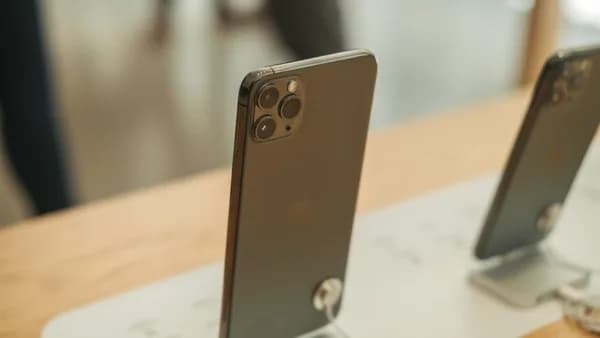
A $1,399 iPhone 18 Pro would not be a routine price bump; it would be Apple asking whether the Pro iPhone can absorb laptop-class pricing without losing its mainstream pull.
A second report now points to that range. Analyst Jeff Pu expects iPhone 18 Pro and iPhone 18 Pro Max pricing to rise by $250-300 each, putting the Pro at $1,349-1,399 and the Pro Max at $1,449-1,499, according to 9to5Mac . That closely matches an earlier Wall Street Journal estimate of a $1,399 starting price.
The number is still unconfirmed. Apple has not announced final pricing. But the repeated range matters because the rationale is now consistent across reports: memory, storage, chip, and camera costs are rising fast enough to pressure Apple’s usual pricing discipline.
Apple’s $1,399 problem is really a margin problem
The headline figure is simple. The business tension underneath it is not.
Pu’s research note, seen by 9to5Mac, attributes the possible increase to higher costs for the A20 Pro chip, LPDDR5X memory, and NAND storage. The report says the latter two could cost Apple roughly 3x what they did last year.
That puts Apple in a narrow corridor. It can raise prices and risk sticker shock, or absorb more cost and protect demand at the expense of margin. 9to5Mac argues that Apple could choose to take a margin hit, but says recent price hikes on other products make that less likely.
“Unfortunately, price increases are unavoidable,” Apple CEO Tim Cook told The Wall Street Journal, according to Forbes.
Cook also described the memory-cost swing in unusually blunt terms:
“This is a hundred-year flood. I’ve never seen anything like it in any area in over 40 years.”
MLXIO analysis: that language does more than explain costs. It prepares buyers and investors for a pricing reset before launch day. Apple rarely benefits from surprise when the surprise is a higher entry price.
The iPhone 18 Pro price math points to a $250-300 shock
The cleanest comparison is with the iPhone 17 Pro, which the related reporting cites at $1,099 for the base model. A move to $1,399 would be a $300 increase, or roughly 27.3%.
| Model / estimate | Starting price cited | Difference vs. iPhone 17 Pro |
|---|---|---|
| iPhone 17 Pro | $1,099 | — |
| iPhone 18 Pro, low end of Pu range | $1,349 | +$250 |
| iPhone 18 Pro, high end of Pu range | $1,399 | +$300 |
| iPhone 18 Pro Max, Pu range | $1,449-1,499 | Not directly comparable to Pro base |
TechInsights’ cost model, cited in related reporting, explains why the number keeps landing near the same place. It estimates Apple paid around $39 for the 12GB of DRAM in the iPhone 17 Pro, with that cost potentially rising to $145 in the iPhone 18 Pro. The 256GB flash storage cost could rise from about $13 to $51.
The broader bill-of-materials estimate is just as sharp:
- iPhone 17 Pro BOM: about $582, including DRAM and flash storage.
- iPhone 18 Pro projected BOM: about $726.
- Increase: roughly 25%.
- iPhone 17 Pro gross margin estimate: around 47%.
- Price needed to preserve that margin: $1,371.
That is why $1,399 is not just a rumor-friendly round number. It sits near the margin-preservation math once the reported memory, storage, and camera pressures are included.
The reports do not quantify taxes, AppleCare, accessories, carrier fees, or storage-tier premiums. So the real out-the-door cost could be higher, but the sourced data only supports analysis of the advertised starting price.
AI data centers are now part of the iPhone pricing story
The most important supply-chain detail is not the chip name. It is who else wants the same memory.
Related reporting says the shortage of DRAM and NAND flash storage is being driven largely by AI data centers competing for components. Manufacturers including Samsung Electronics and Micron Technology have shifted production toward enterprise-scale memory chips for AI servers, tightening supply for consumer devices like the iPhone.
That turns the iPhone 18 Pro into a strange casualty of the AI buildout. Apple’s phone pricing may be getting pulled upward by infrastructure spending far outside the smartphone aisle.
MLXIO analysis: this is where Apple’s Pro strategy gets more exposed. If the company sells the iPhone 18 Pro as a camera-first, AI-ready, high-performance device, it has a cleaner argument for the price. If the visible user-facing upgrade feels incremental, the cost story becomes harder to sell.
The camera also matters. The Wall Street Journal analysis cited in related coverage says the expected new camera system could cost Apple about 50% more than the previous generation, based on supply-chain analyst Ming-Chi Kuo. Add that to the memory squeeze, and the upper-end $1,399-or-higher scenario becomes easier to understand.
The iPhone X comparison is tempting, but the supplied evidence does not prove it
There is an obvious urge to frame $1,399 as another historic Apple price reset. The supplied sources, however, do not provide historical iPhone pricing context beyond the $1,099 iPhone 17 Pro comparison and the reported $200-300 jump.
That matters. A strong analysis should not smuggle in a neat historical arc just because it sounds persuasive.
What the evidence does show is narrower and more useful: Apple may be facing an input-cost spike large enough that its usual margin structure becomes difficult to preserve at current Pro pricing. The company can either compress margin, reprice the Pro tier, or use product segmentation to push buyers toward models with different economics.
For readers following the timing side of Apple’s next launch cycle, MLXIO’s iPhone 18 Pro Release Date Reveals Apple’s Price Bet is the natural companion question: when Apple announces the device, pricing and positioning will have to land together.
Buyers, carriers, and investors will read the same price very differently
A $1,399 base price creates different incentives depending on where you sit.
- Buyers: The decision becomes less about whether the Pro is better and more about whether the Pro-only features justify a much higher entry point.
- Apple: The choice is between protecting gross margin and risking a smaller pool of Pro buyers.
- Carriers: The supplied sources do not detail carrier plans, but any financing structure would start from a higher device price.
- Investors: The key question is whether higher average selling prices offset any resistance to the jump.
- Rivals: Forbes notes that Samsung has already increased prices on its latest models, but the supplied sources do not support claims about how Google or Chinese premium brands would respond.
The iPhone also remains a platform story. Price changes at the high end can shape who owns the most capable hardware, which then affects the audience for camera-heavy apps, AI features, and premium mobile services. Apple’s control over iPhone usage patterns also sits behind fights like 93% UK Surge Puts Opera in Apple’s iPhone Browser Fight, where distribution and default behavior matter as much as hardware.
Apple’s launch script now has to justify the math
If Apple prices the iPhone 18 Pro near $1,399, it will likely need a clean feature narrative. The sourced reports point to the likely ingredients: the A20 Pro, higher-cost LPDDR5X memory, more expensive NAND storage, and a pricier new camera system.
The evidence to watch after launch is practical, not rhetorical.
If shipping estimates stretch, inventory tightens, and Apple avoids unusually aggressive incentives, the market will be signaling acceptance of the new Pro price. If promotions become more generous or availability stays loose, that would weaken the case that Apple can push the Pro tier this far without friction.
For now, the best read is cautious: $1,399 is not confirmed, but the margin math behind it is no longer easy to dismiss.
The Bottom Line
- A $1,399 starting price would push the Pro iPhone closer to laptop-level pricing.
- Rising chip, memory, and storage costs could force Apple to choose between higher prices and lower margins.
- Repeated reports of the same price range suggest Apple may be preparing buyers for a major pricing reset.