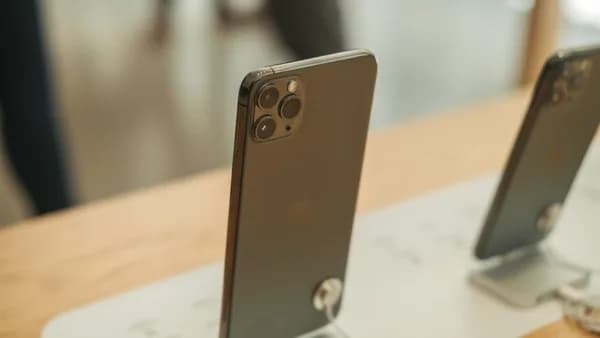
Apple’s most likely iPhone 18 Pro release date is not one date but a two-Friday window: September 18 or September 25. That narrow range says more about Apple than any single rumor. The company’s fall iPhone cycle has become a machine, and iPhone 18 Pro production is expected to move through it almost exactly on schedule.
Apple is expected to unveil the iPhone 18 Pro, iPhone 18 Pro Max, and possibly an iPhone Ultra in early-to-mid September, according to 9to5Mac . The catch: the reported base iPhone 18 delay would push the standard model into early 2027, which would make the 2026 fall lineup unusually premium-heavy.
Apple’s iPhone 18 Pro launch window is predictable—and that predictability is the strategy
The headline is a release date. The signal is discipline.
Apple’s annual iPhone launch has trained buyers, media, accessory makers, and retailers to expect a September reveal, a Friday preorder window, and a Friday retail launch soon after. That rhythm reduces uncertainty. It also concentrates attention around Apple’s highest-profile hardware event of the year.
9to5Mac’s core forecast is simple: Apple should reveal the iPhone 18 Pro in early-to-mid September, with availability landing either Friday, September 18 or Friday, September 25, depending on the announcement date. That is not confirmed. Apple has not sent official invitations in the supplied source material. But the pattern is strong enough to make the window meaningful.
The more interesting part is the lineup. If the regular iPhone 18 really waits until early 2027, Apple’s fall message shifts toward higher-end hardware first. That would put the Pro models and rumored iPhone Ultra at the center of the launch cycle, not just as premium options beside a standard model.
MLXIO analysis: that would make the release date matter less as a shopping-calendar question and more as a positioning question. Apple would be asking fall upgraders to look higher in the lineup.
September 9 or September 14: the calendar problem Apple now has to solve
Apple’s recent iPhone events cluster tightly around the second week of September. 9to5Mac lists the last three unveiling dates:
| iPhone generation | Announcement date | Preorders | Release date |
|---|---|---|---|
| iPhone 17 | Tuesday, September 9, 2025 | Friday, September 12 | Friday, September 19 |
| iPhone 16 | Monday, September 9, 2024 | Friday, September 13 | Friday, September 20 |
| iPhone 15 | Tuesday, September 12, 2023 | Friday, September 15 | Friday, September 22 |
The complication for 2026 is Labor Day, which falls unusually late on September 7. Apple usually launches the iPhone the week after Labor Day, which points to Monday, September 14. But 9to5Mac notes that an event as early as Wednesday, September 9 remains possible, since Apple launched the iPhone two days after Labor Day in 2022.
That creates two clean scenarios:
| Scenario | Announcement | Preorders | Release |
|---|---|---|---|
| Earlier launch path | Wednesday, September 9 | Friday, September 11 | Friday, September 18 |
| Later launch path | Monday, September 14 | Friday, September 18 | Friday, September 25 |
“Unless Apple throws a major curveball this year, September 18 or September 25 is when users can expect to get their hands on an iPhone 18 Pro.”
The source also says the rumored fall lineup consists of iPhone 18 Pro, iPhone 18 Pro Max, and iPhone Ultra. A new iPhone Air is possible, but reports are described as unclear. That uncertainty matters. A predictable event date does not mean a predictable product stack.
The numbers behind Apple’s fall iPhone machine are unusually consistent
The useful data is not just the month. It is the spacing.
Across the iPhone 15, iPhone 16, and iPhone 17 cycles cited by 9to5Mac, Apple announced the phone in September, opened preorders that same week, and released the devices the following Friday. The announcement-to-release gap was roughly 10 days for each of those cycles.
That cadence gives Apple a tightly compressed launch funnel:
- Announcement: demand creation and feature positioning.
- Preorders: early buyer commitment.
- Release Friday: shipments, store sales, and first real-world demand signals.
The supplied source states that the iPhone is Apple’s most important product and makes up the “vast majority” of the company’s earnings. It does not provide launch-quarter revenue numbers or margin detail, so those should not be inferred here. But it does support a narrower point: Apple’s flagship launch timing matters because the iPhone business is central to the company.
MLXIO analysis: consistency is the product before the product. When the launch calendar rarely moves, the market spends less time asking “when” and more time asking “what changed.”
For readers tracking adjacent Apple timing issues, MLXIO has also covered the company’s software cadence in Beta 5 Puts iOS 26.6 in iPhone Cleanup Mode Before iOS 27, a separate but relevant lens on how Apple stages updates around hardware cycles.
A premium-first fall would change the iPhone 18 upgrade decision
The biggest reported shift is not the September window. It is the base model delay.
If the standard iPhone 18 does not arrive until early 2027, fall buyers would face a different choice than usual. Instead of comparing a standard model against Pro upgrades at the same time, they may be choosing among premium devices only: iPhone 18 Pro, iPhone 18 Pro Max, and possibly iPhone Ultra.
MacRumors’ roundup of current expectations says the fall 2026 launch will include the 6.3-inch iPhone 18 Pro, 6.9-inch iPhone 18 Pro Max, and a new foldable iPhone around 5.5 inches closed and approximately 7.8 inches open. It also says the Pro models are expected to get Apple’s first 2-nanometer chip, while design changes may be limited.
Apple’s own iPhone page emphasizes current-generation themes that matter for this cycle: Apple Intelligence, on-device models, Private Cloud Compute, and ChatGPT from OpenAI integrated into Siri and Writing Tools. Apple says its latest iPhone models are built for Apple Intelligence and that personal conversations stay personal when models run entirely on-device.
MLXIO analysis: if Apple reserves its strongest silicon, camera processing, display, or AI features for Pro-tier hardware, the delayed standard model becomes more than a scheduling oddity. It becomes a segmentation tool.
Buyers get a simple rule: separate the keynote date from the date you can actually own one
For anyone planning a 2026 iPhone upgrade, the practical distinction is this: the announcement date is when Apple explains the lineup; the release date is when buyers can receive the device or buy it in stores.
Based on 9to5Mac’s projected windows:
- If Apple announces on September 9: preorders likely open September 11, with release on September 18.
- If Apple announces on September 14: preorders likely open September 18, with release on September 25.
The source does not report pricing, carrier promotions, storage tiers, or confirmed trade-in values for the iPhone 18 Pro. Apple’s current iPhone page does state that customers can get credit toward iPhone 17, iPhone Air, or iPhone 17 Pro when trading in an eligible smartphone, but that should not be treated as confirmation of iPhone 18 launch offers.
For consumers, the clean prescription is straightforward. If your current phone is failing, waiting for an unannounced model may not be rational. If you have a functioning recent iPhone, the September window is close enough that waiting for Apple’s official lineup is the lower-regret move.
Developers and accessory makers face a different clock. They need to be ready for the week of the announcement, not merely release Friday. Separate MLXIO coverage of Apple device-cycle rumors, including iPhone 18 Delay Squeezes Apple’s 2027 iPad Pro Launch, shows why product timing can matter beyond one handset line, though Apple has not confirmed the iPhone 18 schedule described there.
The launch date is easy; the test is whether Apple makes waiting feel necessary
The strongest supported forecast is that Apple keeps the iPhone 18 Pro inside its normal September channel unless it changes course for reasons not described in the supplied source material. The most likely consumer availability dates remain September 18 or September 25.
The less certain piece is the lineup. 9to5Mac says the base iPhone 18 is expected in early 2027, while iPhone Ultra timing still lacks consensus and may differ from the Pro models. That leaves Apple with a sharper fall pitch: premium hardware first, standard hardware later.
The evidence that would confirm this thesis is clear: an Apple invitation for September 9 or September 14, preorder timing on the following Friday, and a fall lineup led by iPhone 18 Pro, iPhone 18 Pro Max, and iPhone Ultra rather than the base iPhone 18.
The evidence that would weaken it is just as clear: a different event week, simultaneous availability for the standard iPhone 18, or a delayed Pro launch. Until Apple makes it official, the date is a projection. But Apple’s pattern is doing most of the talking.
The Bottom Line
- Apple’s expected September launch window gives buyers a clearer timeline for upgrade decisions.
- A delayed base iPhone 18 would make Apple’s 2026 fall lineup unusually focused on premium models.
- The rumored timing reinforces how Apple’s predictable launch cycle shapes media, retail, and accessory planning.