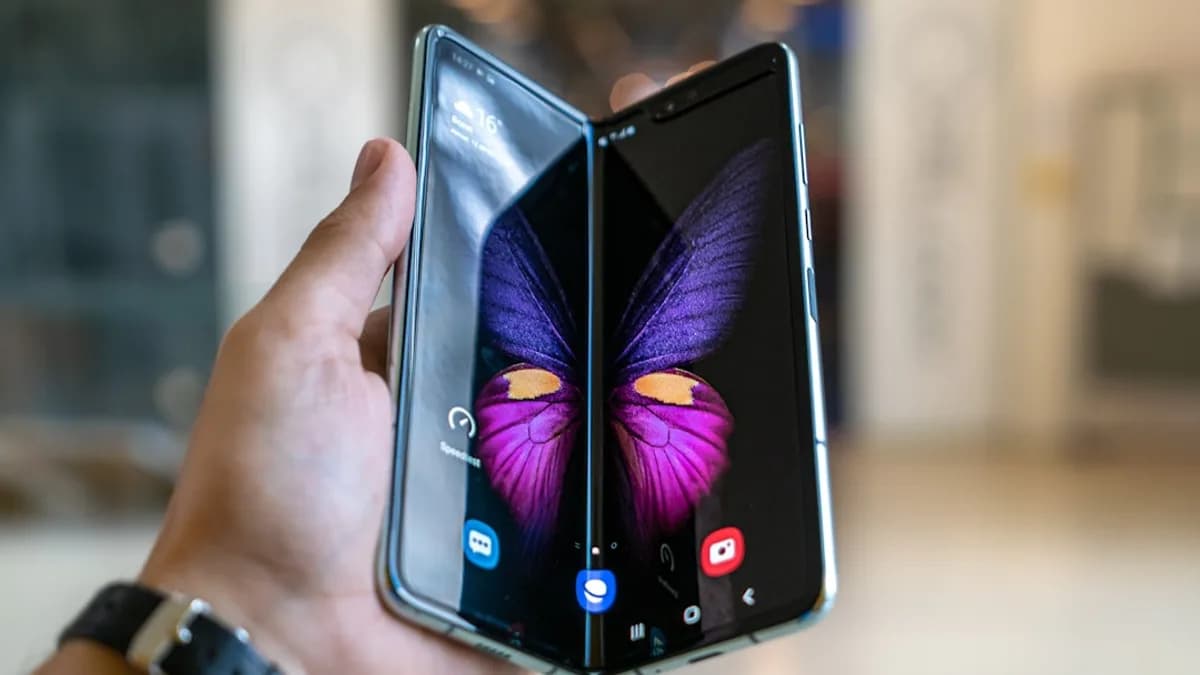
If a foldable looks nearly crease-free on day one but shows a clearer fold line by day seven, what exactly did Samsung sell: a real engineering advance, or a promise that outran the physics?
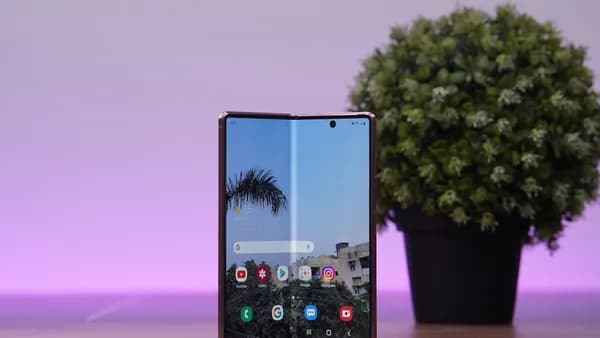
That is the credibility problem now forming around Samsung’s Galaxy Z Fold 8. Early testers say the device’s display crease, initially subtle, became more visible after almost a week of regular use on both the standard and Ultra models, according to Notebookcheck. The phone still works well. That is not the issue. The issue is the word “crease-free.”
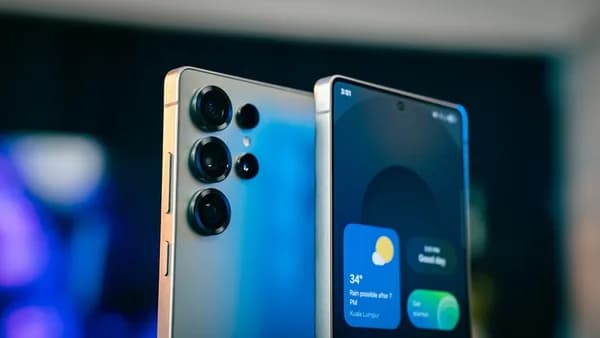
Samsung’s new Flex Titanium design was supposed to attack the oldest visual compromise in foldables. It uses slim titanium bars around the hinge area to reinforce the display and reduce the valley that forms where the panel folds. Early comparisons made the Z Fold 8 look flatter than rivals including the Oppo Find N6 and Vivo X Fold 6, amid broader foldable competition like Google’s Pixel 11 Pro Fold leak and Motorola’s Razr Ultra camera modes. Some impressions went as far as calling it “nearly crease-free” and even suggesting “self-healing” behavior.
One week later, the better framing is simpler: Samsung may have reduced the crease, but it has not erased it.
Did the Galaxy Z Fold 8 crease actually get worse after normal use?
The reported change is visual, not catastrophic. Testers including @GadgetsBoy and @nieantyfan noticed the crease becoming more pronounced after almost one week of regular use. Notebookcheck says the effect appears on both the standard and Ultra models.
That matters because foldables are judged twice. First, as devices. Second, as objects. A conventional flagship can survive a few cosmetic compromises if the display remains sharp and responsive. A premium foldable has less room to hide. Its entire pitch is that the hinge, inner screen, and tablet-like form factor justify the complexity.
The reported crease does not appear to break that pitch on function. Testers say the phone remains functionally excellent. The crease is more obvious under glare than by touch, which suggests this is not a report of touch failure, dead pixels, hinge collapse, or display separation.
But the expectation gap is real.
The visual change “does call into question the ‘crease-free’ claim,” Notebookcheck wrote.
That is the cleanest read. This is not yet evidence that the Galaxy Z Fold 8 has a durability defect. It is evidence that absolute marketing language creates an easy way to disappoint Fold 8 buyers waiting weeks.
For context on how central titanium has become to Samsung’s foldable story, MLXIO has been tracking the hardware pitch in $2,099 Galaxy Z Fold 8 Bets on Titanium to Crush Crease. The new reports do not negate that engineering work. They narrow what it can honestly claim.
Why can a foldable crease return if the display still works?
The likely explanation is mechanical, not mysterious. Experts cited in the source attribute the change to mechanical fatigue and plastic deformation.
Plastic deformation is the permanent settling of material after stress. In this case, the flexible display layers gradually lose their factory tension and settle into the hinge cavity. The panel is still doing its job. It is just no longer presenting the same taut surface it showed fresh out of the box.
That distinction matters. A foldable display is not a rigid slab with a hinge attached. Its surface appearance depends on several stacked variables:
- Display layering: Flexible OLED layers and protective films behave differently after repeated bending.
- Hinge geometry: The shape and depth of the fold area influence how much the screen settles.
- Material tension: A panel can look flatter when new and show more structure after regular folding.
- Light behavior: Reflections and glare can exaggerate surface distortion even when touch feel barely changes.
The Oppo Find N6 reportedly retained a flatter profile better over the same period. That comparison is important, but limited. The supplied source does not provide measured crease depth, identical usage conditions, or controlled side-by-side testing. It supports a directional claim, not a lab verdict.
MLXIO analysis: the first week is the wrong time for a “crease-free” label to start wobbling. If buyers see a visible change before launch-week excitement has faded, the issue becomes trust, not just display science.
Do Samsung’s durability numbers answer the one-week crease complaint?
Not fully. They answer a different question.
Samsung’s supplied display story leans on endurance and reinforcement. Related reporting says Flex Titanium includes a titanium-alloy film and titanium plate. The titanium-alloy film supports the OLED panel, is described as 20 times stiffer than plastic films, and is 30% the thickness of human hair. Samsung Display also tests foldable displays through major bend cycles, including 500,000 folds at room temperature, 60,000 folds at -4°F (-20°C), and 300,000 folds at 140°F (60°C).
Those numbers speak to survival. The week-one crease reports speak to surface uniformity.
| Claim or observation | What it measures | What it does not prove |
|---|---|---|
| 500,000 folds at room temperature | Mechanical endurance under lab conditions | That the crease stays visually minimal after daily use |
| 60,000 folds at -4°F (-20°C) | Cold-condition fold tolerance | That glare distortion remains unchanged |
| 300,000 folds at 140°F (60°C) | High-temperature fold tolerance | That material tension does not settle |
| One-week tester reports | Early visible change under real use | Long-term failure rate or defect frequency |
| Around $1,899 launch price | Premium buyer expectation | Whether the crease affects function |
That is the core mismatch. A device can pass fold-count testing and still look less pristine after a week. Lab endurance is not the same as day-to-day visual aging.
Samsung also demonstrated impact-style display testing in related reporting, including a 21.7-gram metal ball dropped from up to 50cm without scratching the panel. Useful data. Still not the same as measuring crease depth, reflection distortion, or post-use panel flatness.
For shoppers weighing the reported price positioning, MLXIO has also covered the device’s cost debate in $1,899 Galaxy Z Fold 8 Leak Reveals Samsung's Ultra Tax. At that tier, “it still works” may not be enough. Buyers expect the device to stay visually premium, not merely operational.
Did Samsung narrow the foldable crease, or overclaim the result?
Both can be true.
The supplied material supports meaningful progress. Early comparisons found the Galaxy Z Fold 8 remarkably flat next to the Oppo Find N6 and Vivo X Fold 6. Testers still describe the phone as functionally excellent. The visual crease appears more noticeable under glare than by touch, which suggests Samsung’s design may have reduced the day-to-day annoyance even if it did not eliminate the artifact.
The problem is the implied finish line. “Less visible crease” is an engineering claim. “Crease-free” is a promise.
That word raises the standard above normal foldable improvement. Once reviewers can photograph or observe a more pronounced fold line after nearly a week, the claim becomes fragile. The phone does not need to fail for the marketing to look stretched.
MLXIO analysis: foldables are now mature enough that buyers will scrutinize language more aggressively. Early adopters may accept a crease as the price of a large inner display. Mainstream premium buyers are less forgiving, especially when a product is positioned as refined rather than experimental.
This is also why Apple-related foldable display speculation keeps drawing attention. MLXIO’s coverage of Creaseless Fold Teases Apple’s iPhone Ultra Display shows how much the category’s next phase depends on perception of the inner screen. The winning claim may not be “no crease.” It may be a measurable, durable reduction that holds up after weeks of use.
How should buyers judge the Galaxy Z Fold 8 before committing?
The practical test is not whether the crease exists. It does. The better question is whether it bothers you after the novelty fades.
Anyone considering the Galaxy Z Fold 8 series, set to launch globally on August 7 for around $1,899, should judge the display under harsh lighting and angled reflections. A crease that looks minor straight-on can become more obvious when light cuts across the panel.
Buyers should also separate three questions:
- Function: Does touch response, brightness, and viewing quality remain consistent?
- Appearance: Does the crease distract during reading, video, or multitasking?
- Ownership risk: How does Samsung classify normal foldable wear versus a repairable defect?
The third question is the one buyers should ask before purchase, not after. The supplied sources do not state Samsung’s warranty treatment for a more visible crease. That leaves a real unknown around return windows and service expectations.
The next evidence that matters will not come from launch-day hands-on videos. It will come from longer testing: week two, month one, month three. If crease visibility stabilizes and function remains strong, Samsung can argue Flex Titanium delivers a better foldable even without perfection. If the fold line keeps deepening, the “crease-free” language will look less like ambition and more like overreach.
For now, the Galaxy Z Fold 8 still looks like a serious foldable advance with a familiar weakness. The technology may be improving. The slogan did not survive the first week as well as the screen.
The Bottom Line
- Samsung’s “crease-free” messaging is being tested by real-world use after only about a week.
- The issue appears cosmetic rather than functional, but foldables rely heavily on premium design credibility.
- Buyers may need to treat crease reduction as progress, not elimination.