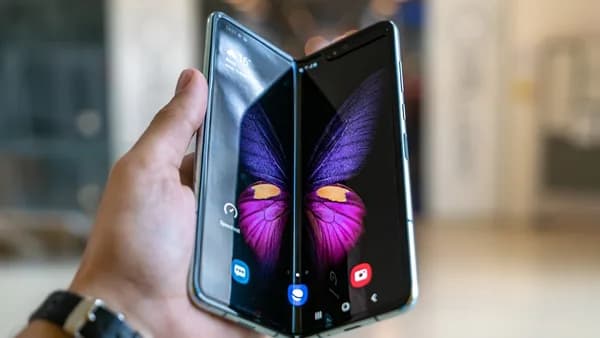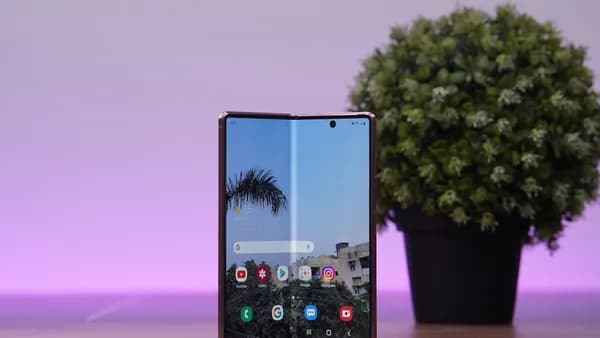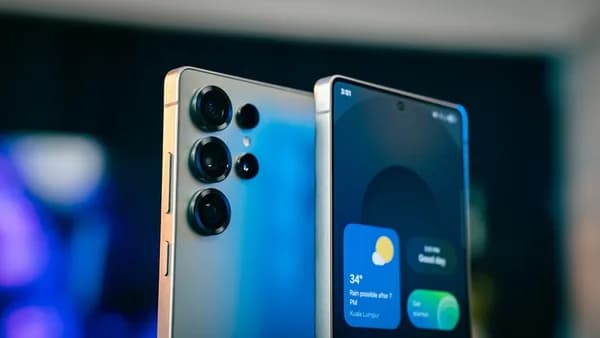
The leaked Galaxy Z Fold 8 starts at $1,899 in the U.S., yet reportedly drops the 200-megapixel camera and 3x telephoto that help make Samsung’s Fold line feel truly flagship.
If accurate, this is not just Samsung adding a shinier Galaxy Z Fold 8 Ultra. It is Samsung redefining the standard Fold as the one buyers settle for. The latest specs, reported by Notebookcheck, point to a split where the Ultra gets the clearer claim to being the true Galaxy Z Fold 7 successor, while the smaller Fold 8 gets the privilege of still costing foldable money.
That is the problem. Foldable buyers already accept premium pricing and foldable display trade-offs. If Samsung now moves core flagship features behind an Ultra label, the company risks making “innovation” feel like an invoice.
Samsung’s leaked Galaxy Z Fold 8 Ultra strategy makes the regular Fold 8 look deliberately compromised
The leaked lineup suggests Samsung is not merely refreshing a product. It is building a pricing ladder.
According to the report, the Galaxy Z Fold 8 is expected to start at 1,999 Euros in Europe, $2,699 in Australia, and $1,899 in the U.S. The Galaxy Z Fold 8 Ultra would start higher: 2,199 euros, $2,999 in Australia, and $2,099 in the U.S.
That $200 gap in the U.S. matters less than what Samsung may be attaching to it. The standard Fold 8 reportedly gets a 50-megapixel main camera with OIS and an f/1.8 aperture, but not the 200-megapixel main camera. It also reportedly loses the 3x telephoto. The Ultra keeps both.
Notebookcheck’s framing is unusually blunt:
“Samsung has essentially neutered the more compact foldable to the bare essentials.”
That may sound harsh. It also matches the spec split. If the leak holds, Samsung is not asking buyers to pay extra for luxury flourishes. It is asking them to pay extra to avoid obvious omissions.
The leaked Galaxy Z Fold 8 specs suggest Samsung wants buyers to pay twice for premium foldables
The reported hardware separation is not cosmetic. It cuts through screen size, camera system, battery, and positioning.
The Galaxy Z Fold 8 reportedly uses a 7.6-inch Dynamic AMOLED 2x inner display at 2,448 x 1,848 pixels, with a 120 Hz refresh rate and 4:3 aspect ratio. Its cover display is listed as 5.5 inches, also Dynamic AMOLED 2x, also 120 Hz, at 1,972 x 1,248 pixels.
The Galaxy Z Fold 8 Ultra, by contrast, reportedly gets an 8-inch AMOLED panel at 2,504 x 2,256 pixels, keeping a 3:2 aspect ratio. Its cover display is 6.5 inches. Both displays refresh at up to 120 Hz.
| Reported spec | Galaxy Z Fold 8 | Galaxy Z Fold 8 Ultra |
|---|---|---|
| Inner display | 7.6-inch, 2,448 x 1,848 | 8-inch, 2,504 x 2,256 |
| Cover display | 5.5-inch, 1,972 x 1,248 | 6.5-inch |
| Main camera | 50MP, OIS, f/1.8 | 200MP, f/1.7 |
| Telephoto | Not listed | 10MP, 3x, f/2.4 |
| Ultra-wide | 50MP, f/1.9 | 50MP, f/1.9 |
| Battery | 4,800 mAh, 45W | 5,000 mAh, 45W |
| U.S. starting price | $1,899 | $2,099 |
This is where buyer frustration becomes predictable. The Galaxy Z Fold line has been Samsung’s most advanced mainstream phone family. But if the non-Ultra Fold no longer gets the full flagship treatment, the brand meaning changes.
Samsung would be following a familiar playbook: create a top tier, then make the old “best” tier feel suspiciously incomplete. That may work in a spreadsheet. It is harder to defend in a product category where the entry price is already punishing.
A stripped-down Galaxy Z Fold 8 would be hard to justify at foldable flagship prices
A foldable phone is already a negotiation. You accept a thicker device, a hinge, a more complicated display stack, and durability questions that slab-phone buyers rarely think about.
Samsung appears to be addressing part of that with Flex Titanium, the new display technology that Notebookcheck says Samsung has officially unveiled. If it produces a more durable foldable with better crease control, that is a real improvement. We have already covered why the Galaxy Z Fold 8 Ultra crease leak matters, because crease control is one of the few foldable upgrades users can see every time they open the device.
But the standard Fold 8 cannot survive on form factor alone. At $1,899, buyers will expect a top-tier camera system, premium displays, the best available Samsung chipset, strong battery performance, and productivity-first software.
Some of that is present. The Fold 8 reportedly uses the Snapdragon 8 Elite Gen 5 for Galaxy, with 12 GB of RAM and 256 GB, 512 GB, or 1 TB of storage. The 1 TB version reportedly gets 16 GB of RAM. The battery also improves versus the Galaxy Z Fold 7, moving from 4,400 mAh and 25 watts to 4,800 mAh and 45-watt fast charging.
Yet the camera cuts are hard to ignore. As we noted in Galaxy Z Fold 8 Drops 200MP Camera but Keeps Top Price, removing headline camera hardware while keeping premium pricing gives critics an easy target.
A cheaper foldable with compromises is one thing. A near-$2,000 foldable that looks designed to push you toward the $2,099 model is another.
The Galaxy Z Fold 8 Ultra leak exposes Samsung’s growing dependence on upsell psychology
The Ultra model does not need to be dramatically better to reshape buyer perception. It only needs to exist beside the standard Fold 8.
That is the power of a “good, better, best” ladder. Once the best option appears, the middle option is judged by what it lacks. The standard Fold 8 may be capable. It may even be the more comfortable device for users who want a compact foldable. But at launch, buyers will compare it directly against the Ultra and ask why the cheaper expensive phone lost the 200MP sensor and 3x lens.
Samsung’s reported segmentation also makes the Ultra feel like the “real” successor to the Fold 7. Notebookcheck says the Galaxy Z Fold8 Ultra is “the real successor to the Galaxy Z Fold7,” while the compact model gets a wider form factor and a thinner design.
That thinner build is not trivial. The Fold 8 is expected to measure 4.5 mm thick and weigh 202 grams, while the Ultra reportedly measures 4.1 mm and weighs 218 grams. Both are listed with IP48 water and limited dust resistance.
Still, thinness does not erase the upsell. If Samsung can lift average selling prices by making loyal Fold buyers feel one model short of satisfied, the move may work commercially. The risk is trust. Fold users did not buy into this line to be told the definitive Fold now lives one rung higher.
Samsung can argue the Galaxy Z Fold 8 Ultra gives power users the choice they asked for
There is a strong counterargument, and Samsung will almost certainly lean on it: segmentation is not automatically anti-consumer.
A larger Ultra foldable can serve a different buyer. Some users want the biggest inner screen, the sharpest panel, the strongest camera stack, and the largest battery Samsung can fit. The Ultra reportedly delivers an 8-inch inner display, a 200-megapixel main camera, a 3x telephoto, a 50-megapixel ultra-wide, and a 5,000 mAh battery.
That is a coherent pitch. The same Snapdragon 8 Elite Gen 5 for Galaxy appears across both devices, and both reportedly offer up to 1 TB storage with 16 GB RAM on the top configuration. Product separation can make sense if the smaller Fold 8 is intentionally more portable and clearly positioned as such.
The colors also reinforce that Samsung is thinking in differentiated identities. The Fold 8 reportedly comes in Graphite, Cream, Lavender, and a Samsung online exclusive Pistachio. The Ultra is listed in Graphite, Cream, Violet Shadow, and exclusive colors Green Shadow aka Violet Green.
Choice is fine. Artificial scarcity of flagship basics is not.
The real problem is not the Galaxy Z Fold 8 Ultra—it is what Samsung may remove from the standard Fold
The Ultra label is defensible if it adds genuinely extra capability. A bigger display, more screen space, and specialized camera hardware can justify a higher tier.
But there is a line between premium additions and essential flagship features. On a device expected to start at $1,899, a missing telephoto lens and downgraded main camera do not feel like harmless differentiation. They feel like a billable restoration.
Samsung’s messaging at Galaxy Unpacked will matter. If the company frames the standard Fold 8 as a more compact, more practical foldable with meaningful design advantages, buyers may accept the split. If it simply presents the Ultra as the one with the features everyone expected, the standard Fold 8 becomes a decoy SKU.
That concern is sharpened by Samsung’s own emphasis on titanium and crease control. We have already seen the company’s foldable story lean hard into materials in $2,099 Galaxy Z Fold 8 Bets on Titanium to Crush Crease. Better displays and stronger construction are exactly where foldables should advance.
They should not become cover for removing other flagship hardware.
Galaxy Z Fold buyers should demand innovation, not an Ultra tax
Buyers should wait for final specs, final pricing, and full reviews before rewarding this strategy. Leaks can be wrong. Retailer material can change. Samsung may still clarify the logic in a way that makes both models feel purposeful.
But the test is simple: compare the Galaxy Z Fold 8 not only against the Galaxy Z Fold 8 Ultra, but against what previous Fold buyers believed the line represented. If the standard model is no longer the definitive Samsung foldable, Samsung needs to say that plainly.
Reviewers should press on the same point. Does the smaller Fold 8 gain enough in portability, battery, display durability, and charging to offset the camera cuts? Does the Ultra’s 5,000 mAh battery and 45-watt charging justify its size and price? Do the 1,200 charge cycles listed in the EPREL EU-database raise concerns for both models? And does Samsung’s claimed 51-hour battery life for the Ultra hold up outside controlled testing?
The Fold line should be Samsung’s argument for the future of mobile computing. If these leaks are accurate, buyers should make Samsung prove that future is not just a new bill for features that should have been included.
The Bottom Line
- Samsung may be moving core flagship Fold features behind a more expensive Ultra tier.
- The standard Fold 8 could still cost premium foldable money while losing key camera hardware.
- A $200 U.S. price gap may push buyers toward the Ultra if they want the true flagship experience.