Claude could become the first major test of Apple Wallet’s Digital ID outside the airport line. The users most affected would be people asked to prove age, identity, or citizenship to access an AI model — without handing a passport scan to yet another verification vendor.
That possibility is not confirmed by Anthropic. But according to 9to5Mac , Apple’s Digital ID may fit the exact problem Anthropic now faces: how to verify who can use certain Claude models after export controls disrupted access to Fable 5 and Mythos 5.
Why Claude users could be the first big online test for Apple Wallet Digital ID
The immediate issue is not airport security. It is controlled access to AI.
Per 9to5Mac, Anthropic’s Fable 5 and Mythos 5 models have been disabled for all customers after the US government added export controls for the models. The source says this followed a reported jailbreak, and that the models are now unavailable to foreign nationals, whether they are inside or outside the US.
That creates a verification problem. If Anthropic wanted to bring back access for eligible users, it would need a way to confirm identity or citizenship status with more confidence than a self-attested checkbox.
Could Apple Wallet become that verification rail?
9to5Mac’s argument is narrow but important: Anthropic could choose a traditional ID verification provider, or it could use Apple’s Digital ID feature. The Apple route is speculative. There is “nothing to suggest that Anthropic will use Apple’s digital ID feature,” the source says. But Anthropic has used an Apple identity-related API before: Apple’s built-in age verification API.
For readers tracking Apple’s broader software direction, this is separate from UI and assistant changes we have covered in iOS 27 Lets Siri AI Steal Your iPhone Swipe After 15 Years and iOS 27 Bets on Fixing Your iPhone Before AI Takes Over. This story is more specific: whether Apple Wallet can become a trusted identity layer for apps that need to verify users.
What Apple Wallet Digital ID gives iPhone users that state IDs do not
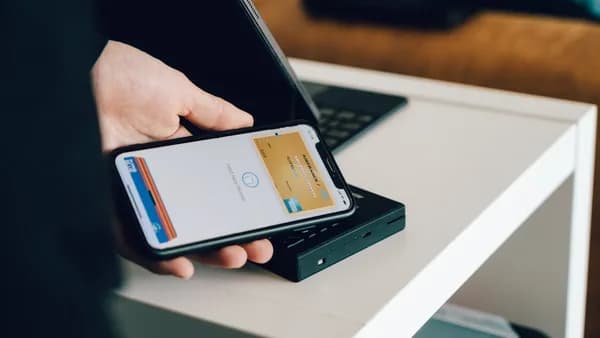
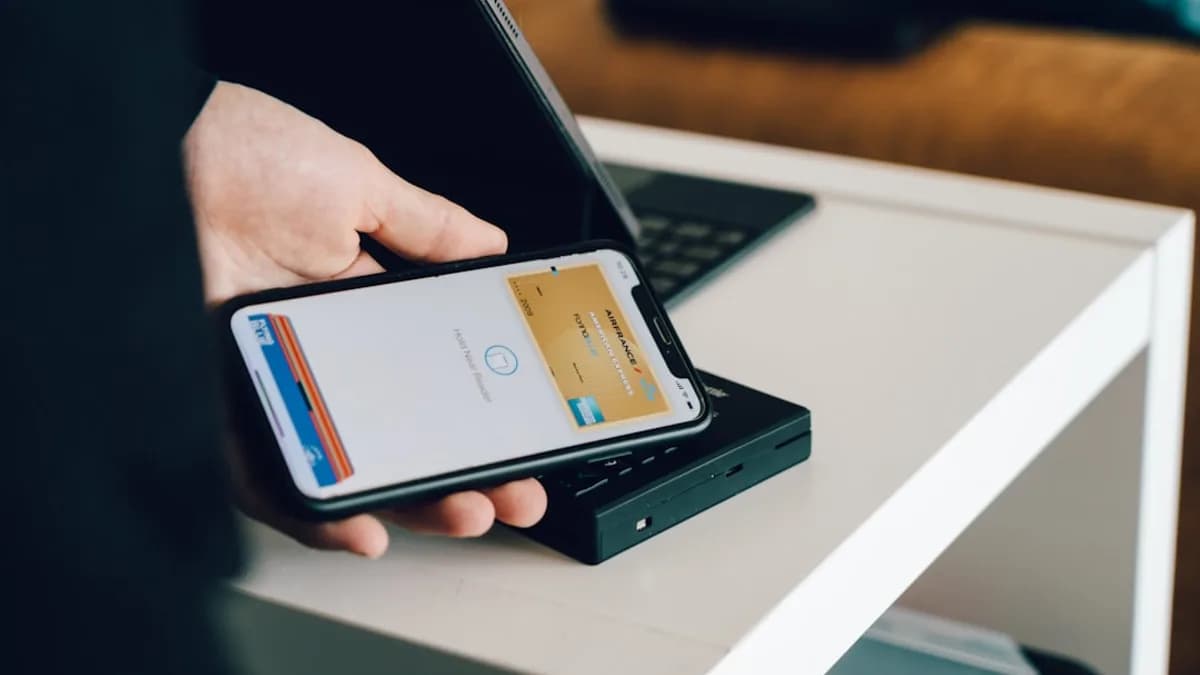
Apple Wallet Digital ID lets iPhone users create an identity credential in Wallet using a U.S. passport. That makes it different from driver’s licenses and state IDs in Wallet, which Apple has been rolling out slowly on a state-by-state basis.
9to5Mac frames the distinction plainly: driver’s licenses in Wallet depend on state support; passport-based Digital ID is broader because anyone with a passport can use it.
The current public use case is familiar: presenting Digital ID at supported TSA checkpoints in airports. But Apple’s pitch was never limited to travel. The source says Apple had a wider scope in mind, including digital age and identity verification.
Here is the practical split:
| Wallet identity option | Source document | Rollout constraint | Current or stated use |
|---|---|---|---|
| Digital ID | U.S. passport | Available to eligible passport holders | TSA checkpoints; broader digital identity and age verification scope |
| Driver’s license/state ID in Wallet | State-issued ID | Depends on state-by-state support | Limited by state availability |
| Persona verification in Claude | Traditional identity verification flow | Referenced in Claude privacy policy | 9to5Mac says it appears tied to fraudulent activity handling, not the Fable/Mythos rollout |
The important point for builders: Digital ID is not just another Wallet card. It is Apple trying to make identity verification available through the same iPhone surface people already use for payments, tickets, and IDs.
How Claude builders might use Digital ID without a confirmed integration
A real Claude integration has not been announced. So the only grounded way to describe it is as a possible path, not a product plan.
If Anthropic chose Apple’s route, the broad purpose would be identity or age verification through a Wallet credential rather than through a separate document-upload process. 9to5Mac specifically raises the possibility of using Apple’s feature for nationality verification, because Fable 5 could theoretically return if Anthropic could ensure only US citizens were able to use the model.
That is different from saying Claude will ask every user for a passport. The source does not say that. It also does not describe what fields Anthropic would request, what Apple would share, or how the user interface would look.
The strongest evidence that Anthropic might be open to an Apple-based verification path is precedent. 9to5Mac says Anthropic was one of the few companies to use Apple’s built-in age verification API, which lets developers verify users’ ages without handling that process themselves.
There is also a separate Claude privacy-policy thread. 9to5Mac says Claude updated its privacy policy a few months ago to include references to identity verification using Persona, though an Anthropic employee said that update was about a limited fraud-related process.
“Hi, this is an update we rolled out in April that applies only to a small subset of users flagged for potentially fraudulent activity instead of outright banning them. It was updated on June 17 as an update to the appeals process. It's unrelated to the Fable or Mythos rollout.”
That quote matters because it narrows the current evidence. Persona references exist, but Anthropic has pushed back on tying them to the Fable or Mythos situation.
Why an AI model might need stronger identity checks at all
Claude’s case shows the tension around powerful AI systems: access rules can change faster than consumer verification tools.
According to the source, Fable 5 was released under the assumption that it would be safeguarded from potentially dangerous behavior. A jailbreak was reportedly found. Then export controls hit, and Fable 5 and Mythos 5 became unavailable to foreign nationals.
That chain creates a hard operating question for Anthropic: if access depends on citizenship or nationality, how does the company verify eligibility without turning every account into a high-friction document review?
A Wallet-based option could appeal because it points verification toward a credential already stored on a device. 9to5Mac’s view is that this could keep personal information away from “some shady third-party identity verification service.” That is the privacy argument. The compliance argument is simpler: if a model is restricted to a defined class of users, the platform needs a reliable gate.
But there are limits. 9to5Mac names three obvious exclusions:
- No iPhone: users without an iPhone would be left out of an Apple Wallet-based path.
- No passport: users without a passport could not use passport-based Digital ID.
- Limited state ID support: users relying on driver’s licenses in Wallet are constrained by the 14 states plus Puerto Rico that support the feature, per the source.
So Apple Wallet could be a clean path for some users and a dead end for others.
A real-world Claude scenario: the useful version and the unfair version
Imagine a 19-year-old iPhone user trying to access a Claude feature that requires proof they are an adult or eligible under a restricted-access rule. In the best version of this scenario, Claude offers Apple Wallet Digital ID as one verification method. The user proves the required attribute through Wallet instead of sending a passport image to a third-party service.
That is the user-friendly version. It is faster in concept, keeps the interaction inside a familiar Apple-controlled surface, and reduces the number of parties involved in the identity check.
The unfair version is just as obvious. A user without a compatible iPhone, without a passport, or outside supported Wallet ID coverage may face a different route — or no route at all. If Anthropic made Apple Wallet the only path, that would turn device ownership into an access gate.
The more realistic implementation, if it ever happens, would likely need alternatives. Apple Wallet could be one option, not the whole identity system.
What Apple, Anthropic, and users should watch next
A Claude integration would validate Apple’s bigger Wallet ambition: identity, not just payments and boarding passes. For Anthropic, it could offer a way to reopen access to restricted models if the company can satisfy the rules behind those restrictions. For users, it would test whether digital identity feels safer than document upload — or just more invasive because it ties real-world identity to AI usage.
The next signal is not a marketing slogan from Apple. It is whether Anthropic announces any new verification method tied to Fable 5, Mythos 5, or future restricted Claude models.
If that happens, watch three details closely:
- Scope: Is verification required for all Claude users, or only specific models/accounts?
- Method: Does Anthropic use Persona, Apple Wallet, or multiple options?
- Access: Are non-iPhone users and users without passports given a workable alternative?
Until Anthropic confirms a plan, Apple Wallet Digital ID in Claude remains a credible possibility, not a launch. But the use case is clear: AI companies may need stronger identity gates, and Apple now has a passport-based credential sitting on the iPhone, waiting for a mainstream app to prove whether that model can work online.
Impact Analysis
- Export controls on Anthropic’s Fable 5 and Mythos 5 create a new need for stronger user verification.
- Apple Wallet Digital ID could become useful beyond airports if adopted for online AI access checks.
- Users may benefit from proving eligibility without sharing sensitive identity documents with more vendors.