14 U.S. states plus Puerto Rico already support driver’s licenses or state IDs in Apple Wallet, and Utah and Virginia now appear to be closer to joining that list.
That is the real signal beneath the latest finding: Apple’s digital ID rollout is still slow, fragmented, and state-dependent, but it is no longer just a curiosity buried inside Wallet. References to Utah and Virginia were found in Apple’s backend by MacRumors’ Aaron Perris, according to 9to5Mac . If those references translate into launches, Apple Wallet IDs would move another step toward becoming routine identity infrastructure for U.S. iPhone users.
“Today I found a reference in Apple's backend to Utah possibly being the next state to get a Driver's License in Apple Wallet
In May, I also found a reference to Virginia, but that is not live yet.”
The tension is obvious. Apple Wallet is becoming more than a place for cards, passes, and tickets. It is becoming a credential layer. But driver’s licenses are public documents issued under state authority, and putting them inside a private technology platform raises harder questions than adding a boarding pass.
2 backend references point to Apple’s state-by-state ID strategy
The reported expansion is not an official launch. It is a signal from Apple’s backend that Utah and Virginia may be preparing to support driver’s licenses and state IDs in Wallet.
That distinction matters. Apple can prepare the technical side, but availability still depends on the states. Driver’s licenses are not issued nationally in the U.S., so Apple cannot flip one nationwide switch. It needs state-by-state participation, DMV coordination, and local approval before residents can add IDs.
That explains why the rollout has taken years. Arizona launched in March 2022, followed by Maryland in May 2022, Colorado in November 2022, and Georgia in May 2023, according to MacRumors. The feature then expanded through more states across 2024, 2025, and 2026.
For Apple, the strategic value is clear, but limited by state adoption. Wallet becomes stickier when it holds credentials people may need at airports, businesses, and in apps. For users, though, the experience remains uneven: an iPhone user in one state may be able to add an ID, while a friend across a state line may not.
That fragmentation is not unusual for Apple platform changes. The company often pushes technical transitions that only become meaningful when users, institutions, or partners catch up. MLXIO readers have seen similar friction in other Apple shifts, including macOS 28 locking out encrypted HFS+ drives and the possible timing changes around Apple’s iPhone 18 roadmap.
14 states, Puerto Rico, and more than 250 TSA airports show both progress and limits
The current footprint is meaningful, but still far from universal.
Apple Wallet driver’s licenses and state IDs are available in 14 states: Arizona, Maryland, Colorado, Georgia, Ohio, Hawaii, California, Iowa, New Mexico, Montana, North Dakota, West Virginia, Illinois, and Arkansas. The feature is also available in Puerto Rico.
Six more states have previously signed on to adopt the feature without disclosed timeframes: Connecticut, Kentucky, Mississippi, Oklahoma, Utah, and Virginia. The new backend references matter because they suggest Utah and Virginia may be moving from “signed on” toward actual launch readiness.
| Category | Apple Wallet ID status |
|---|---|
| Live states | Arizona, Maryland, Colorado, Georgia, Ohio, Hawaii, California, Iowa, New Mexico, Montana, North Dakota, West Virginia, Illinois, Arkansas |
| Live territory | Puerto Rico |
| Signed on, not yet live | Connecticut, Kentucky, Mississippi, Oklahoma, Utah, Virginia |
| Reported backend references | Utah, Virginia |
The usage footprint is broader than the state list suggests, but still constrained. Apple Wallet IDs are accepted at TSA checkpoints in more than 250 U.S. airports for domestic travel. MacRumors lists airports including BWI, DCA, IAD, PHX, DEN, ATL, SFO, LAX, ORD, MDW, RIC, ORF, ROA, and PHF, among others.
But acceptance at TSA does not equal universal acceptance. The supplied reporting states that Apple Wallet IDs are not accepted by law enforcement and still lack many other use cases. Users should keep carrying a physical ID.
That is the central adoption metric: not just how many states support enrollment, but how many real-world verification points accept the credential.
Wallet ID is convenient, but the physical license still wins on coverage
For residents of Utah and Virginia, the practical upside would be straightforward if support goes live: they could add a driver’s license or state ID to Apple Wallet and present it from an iPhone or Apple Watch where accepted.
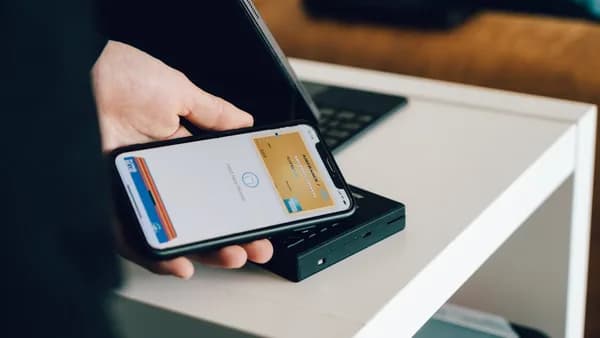
The setup flow is already defined in supported states. Users open Wallet, tap the plus sign, choose Driver’s License and ID Cards, select their state, and follow the prompts. That makes enrollment feel like adding any other Wallet credential, even though the underlying authority still comes from the state.
The experience differs by use case:
- Airports: TSA acceptance exists at more than 250 U.S. airports, but travelers are told to check TSA signage.
- Apps: Apple Wallet IDs can be used for identity or age verification in select apps.
- Businesses: Some businesses can accept Wallet IDs for proof of identity or age.
- Law enforcement: The supplied reporting says Apple Wallet IDs are not accepted by law enforcement.
- Backup ID: A physical license remains necessary.
Apple also now offers another path for users in unsupported states: a Digital ID based on a U.S. passport, available with iOS 26.1 or watchOS 26.1 and later. That passport-based Digital ID can be presented at the same participating TSA checkpoints for domestic travel identity or age verification. It is not a physical passport replacement and cannot be used for international travel.
Apple’s ID rollout is slower because governments control the credential
The pace looks slow compared with many Apple software features, but that is baked into the product. A driver’s license is not an Apple-issued credential. It is a state credential displayed through Apple Wallet.
That creates a three-sided rollout problem:
- Apple has to support the credential inside Wallet.
- States and DMV offices have to approve and implement support.
- Verification points have to accept the digital ID in practice.
MLXIO analysis: this is why the Utah and Virginia backend references are more meaningful than a generic “coming soon” label, but less meaningful than a launch date. They suggest Apple has done some preparatory work. They do not prove when residents will be able to enroll, or where the ID will be accepted on day one.
The broader pattern supports that read. Apple Wallet IDs began with Arizona in March 2022 and have grown through individual state launches over several years. The feature is expanding, but the rollout remains uneven by design.
The next test is not enrollment — it is acceptance
If Utah and Virginia go live, Apple will add two more pieces to its mobile ID map. That would strengthen Wallet’s role as a personal credential hub, but it would not make physical licenses obsolete.
The evidence that would confirm a stronger shift is not just more state names on Apple’s list. It would be wider acceptance across TSA checkpoints, businesses, apps, and state services. The evidence that would weaken the thesis is a pattern where users can enroll easily but still have few places to present the ID.
For now, the practical takeaway is simple: Apple Wallet driver’s licenses are expanding, but they remain a secondary credential. Useful at supported checkpoints. Promising for identity verification. Not yet a replacement for the card in your pocket.
Impact Analysis
- Apple Wallet IDs are moving closer to mainstream use as more states prepare support.
- The rollout remains fragmented because driver’s licenses are issued and approved state by state.
- Putting government IDs inside a private tech platform raises bigger questions about identity, access, and control.