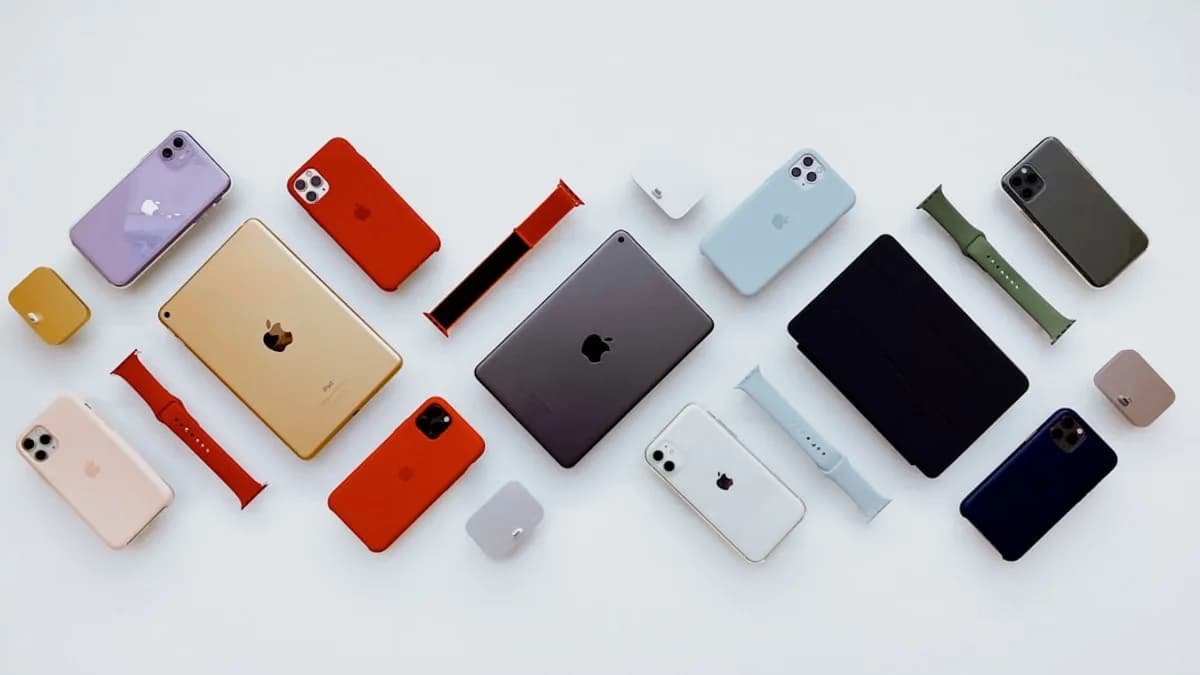
Memory-price pressure should be a drag on consumer hardware. Apple may instead turn it into a share-taking year across its biggest device lines.
That is the tension inside Counterpoint Research’s latest forecast, as reported by 9to5Mac : Apple is projected to gain market share in smartphones, laptops, tablets, and smartwatches in 2026, with record share expected in three of those categories.
Apple’s 2026 share surge points to cross-device gravity, not just stronger device sales
The headline number is not one product breaking out. It is the spread.
Counterpoint expects iPhone, iPad — ahead of a potentially squeezed 2027 iPad Pro launch — and Mac to hit record market share levels in 2026, while Apple Watch also gains share. That matters because the report does not frame the year as a broad hardware boom. It points to stress in parts of the market, especially from rising memory prices, inventory correction, and declining shipments outside Apple.
That creates a sharper read on the forecast. Apple may not need explosive unit growth to strengthen its position. In smartphones, Counterpoint expects iPhone shipments to remain flat, yet Apple’s share still rises because other major manufacturers are expected to fall harder.
“Apple’s iPhone shipments are likely to remain flat in 2026, while most of the other key OEMs will see double-digit declines.”
MLXIO analysis: this is the core signal. Apple’s advantage is not simply demand acceleration. It is resilience when rivals have less room to absorb component-cost pressure, pass along price increases, or protect margins without losing buyers.
Counterpoint’s forecast shows Apple gaining in four categories, with records in three
Counterpoint’s 2026 estimates show Apple taking share in every major category named in the report:
| Category | 2025 share | 2026 forecast | Change | Record share? |
|---|---|---|---|---|
| iPad / tablets | 35% | 39% | +4 points | Yes |
| iPhone / smartphones | 23% | 25% | +2 points | Yes |
| Mac / laptops | 9% | 12% | +3 points | Yes |
| Apple Watch / smartwatches | 20% | 23% | +3 points | Not specified as record |
The most striking part is the gap between Apple’s trajectory and the broader market.
Counterpoint expects the tablet market to decline in 2026 because of “inventory correction and memory shortages.” Yet Apple is forecast to rise, helped by new base iPad and iPad mini models that keep the lineup active across price tiers.
For laptops, the related Counterpoint write-up says Mac shipments are projected to grow 23% YoY, while the overall laptop market declines 11%. That is where the MacBook Neo becomes central to the forecast.
For smartwatches, Counterpoint sees the overall category growing just 1%, with Apple outpacing it because of the full-year availability of Apple Watch Ultra 3 and Apple Watch SE 3.
A useful distinction: these figures are market-share forecasts, not profit-share forecasts. Apple can gain share without revealing how much margin it captures in each category. The report does, however, stress that premium segments can absorb more price shocks, and that affluent consumers are less affected by price increases.
The iPhone is flat, but Apple still wins more of the smartphone market
The smartphone call is the cleanest example of share gains without a shipment boom.
Counterpoint expects Apple to reach its highest-ever smartphone share at around 25% in 2026, even though iPhone shipments are likely to remain flat. The driver is relative performance: other key manufacturers are expected to see double-digit declines.
Counterpoint also points to product timing. The iPhone 18 Pro series is expected to perform better than the iPhone 17 Pro series, while the iPhone 17 model is expected to keep selling strongly “in the absence of the iPhone 18 in 2026.”
That gives Apple two advantages at once:
- Mix: Pro models support the premium end, where price pressure is easier to absorb.
- Continuity: The iPhone 17 can keep filling demand if no standard iPhone 18 appears in 2026.
- Timing: Rivals face price increases while Apple has not raised iPhone prices yet, according to the report.
MLXIO analysis: the smartphone forecast is less about Apple suddenly expanding the market and more about competitors losing footing in a cost shock. Flat shipments can still translate into record share if the denominator shrinks.
This is not a classic one-product supercycle
The source material does not provide quantified comparisons with past iPhone cycles, 5G upgrades, or pandemic-era demand. So the stronger conclusion is narrower: Counterpoint is not describing a single-device breakout. It is describing simultaneous share gains across Apple’s hardware base.
That makes 2026 different from a simple “new iPhone drives everything” narrative.
The iPad case depends on refresh breadth. The Mac case depends on the MacBook Neo and market contraction elsewhere. The Apple Watch case depends on full-year availability of newer models. The iPhone case depends on premium resilience and rivals’ declines.
That pattern points to a cross-device retention story. Counterpoint Research Director Tarun Pathak captured the logic in the related source material:
“This year defines Apple’s unique resilience within the industry. The multi-segment market share gains also mean a compounding impact on the company’s ecosystem strength.”
The word “compounding” is doing the work. Each product category reinforces the others. More iPhones can support more Watches. More Macs and iPads can deepen software and services attachment. More devices in one household or enterprise account can make switching less attractive.
Rivals are unnamed, but the pressure point is clear
The supplied report does not name Samsung, Lenovo, Huawei, or specific budget brands. It refers more broadly to “other key OEMs” and “most of the other key OEMs.”
That limits how far the competitive analysis can go. Still, the mechanism is explicit: rising memory prices are forcing many manufacturers to consider price increases to protect margins. Apple, by contrast, benefits from premium positioning and has not raised iPhone prices yet, according to Counterpoint.
The before-and-after frame is blunt:
- Assumption: Higher component costs pressure all hardware makers similarly.
- Counterpoint’s forecast: Apple gains share while others face sharper shipment declines.
- Reason given: Premium margins and affluent customers help Apple absorb more of the shock.
- Open question: Whether Apple can keep sparing iPhone and Apple Watch if component shortages persist.
Readers following the memory-cost thread can also read MLXIO’s Apple Bets on Blacklisted CXMT as Memory Costs Bite, though Counterpoint’s forecast itself does not hinge on any single supplier named in that headline.
Investors get scale optionality; consumers get higher switching costs
For investors, the forecast supports a simple interpretation: Apple’s hardware base may become more valuable even if some end markets shrink. Share gains across iPhone, iPad, Mac, and Apple Watch can increase the surface area for services, accessories, upgrades, and future device bundles.
That does not mean the report proves services revenue growth or margin expansion. It does not provide those numbers. But it does support the idea that broader installed hardware reach can raise customer lifetime value.
For consumers, the tradeoff is different. Apple’s cross-device model can be convenient and durable. It can also raise switching costs. Counterpoint’s related analysis says it will become “increasingly difficult for competitors to make an Apple user switch to their operating system.”
Developers and enterprise buyers may read the forecast similarly. A larger Apple device base can improve the economics of supporting Apple platforms. But again, the supplied source does not provide developer revenue figures, enterprise adoption rates, or app-store metrics.
The next test is whether share turns into AI and services pull
The forecast sets up a measurable 2026 test. If Counterpoint is right, Apple will not just defend premium hardware. It will convert component-market stress into record share across smartphones, tablets, and laptops.
The evidence that would confirm that thesis is specific:
- iPhone reaches around 25% share while shipments stay flat.
- iPad rises to 39% despite tablet-market decline.
- Mac reaches 12% share while the laptop market contracts.
- Apple Watch climbs to 23% as the broader smartwatch market grows just 1%.
The evidence that would weaken it is just as clear: Apple raises prices in the currently spared categories, new iPad and Mac models fail to hold demand, or rival shipment declines prove less severe than Counterpoint expects.
The bigger strategic question is whether Apple turns this hardware share into stronger software and services attachment. Hardware share gives Apple more chances to place health features, subscriptions, and cross-device services in front of users. It does not guarantee users will care.
For now, Counterpoint’s forecast says Apple’s 2026 strength is not about one breakout product. It is about four product lines moving in the same direction while much of the market absorbs a cost shock. That is the watch item.
The Bottom Line
- Apple is expected to gain share across its major hardware lines even as component costs pressure the broader market.
- Flat iPhone shipments still translating into higher share suggests rivals may be weakening faster than Apple.
- Record share for iPhone, iPad, and Mac would strengthen Apple’s ecosystem advantage across devices.