Minimalism, But Make It Full-Frame: The Sigma BF’s Radical Shrink
The Sigma BF doesn’t just shrink the size of a full-frame camera—it all but erases the genre’s usual bulk. Milled from a single block of aluminum, the BF’s unibody build is a direct challenge to the sprawling ergonomics and heavy shells that have defined full-frame bodies for decades. This isn’t just a design flourish: Sigma’s approach strips the camera down to its essentials, offering a visual and physical minimalism that targets photographers who want serious image quality without the drag of excess hardware. The BF stands apart in a market where most full-frame cameras still favor grip size, battery heft, and ports over true portability. That deliberate minimalism, as shown in a teardown video, isn’t just skin-deep—it shapes the entire engineering philosophy of the product, according to Notebookcheck.
For users, this means a camera that can slip into a jacket pocket—a rarity for a sensor of this size. Sigma is clearly staking out a niche: shooters who want the image latitude and depth of a full-frame sensor, but with the design discipline and subtlety that street and travel photographers crave. MLXIO analysis: While the BF won’t replace high-speed, grip-heavy pro bodies in the studio or on the sidelines, it reframes what a full-frame camera can be—and who it’s for.
Inside the Sigma BF: What the Teardown Actually Shows
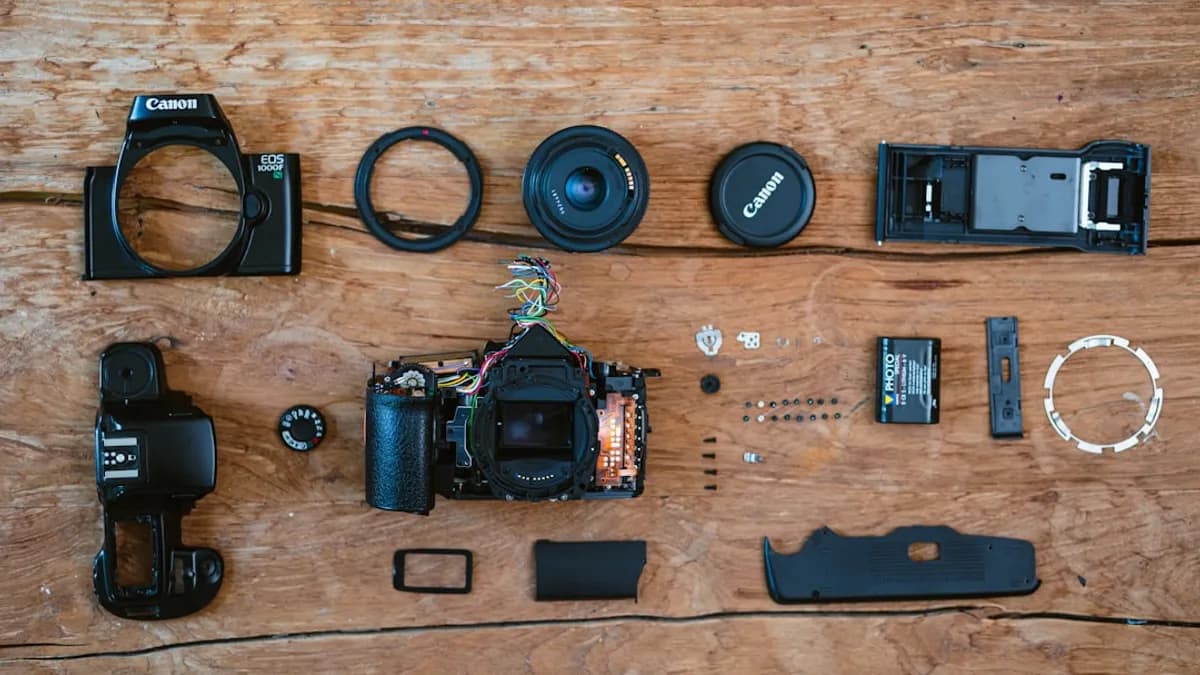
The teardown video cited by Notebookcheck cracks open more than just a technical curiosity. With the camera’s dense, compact form, the teardown reveals a design that makes repair surprisingly accessible. The source notes that repairs are “easy to carry out,” a claim that stands out in an industry notorious for glued-shut, warranty-voiding cases.
What does this mean in practice? The BF’s construction allows for relatively straightforward disassembly, especially given its small footprint. The aluminum unibody, rather than being a fortress, is engineered to open up without resorting to destructive prying or proprietary tools. This suggests a sequence of internal layers—likely including modular boards and accessible fasteners—though the source doesn’t detail their exact arrangement. The key takeaway: Sigma has balanced compactness with serviceability, a feat rarely attempted at this end of the market.
MLXIO interpretation: In a full-frame segment where most brands seal their cameras to maximize weather resistance (and, arguably, to discourage third-party repairs), Sigma’s design is a statement. They’re betting that a minimalist camera shouldn’t come at the cost of repairability.
Where the Data Stops: Consumer Preferences and Market Impact
Here’s where the facts run out. The supplied sources don’t offer hard numbers on consumer demand for compactness or repairability in the full-frame segment. There’s no spreadsheet of market share, no survey results, no teardown cost comparisons. Without specification tables or teardown step counts, any direct comparison with rivals—whether in weight, volume, or repair time—remains speculative.
What is clear is that Sigma is not following the usual playbook. Their willingness to prioritize both minimalism and repair access signals an awareness of shifting expectations, at least among a segment of users. But without public data on how many units are sold, how repair costs compare, or how the BF stacks up in real-world durability, the broader impact on the market is still an open question.
Stakeholder Views: What We Know and What Remains Unsaid
Feedback from professional photographers, repair techs, or industry analysts isn’t supplied in the source. We don’t have direct quotes, user reviews, or repair shop anecdotes on the BF’s design or serviceability. The only grounded claim: the teardown shows the BF is “easy to carry out repairs” on, which implies that at least one third party found the camera approachable to service.
This leaves us with a notable gap. We don’t know if working photographers have embraced the BF’s size, if rental houses find it more durable, or if repair shops see a meaningful difference in service times or costs. Equally, there’s no on-record commentary from industry observers about whether Sigma’s design will push competitors toward similar choices.
History’s Out of Reach: Minimalism and Modularity, Unquantified
The source doesn’t provide historical context, so all we know is that the BF is “one of the most unusual full-frame cameras on the market.” MLXIO interpretation: This positions the BF as an outlier—most full-frame bodies are still large, heavy, and challenging to repair. Without data on past attempts at compact full-frame cameras, or on how modularity has evolved in broader electronics, we can’t chart a lineage or trend. The BF’s approach looks singular for now, not part of a documented movement.
Why Sigma’s Choices Matter—And Where They Could Lead
Here’s the signal in the static: Sigma’s BF design proves that compactness and repairability can co-exist in a high-end product. If the teardown’s claim holds, this undercuts the argument that smaller cameras must be disposable or hostile to repairs. It also hints at a path toward more sustainable electronics in a segment that has long prioritized sealed, disposable units.
But until there’s wider adoption, the BF’s impact remains an open question. Will other manufacturers take note? Will photographers demand similar features elsewhere? The evidence isn’t in yet.
What to Watch: Will the Industry Follow Sigma’s Lead?
The teardown cracks open a possibility: what if more full-frame cameras were designed to be both genuinely compact and user-serviceable? The Sigma BF shows it’s possible—at least in one case. What would confirm a real industry shift? If future models from Sigma or rivals tout not just size and image quality, but also teardown accessibility and repair pathways, the BF’s influence will be clear.
For now, all eyes are on Sigma. If their approach delivers real-world reliability and user satisfaction—especially in terms of repairs—expect the conversation around full-frame camera design to change. If not, the BF may remain a fascinating anomaly: a minimalist camera that dared to open up, when everyone else stayed sealed shut.
Key Takeaways
- The Sigma BF challenges traditional full-frame camera design by prioritizing portability and minimalism.
- Its unique unibody construction allows for a compact size without sacrificing image quality, appealing to street and travel photographers.
- A repair-friendly design sets a new standard in an industry where most compact cameras are difficult to service.