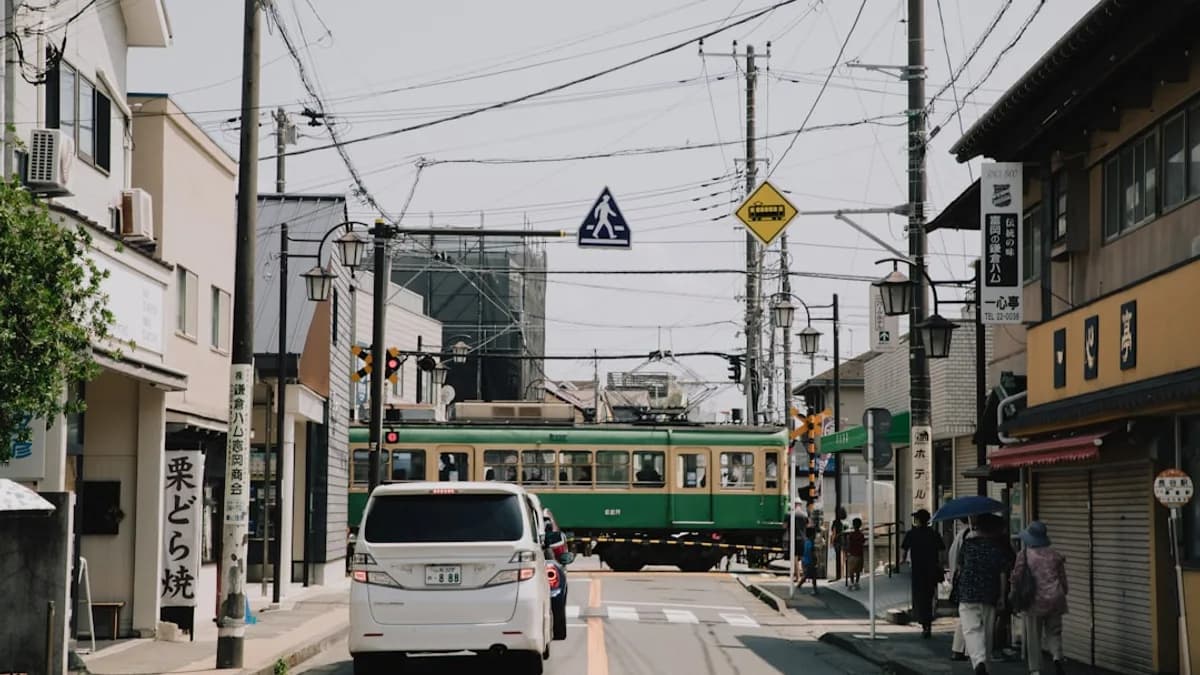
Why Japan’s Complex Landscape and Culture Made Forza Horizon’s Next Setting a Daunting Challenge
Playground Games didn’t hesitate to call Japan the most formidable Forza Horizon location to date. For a studio that’s already reconstructed Colorado, the Côte d’Azur, and the Australian Outback, that’s not hyperbole—it’s a signal of just how complex Japan’s geography and culture are to simulate. The country’s topography swings from urban density in Tokyo to rural mountains, coastal highways, and volcanic valleys, all compacted into a small landmass. Each region isn’t just visually distinct—it carries its own driving culture, architectural quirks, and microclimates. Capturing this without flattening Japan into a stereotype was the real challenge.
The complexity isn’t limited to geography. As The Guardian Tech reports, the team grappled with decades of player expectations shaped by other games. Japanese settings in titles like Persona 4, Shenmue, and Yakuza have painted the country in bold, stylized strokes—quiet rural towns, bustling docks, and neon cityscapes that border on fantasy. These images are so deeply embedded in gaming culture that any new depiction gets scrutinized for authenticity and emotional resonance. Art director Don Arceta’s comment is telling: “With Japan there’s such an expectation [of] what gamers want—it’s a certain version of Japan that they picture.” No other Forza location has come with the same baggage.
Forza Horizon’s developers had avoided Japan for years, not because the fanbase didn’t want it—community requests were relentless—but because they doubted their pipeline could do it justice. Design director Torben Ellert admitted Japan had been “on our shortlist for several games now,” but the team simply “didn’t feel like we were ready.” The hesitation wasn’t about ambition, but about respect for the source material and the risk of missing the mark in a country already mythologized by the genre.
The Role of Exhaustive Field Research and 360-Degree Camera Technology in Capturing Japan’s Authenticity
Playground’s fidelity-first approach borders on obsession. Before a single polygon is modeled, their teams descend on each location with a small arsenal of cameras, drones, and environmental sensors. The goal: to capture not just the look of a place, but its mood, light, and motion. For Japan, this meant thousands of reference photos, extensive video, and—crucially—360-degree camera rigs to record how the landscape unfolds in every direction.
This all-encompassing capture method isn’t just for show. In a country where a single turn can take you from bamboo forest to concrete jungle, static photos miss the nuance of shifting perspectives and ambient detail. The 360-degree cameras let artists reconstruct spaces where the feel of the road, the density of signage, and the interplay of urban and natural features are in constant flux. Sky captures, a Forza Horizon staple, add another layer: the team records hours of real sky at different times and conditions, then uses that data to drive in-game weather and lighting.
The technical challenge scales with the landscape’s complexity. Urban Tokyo required solutions for dense verticality and layered infrastructure, while rural and mountainous areas presented problems in simulating foliage, terrain deformation, and local architecture. Every kilometer meant more data, more iteration, and a heavier burden on the studio’s asset pipeline. But this process is the only way to give players an experience that feels both expansive and true to life—a Japan that’s not just seen, but felt.
Quantifying Authenticity: Data and Metrics Behind Forza Horizon’s Japanese Worldbuilding
While Playground Games doesn’t drop a hard number for photos or hours of footage, the developer’s process is exhaustive and systematic. Past entries saw teams return with tens of thousands of images; for Japan, sources reference the most ambitious data haul to date, including “thousands of photos” and “hours of video,” plus advanced environmental and sky captures The Guardian Tech.
The payoff shows up in the game’s world density and variety. Tokyo, for example, is described as “five times the size of FH5’s Guanajuato,” with navigation that feels organic, not procedurally stitched together. The city’s expressways, residential zones, and car-culture landmarks like the Daikoku parking area aren’t just window dressing—they’re spaces built for repeated exploration, with layered routes and evolving traffic patterns. Seasonal weather isn’t a cosmetic overlay; snow and rain physically alter road behavior, sometimes forcing players to rethink their choice of vehicle or route.
Player benchmarks for authenticity have shifted accordingly. Early reviews highlight the “patchwork of distinct regional identities” and the credible transitions between urban and rural environments, a leap from previous titles where regional boundaries sometimes felt arbitrary. The community’s reaction—especially among fans who have lobbied for a Japan setting for over a decade—suggests that Playground’s data-heavy approach has finally bridged the gap between expectation and execution.
Balancing Gamer Expectations and Reality: Multiple Perspectives on Japan’s Portrayal in Video Games
Japan doesn’t arrive in a vacuum—it lands in a gaming world saturated with stylized versions of the country. Persona’s wistful rural towns, Shenmue’s ports, and Yakuza’s pulsing city nights have built a collective mythology that’s hard to shake. These aren’t documentaries; they’re heightened, sometimes nostalgic visions that trade realism for emotional punch.
Forza Horizon’s team faced a double bind: create a world that’s recognizably Japan, but avoid lapsing into cliché. As Arceta notes, “such an expectation [of] what gamers want” can box in developers, forcing them to choose between accuracy and the dreamlike Japan that lives in players’ heads. The solution was to embrace variety and specificity. Instead of reducing Japan to neon and cherry blossoms, the map shifts tone and texture as you travel—suburban sprawl gives way to mountain passes, rural prefectures feel “quieter and more relaxed” than the urban core, and iconic sites like Daikoku PA are rendered with insider-level detail.
This approach recognizes that authenticity isn’t about documentary realism, but about matching the emotional and cultural truth of a place. Player and critic feedback so far points to respect for this balancing act. Where some open-world games flatten their settings into a single mood or aesthetic, Forza’s Japan feels lived-in, with environments that surprise and challenge the gamer’s expectations. The risk remains—overemphasizing one region or subculture could still alienate fans—but the design process, as described, is structured to mitigate this by foregrounding diversity and local specificity.
Learning from the Past: How Forza Horizon’s Previous Regional Settings Informed the Japan Project
Forza Horizon’s method has always leaned on fieldwork, but Japan forced new levels of rigor. Earlier entries—Colorado’s highways, Australia’s coastlines, Mexico’s colonial cities—were ambitious, but the learning curve was steep. Each location required its own research playbook, but the core technique was the same: send teams, gather imagery, reconstruct in-engine.
What changed for Japan was scale and the need for nuance. Previous settings, while complex, didn’t demand the same density of reference material or sensitivity to regional contrast. Tokyo’s urban maze and the country’s rapid-fire environmental shifts meant the team couldn’t rely on modular or recycled assets. Technical improvements, like the expanded use of 360-degree cameras and more sophisticated sky capture rigs, were developed in response to these challenges.
This iterative process has left a mark. Systematic use of real-world data now shapes everything from weather simulation to road surface behavior. The result is a game that doesn’t just look like Japan, but moves and “breathes” in ways that mirror the real thing. The takeaway for Playground Games: past successes didn’t guarantee future ones—each setting upped the bar, and Japan reset it completely.
What Forza Horizon’s Japanese Setting Means for Open World Racing Games and Player Experience
The impact on player immersion is immediate. Early hands-on reports and reviews single out Japan’s “patchwork of distinct regional identities” and the way the map “rewards exploration with real sincerity.” For the first time, the in-game environment isn’t just backdrop—it’s a dynamic character, with weather, traffic, and road conditions that force players to adapt.
This level of authenticity may nudge the entire genre. If Forza Horizon 6 is now the standard, players will expect future open-world racers to take geography and culture as seriously. That means more studios could be compelled to invest in on-location research, environmental data collection, and local consultation. The payoff is engagement: when the world feels real, players spend more time exploring, experimenting, and building their own narratives.
The risk is clear too. The cost—in time, budget, and creative overhead—is enormous. Only studios with deep pockets and publisher backing can afford this level of fidelity, which could lead to a bifurcated market: on one side, hyper-authentic AAA titles; on the other, more stylized, budget-conscious alternatives. But for Forza Horizon, the bet is that immersion and detail will keep players coming back, and that the investment will show up in retention and word-of-mouth.
Future Horizons: Predicting How Forza and Other Games Will Evolve with Advanced Research and Realism
Looking forward, authenticity is set to become a battleground, not just a selling point. The direction seems clear: more advanced environmental scanning, AI-assisted asset generation, and even real-time data integration could be on the horizon. If 360-degree cameras and sky capture rigs are today’s tools, tomorrow’s might include live weather feeds, procedural city-building driven by AI, and hyper-localized audio sourced from actual street recordings.
Forza Horizon’s Japan is a test case—if players reward this level of dedication, expect other franchises to follow suit, possibly venturing into even more complex or culturally loaded regions. But the challenge remains: how to scale this kind of research without ballooning costs or losing creative flexibility. AI might help automate worldbuilding, but the human touch—fieldwork, local consultation, and cultural sensitivity—can’t be replaced by algorithms alone.
What comes next? Watch for signals in both player retention and critical response. If the Japan setting drives engagement and earns praise for authenticity, expect Playground Games and its rivals to double down on research-driven development. If not, studios may retreat to safer, less demanding locations. The takeaway for now: Forza Horizon’s Japanese setting isn’t just a technical achievement—it’s a bet on the future of immersion, and a challenge to every studio that claims to build “open worlds.”
Why It Matters
- Forza Horizon's move to Japan highlights the growing demand for authentic cultural representation in gaming.
- The developers' in-depth research and technology use set a new standard for how virtual environments can capture real-world complexity.
- This project reflects a broader industry trend toward respecting and accurately portraying diverse global locations.