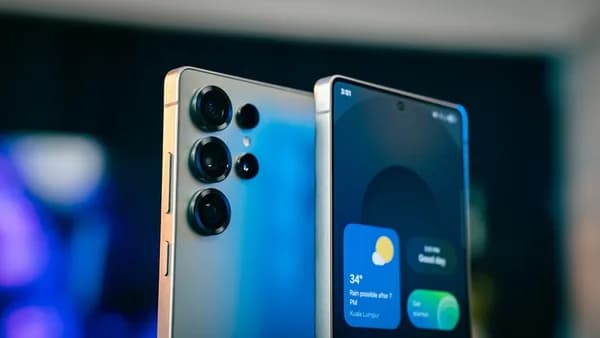
RedMagic is selling a phone with a 24,000 rpm fan, liquid cooling, a 7,500 mAh battery, and a notch-free display for $849 — a configuration that makes many premium phones look thermally conservative rather than truly performance-first.
The Nubia RedMagic 11S Pro launches globally on June 10, 2026, shortly after its China debut in mid-May, according to Notebookcheck. The core bet is blunt: RedMagic is not trying to win the conventional flagship contest on camera prestige, thinness, or brand halo. It is trying to win the sustained-performance contest.
RedMagic 11S Pro turns the $849 flagship phone equation upside down
The expected flagship formula is familiar: a premium chip, a polished body, an expensive camera stack, and enough thermal design to survive benchmarks and daily use. The RedMagic 11S Pro flips that order. It puts thermals, battery, display continuity, and gaming controls ahead of mainstream flagship signaling.
The base model comes with 12 GB RAM and 256 GB storage for $849, €799, or £709. The higher configuration, with 16 GB RAM and 512 GB storage, costs $949, €899, or £799. European and UK buyers can buy an Early Bird voucher for €1 or £1 from June 3 to 9, which allows purchase a day earlier and cuts €30 or £30 from the price.
That puts the phone in an odd and useful middle zone. It is priced above many value phones, but below the psychological tier where buyers expect every category — camera, software support, brand cachet, resale — to be maximized. RedMagic’s answer is different: spend the money on the parts that keep frame rates stable.
The hardware makes the intent obvious:
- Chip: Qualcomm Snapdragon 8 Elite Gen 5, in a faster variant with boost clocks up to 4.74 GHz
- Cooling: liquid cooling, 24,000 rpm fan, and vapor chamber
- Battery: 7,500 mAh, with 80W wired and wireless charging
- Display: 6.85-inch AMOLED, 144 Hz, 1,800 nits, no notch or punch-hole
- Controls: touch-sensitive shoulder buttons
- Durability: IPX8 water resistance despite the internal fan
That is less a conventional handset than a pocket gaming machine that happens to make calls. The tension is clear. RedMagic is asking buyers to value sustained load over elegance. For mobile gamers, that trade may be rational. For mainstream buyers, it may still feel too specialized.
Snapdragon 8 Elite Gen 5, active cooling and water cooling target sustained performance, not benchmark theater
Most premium phones can sprint. The harder question is whether they can keep sprinting when a game, emulator, video render, or heavy AI task keeps the silicon hot for long periods. RedMagic is designing around that second question.
The RedMagic 11S Pro uses a slightly faster version of the Snapdragon 8 Elite Gen 5 than the RedMagic 11 Pro. Notebookcheck says the newer model reaches boost clock rates of up to 4.74 GHz, compared with 4.6 GHz on the RedMagic 11 Pro. On paper, that difference is modest. In practice, the cooling system is the more important part of the story.
RedMagic’s own product material describes an upgraded AquaCore liquid-cooling setup with Liquid Metal 3.0, a 13,116 mm² vapor chamber, and a 24,000 RPM turbo fan. The company also claims the fan runs at under 30dB, while the device is rated IPX8 for water resistance and the fan module is IP68 rated.
RedMagic markets the phone around “World’s Fastest Mobile CPU” performance and an “Upgraded REDMAGIC AquaCore liquid cooling system with Liquid Metal 3.0, a 13,116 mm² vapor chamber, and 24,000 RPM turbo fan.”
That marketing should be read carefully. The source material supports RedMagic’s specific hardware claims and clock speeds. It does not independently prove that the 11S Pro beats every mainstream flagship in all workloads. But the design philosophy is still meaningful: RedMagic is spending internal volume and engineering complexity on heat removal.
A simple comparison shows how narrow — and deliberate — the upgrade from the RedMagic 11 Pro appears to be:
| Feature | RedMagic 11 Pro | RedMagic 11S Pro |
|---|---|---|
| Snapdragon boost clock | Up to 4.6 GHz | Up to 4.74 GHz |
| Base model cooling | Less advanced base-model setup, per Notebookcheck comparison | Liquid cooling, 24,000 rpm fan, vapor chamber even on cheapest version |
| Battery | Nearly identical context from related review implied by source | 7,500 mAh |
| Display design | Almost identical, per Notebookcheck | 6.85-inch AMOLED, no notch or punch-hole |
The fan is the defining feature, and also the risk. Active cooling adds moving parts. It may draw power. It can create noise. It raises questions about dust, long-term wear, and repair complexity. RedMagic counters part of that concern with the water-resistance rating, but ratings are not the same as years of real-world abuse.
MLXIO analysis: this is the anti-slim-phone design. Many premium Android phones prioritize thin bodies and camera hardware. RedMagic prioritizes thermal headroom. That makes the 11S Pro less universally polished, but potentially more honest for buyers who already know their phone spends hours under load.
$849 pricing puts RedMagic 11S Pro between mid-range value phones and four-figure flagships
The $849 starting price is the commercial hook. If the RedMagic 11S Pro were a $1,200+ device, the fan, liquid cooling, RGB touches, and shoulder triggers would feel like niche indulgences. At $849, the argument becomes sharper: why pay flagship money for a phone that throttles sooner if your main use case is gaming?
This is not a cheap phone. The base price still sits well above mass-market Android devices. But the spec sheet is tilted toward expensive components that performance buyers notice: high-end silicon, active cooling, large battery, fast charging, and a high-refresh full-screen AMOLED panel.
The before-and-after is the real story:
- Before: Gaming phones often looked like specialty devices for users willing to accept obvious compromises.
- After: RedMagic is pricing a heavily cooled Snapdragon flagship below many premium-tier expectations.
- Before: A full-screen display without a hole-punch often meant accepting experimental trade-offs.
- After: RedMagic is making that compromise part of a broader gaming-first value pitch.
- Before: Active cooling was a curiosity.
- After: It becomes the reason the phone exists.
The comparison with gaming handhelds is more complicated. The RedMagic 11S Pro is still a phone, not a dedicated handheld with physical sticks and a larger chassis. But for users already committed to mobile games, cloud gaming, emulation, or controller accessories, the economics may look cleaner than buying a separate device.
The pricing also exposes an uncomfortable split in the premium phone market. A buyer paying more than $849 for a mainstream flagship is often paying for camera systems, materials, software guarantees, retail support, brand strength, and integration with a broader device lineup. RedMagic is not pretending to beat every one of those. It is arguing that raw mobile performance should cost less than the top tier.
That same performance-per-dollar tension showed up in our coverage of devices that punch upward on specific hardware priorities, including the MagicPad 4 challenging iPad Pro speakers under $700. The pattern is not that cheaper devices beat premium brands everywhere. It is that focused hardware bets can embarrass more expensive products in narrow, visible ways.
A notch-free under-display camera gives RedMagic 11S Pro a rare full-screen gaming advantage
The display decision may matter as much as the chip. The 6.85-inch AMOLED panel has no notch and no punch-hole because the 16 MP f/2.0 selfie camera sits under the display. The fingerprint sensor is also invisibly integrated into the screen.
For gaming, that matters. A notch or punch-hole is a small interruption in daily use, but it becomes more noticeable in games, video, and full-screen interfaces where symmetry and visibility count. RedMagic is not chasing the most conventional front-camera layout. It is chasing uninterrupted screen real estate.
The panel itself is built for that use case: 144 Hz refresh rate, 1,800 nits brightness, and a large 6.85-inch surface. RedMagic’s own material lists a 2688 × 1216 resolution and 95.3% screen-to-body ratio. Those details reinforce the same priority: less obstruction, more playable area.
The likely compromise is obvious. Under-display selfie cameras have historically been a trade-off because the camera has to capture light through display layers. The supplied source does not include independent image-quality testing for the 11S Pro’s front camera, so the safe read is not that RedMagic has solved the problem. It is that RedMagic believes its audience will accept the risk.
That is consistent with the rear camera setup. The phone includes a 50 MP f/1.9 main camera with a 1/1.55 inch sensor and a 50 MP f/2.0 ultra-wide camera. RedMagic’s own page says the main camera has OIS. Respectable on paper, but the device is not being sold as a camera-first phone.
For contrast, the broader smartphone market still contains devices that compete heavily on sensor headlines, as seen in our analysis of the 200MP Oppo Reno16 Pro putting pricier flagships on notice. RedMagic is running a different play. It is not saying “look at the camera.” It is saying “look at the screen, and keep looking while the phone stays cool.”
Gaming phones have spent years chasing what mainstream flagships avoided
Gaming phones have long emphasized features that mainstream flagships treated as too bulky, too loud, or too niche: shoulder triggers, aggressive cooling, high refresh rates, oversized batteries, and visual design that announces performance rather than hiding it.
The RedMagic 11S Pro looks like a more mature version of that idea. The transparent styling, RGB lighting, and visible cooling still lean enthusiast. But the practical pieces are less gimmicky than they once sounded. A large vapor chamber, active fan, and massive battery directly target the core problem of mobile performance: heat over time.
RedMagic’s related material claims the phone has a REDMAGIC RedCore R4 gaming chip, Energy Cube 3.0, and 520 Hz shoulder triggers. The useful way to read those claims is not as magic. They are part of a system designed to allocate performance, cooling, touch response, and in-game effects around long sessions.
RedMagic also publishes lab figures. In a 120-minute Honkai: Star Rail test at 60FPS mode + Ultra High Graphics, it lists 61.01 average FPS for the RedMagic 11S Pro versus 59.31 for a competitor phone, with 1% Low FPS of 59.8 versus 29.3. In a 60-minute Genshin Impact test at max graphics, it lists 60.93 average FPS versus 60.90 for the RedMagic 11 Pro, with peak temperature of 42.9°C versus 45.7°C.
Those are company lab numbers, not independent review findings. Still, the metrics RedMagic chose are telling. Average FPS is not the only message. 1% low FPS and peak temperature speak to stability, which is exactly where cooling should show up if it works.
Mainstream flagships usually sell a broader promise. They chase camera polish, thinness, premium materials, and platform loyalty. RedMagic is chasing a narrower one: when the workload stays heavy, the phone should not fall apart thermally. That may stay niche, but the workload definition is expanding. MLXIO analysis: gaming is the proof point, but the same sustained-performance logic could matter for local AI features, long video capture, and content workflows if those tasks keep pushing CPU, GPU, or NPU resources.
Gamers, creators, carriers and mainstream buyers will judge the RedMagic 11S Pro differently
A mobile gamer will likely evaluate the RedMagic 11S Pro through five questions: Does it hold frame rates? Does it stay cool enough to grip? Does the display avoid distractions? Does the battery last? Do the controls improve play? On the supplied specs, RedMagic has targeted each of those directly.
A mainstream buyer may ask different questions. How good are the cameras in bad light? How long will software updates arrive? Will the fan age well? How broad is carrier support? How strong is resale value? The source material does not answer those questions. That silence matters because niche hardware often wins enthusiasts before it convinces ordinary buyers.
Creators sit between those groups. The big battery, cooling system, high-refresh display, and fast charging could appeal to users who push phones hard. But the supplied material does not establish the RedMagic 11S Pro as a creator phone. Its evidence is gaming-led. Any creator argument remains inference until independent testing covers video, editing, thermals, and camera output.
Retailers and carriers face a separate problem. The phone can generate attention because the hardware is unusual. But the global sales path described by Notebookcheck centers on the manufacturer’s online store. The source does not establish broad carrier placement, subsidy support, or in-store availability. That can limit reach even when specs look aggressive.
The industry read is sharper. If a $849 gaming phone can deliver sustained flagship-class performance, it pressures mainstream brands to justify higher prices with advantages beyond short benchmark bursts. That defense could come through cameras, software commitments, support networks, or better sustained thermals. RedMagic does not need to outsell the largest brands to make that question harder.
RedMagic 11S Pro could force 2026 Android flagships to rethink cooling, displays and pricing
The RedMagic 11S Pro’s strongest claim is not that every buyer should want a fan in a phone. It is that thermals deserve a more visible place in the flagship conversation.
If independent reviews confirm RedMagic’s sustained-performance claims, active or semi-active cooling will become harder to dismiss as gamer theater. The phone’s combination of Snapdragon 8 Elite Gen 5 Leading Version, 13,116 mm² vapor chamber, liquid cooling, and 24,000 rpm fan creates a clear test case: does more cooling translate into better real use over long sessions?
The under-display camera is another test. If buyers accept a 16 MP hidden selfie camera in exchange for a cleaner 6.85-inch panel, mainstream brands may revisit full-screen designs more seriously. If selfie quality disappoints, the punch-hole stays safer.
The price is the third pressure point. At $849, RedMagic is not undercutting the market with weak hardware. It is undercutting premium assumptions with a very specific hardware budget. That makes the phone useful even for people who never buy it, because it exposes what different brands choose to optimize.
Evidence that would strengthen RedMagic’s thesis:
- Independent thermal testing shows lower throttling over long gaming sessions.
- Battery tests confirm the 7,500 mAh pack offsets fan and high-refresh power draw.
- Display reviews validate brightness, touch response, and under-display camera trade-offs.
- Durability reports show the fan and water resistance hold up outside lab conditions.
- Software support details give buyers confidence beyond the spec sheet.
Evidence that would weaken it is just as clear: fan noise that annoys users, camera output that trails expectations, inconsistent carrier support, weak update commitments, or cooling gains too small to justify the complexity.
RedMagic may not pull mainstream buyers away from camera-first flagships in large numbers. But if the 11S Pro proves that $849 can buy steadier performance, a cleaner screen, and fewer thermal excuses, it will shift what power users expect from high-end Android phones in 2026.
The Bottom Line
- RedMagic is prioritizing sustained gaming performance with a 24,000 rpm fan, liquid cooling, and a Snapdragon 8 Elite Gen 5 variant.
- The $849 starting price positions it below many ultra-premium flagships while offering unusually aggressive gaming-focused hardware.
- The notch-free under-display camera and 7,500 mAh battery make it a distinctive alternative to mainstream flagship designs.