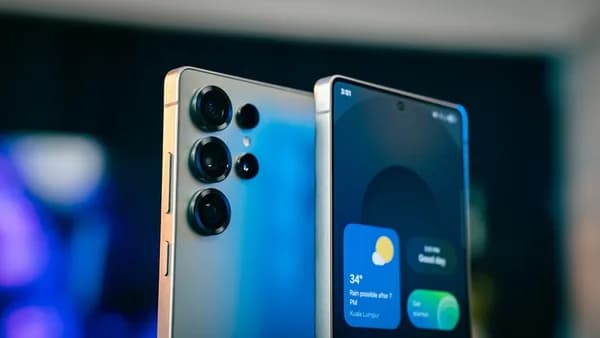
Oppo Reno16 Pro launched in China today with a 200 MP main camera, three 50 MP companion cameras and a 7,000 mAh battery inside a 7.7 mm body. That mix targets buyers who want flagship-style camera and performance specs without flagship-tier pricing, according to Notebookcheck.
Oppo Reno16 Pro debuts with a 200 MP main camera and Dimensity 9500s chip
Oppo has positioned the Reno16 Pro as a premium mid-range phone with unusually aggressive hardware for its class. The headline is the camera stack: a 200 MP f/1.8 main camera, a 50 MP f/2.0 ultra-wide camera, a 50 MP f/2.8 telephoto camera with 3.3x optical zoom, and a 50 MP f/2.0 selfie camera.
The other major change is silicon. Oppo has replaced the MediaTek Dimensity 8450 used in the previous model with a Dimensity 9500s, a move Notebookcheck says should bring the Reno16 Pro close to flagship performance.
The immediate question for buyers: does Oppo’s spec sheet translate into real performance, or just a louder launch pitch?
On paper, the rest of the phone backs up the camera-first positioning. The Reno16 Pro has a 6.78-inch LTPO AMOLED display with a 120 Hz refresh rate, 3,600 nits peak HDR brightness and 2,160 Hz PWM frequency, which Oppo is using to reduce visible flicker.
The body is IP69K-certified, measures 7.7 millimetres thick and weighs 205 grams. That is paired with a 7,000 mAh battery, 80 W USB-C charging and 50 W wireless charging, a battery focus also seen in the Honor 600 Super Edition.
Other hardware touches include an in-display fingerprint sensor, Wi-Fi 7, Bluetooth 5.4, dual SIM support and a programmable action button on the left side.
Reno16 Pro camera specs raise the bar for mid-range smartphone photography
The Reno16 Pro’s camera system is the reason this launch stands out. A 200 MP main camera gives Oppo room to market detail capture and cropping flexibility, while the three 50 MP cameras suggest the company did not reserve high-resolution sensors only for the primary shooter.
For creators and social-first users, the spread matters. The setup covers wide, ultra-wide, telephoto and front-facing shooting without dropping to a visibly lower megapixel count on the selfie camera or zoom lens.
But the unanswered question is the important one: how consistent will these four cameras be once lighting gets worse and video enters the picture?
Megapixels alone will not settle that. Real-world results will depend on sensor behavior, optics, stabilization, image processing and Oppo’s software tuning. A 200 MP number can sell the phone; only reviews can show whether it captures sharper images, cleaner low-light shots or better video than expected at this price.
The telephoto camera also deserves attention. Oppo lists a 3.3x optical zoom, which gives the Reno16 Pro a dedicated zoom option rather than forcing every tighter frame through digital crop.
For readers tracking camera-heavy Android hardware, MLXIO recently covered another spec-forward phone in Four 50MP Cameras Make Motorola Edge 70 Pro+ a Threat. And for a reminder that hardware claims still need test-bench scrutiny, see our coverage of 5°C Error Exposes AGM G3 Pro's Thermal Camera Trade-Off.
Camera hardware at launch
| Camera | Specification |
|---|---|
| Main camera | 200 MP, f/1.8 |
| Ultra-wide | 50 MP, f/2.0 |
| Telephoto | 50 MP, f/2.8, 3.3x optical zoom |
| Selfie camera | 50 MP, f/2.0 |
The camera story is strong. The proof will come when reviewers can compare color science, autofocus behavior, shutter speed, low-light output and video stabilization across all four sensors.
Dimensity 9500s performance could make Oppo’s new Reno a value challenger
The Dimensity 9500s is the Reno16 Pro’s second big play. Oppo is using the chip to move the phone beyond a camera-led mid-ranger and into a device that can plausibly compete on speed, multitasking and media workloads.
For everyday users, that should show up first in app switching, camera processing and high-refresh display behavior. For heavier users, the real test will be sustained performance under load.
So the key performance question is simple: can the Reno16 Pro keep its speed without heat or battery trade-offs becoming obvious?
The source material does not include benchmarks, thermals or gaming data. That limits what can be said today. The chip upgrade is meaningful because it replaces the prior Dimensity 8450, but the scale of the gain needs independent testing.
Battery capacity gives Oppo another argument. A 7,000 mAh cell in a 7.7 mm body is a notable packaging claim, especially when paired with both 80 W wired and 50 W wireless charging.
The display also leans premium. A 6.78-inch LTPO AMOLED panel with 120 Hz refresh, 3,600 nits peak HDR brightness and 2,160 Hz PWM puts the Reno16 Pro’s screen specs in the same conversation as its camera and chip: strong on paper, pending hands-on validation.
Performance-linked features Oppo is putting forward
- Chip: MediaTek Dimensity 9500s, replacing the Reno15 Pro’s Dimensity 8450.
- Battery: 7,000 mAh, with 80 W wired charging and 50 W wireless charging.
- Display: 6.78-inch LTPO AMOLED, 120 Hz, 3,600 nits peak HDR brightness.
- Controls: Programmable action button on the left side.
- Connectivity: Wi-Fi 7, Bluetooth 5.4, dual SIM.
That is a dense hardware list for a premium mid-range launch. But performance phones are judged after the spec sheet — by frame stability, camera processing speed, heat behavior and battery drain.
Oppo Reno16 Pro availability, pricing and review tests buyers should track next
Oppo has confirmed the Reno16 Pro for China, with two listed configurations. The 12 GB RAM / 256 GB storage model costs CNY 4,499 ($662), while the 16 GB RAM / 512 GB storage version costs CNY 5,299 ($779).
| Model | China price |
|---|---|
| 12 GB RAM + 256 GB storage | CNY 4,499 ($662) |
| 16 GB RAM + 512 GB storage | CNY 5,299 ($779) |
The launch gap is international availability. Oppo has not yet confirmed details for markets outside China, so regional pricing, launch dates and any configuration changes remain open.
The practical question for buyers outside China: wait for the global model, or treat today’s launch as a preview rather than a purchase signal?
For now, the Reno16 Pro looks strongest where the facts are clearest: camera count, battery size, display specs, charging speed and China pricing. The watch items are just as clear — camera consistency, low-light performance, video quality, heat management and battery endurance.
If Oppo carries these specifications into more markets without a major price jump, the Reno16 Pro could become one of the more interesting premium mid-range Android launches to test this cycle. Until then, the phone is a compelling spec sheet waiting for proof.
Key Takeaways
- The Reno16 Pro brings unusually high-end camera hardware to the premium mid-range segment.
- The move from Dimensity 8450 to Dimensity 9500s could make the phone feel closer to flagship performance.
- A 7,000 mAh battery in a 7.7 mm body gives buyers a rare mix of capacity and slim design.