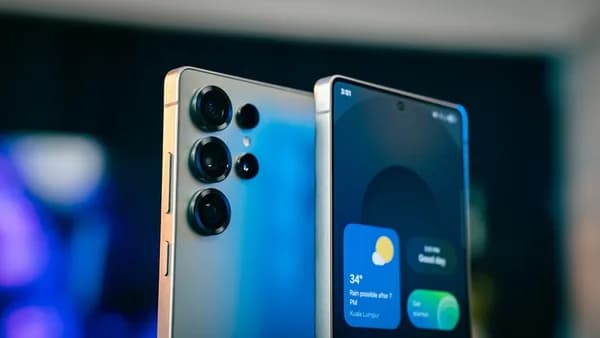
Samsung’s rumored Galaxy S27 Pro is starting to look less like a compact Galaxy S27 Ultra and more like a carefully fenced-off premium middle model.
That is the shift suggested by new supply-chain chatter out of South Korea, according to Notebookcheck. The report says insiders now point to camera specifications that may be “significantly less ambitious than initially planned,” while earlier reporting also suggested a region-specific chipset strategy that could leave only US buyers with a Snapdragon version.
Industry insiders apparently emphasize that the Pro model’s specifications are likely to be “significantly less ambitious than initially planned,” Notebookcheck reported.
That changes the meaning of “Pro.” If the rumor holds, the question is not whether Samsung can build a smaller flagship. It is whether Samsung wants that smaller model to carry the Ultra’s best imaging and silicon, or simply borrow enough premium cues to justify a new slot in the lineup.
Samsung’s Pro label may be setting expectations it cannot meet
Early Galaxy S27 Pro rumors invited an obvious comparison: Apple-style flagship pairing, where the main distinction is size. In that reading, the Galaxy S27 Pro would be the smaller sibling of the Galaxy S27 Ultra, potentially giving buyers Ultra-grade hardware without the Ultra footprint.
Notebookcheck’s latest read points in a different direction. The site says the Pro may be closer to a late successor to the Galaxy S25 Edge than a shrunken Ultra.
That is a meaningful distinction. A compact Ultra implies parity where it counts: cameras, chipset class, image processing, and flagship performance. A premium middle model implies controlled compromise.
The chipset rumor already pushed in that direction. Notebookcheck says Samsung apparently plans a region-specific chipset strategy for the Galaxy S27 Pro, similar to regular and plus-sized Galaxy S models. If accurate, only US customers would get a Snapdragon chip.
That dovetails with our earlier analysis of how a Galaxy S27 Pro chip split could burn global buyers. The camera leak now suggests silicon may not be the only area where the Pro falls short of the Ultra pitch.
The camera leak points to Samsung protecting the Ultra tier
Samsung has not confirmed the Galaxy S27 Pro, the Galaxy S27 Ultra, or any camera specifications. That caveat matters because this is still early hardware reporting.
Still, the direction of the rumor is clear. Notebookcheck says the Pro’s cameras are now expected to land between the Galaxy S27 and Galaxy S27 Ultra, not match the Ultra outright.
That would make strategic sense as MLXIO analysis. Camera hardware is one of the cleanest ways to separate premium phones when displays, software features, and build quality start to converge. If Samsung gives a smaller Pro the same full camera system as the Ultra, it risks making the Ultra harder to justify for buyers who do not care about size.
“Less Ultra” does not mean bad. It could still mean better cameras than the base Galaxy S27. But it would disappoint buyers who expected the smaller model to carry Samsung’s strongest imaging stack.
The unresolved piece is how much Samsung cuts. A few months ago, a leaker suggested the Pro and Ultra could share at least the main camera and ultrawide. Notebookcheck now says it remains unclear whether that is still true or whether Samsung has made more reductions.
The specs to watch are narrower than the name suggests
The useful way to read this leak is not “Pro versus Ultra” as branding. It is module by module.
A prior Wccftech report citing yeux1122 claimed the Galaxy S27 Pro could share a 200MP main sensor and 50MP ultrawide with the Galaxy S27 Ultra, while differing on telephoto: a 50MP ALoP unit with 3.5x optical zoom on the Pro versus a 50MP telephoto with 5x zoom on the Ultra. That older claim now sits uneasily beside Notebookcheck’s newer warning that the Pro specs may be less ambitious.
| Area | Earlier rumor | Latest Notebookcheck framing | MLXIO read |
|---|---|---|---|
| Main camera | 200MP, reportedly shared with Ultra | No specific specs revealed | Still unconfirmed; this is the key parity test |
| Ultrawide | 50MP, reportedly shared with Ultra | No specific specs revealed | Another test of whether “Pro” means Ultra-adjacent |
| Telephoto | 3.5x Pro vs 5x Ultra | Cameras likely between S27 and Ultra | Most likely place for visible separation |
| Chipset | Region-specific strategy reported | Only US customers may get Snapdragon | Performance consistency becomes part of the story |
Even small camera differences can matter. A shorter optical zoom changes portrait and travel shooting. A different telephoto sensor can affect detail, low light, and stabilization. A weaker image signal processor can also change output, which is why the chipset split is relevant to cameras, not just benchmarks.
The biggest missing number is price. None of the supplied reporting gives launch pricing. Without that, the value case cannot be judged. A compromised Pro at a meaningful gap below Ultra is one product. A compromised Pro close to Ultra pricing is another.
Samsung has a familiar problem: compact phones leave less room for Ultra hardware
The rumored Galaxy S27 Pro sits inside a basic hardware tension. Smaller phones have less internal space for batteries, thermals, and camera modules. Periscope-style telephoto systems are especially space-sensitive.
That does not prove Samsung will downgrade the Pro camera. It does explain why the telephoto system is the obvious place to draw a line.
MLXIO analysis: this may not be a failed compact Ultra. It may be the predictable result of Samsung trying to create a smaller premium phone without collapsing the hierarchy of the Galaxy S lineup. The Ultra can remain the camera flagship while the Pro becomes the more compact premium option.
The comparison to Apple’s iPhone universe is useful only up to a point. Notebookcheck says many initially viewed the rumored Pro through that lens: two flagship models differing mainly in size. The latest supply-chain information suggests Samsung may not be following that parity-first model.
This also makes separate feature leaks harder to interpret. A model can inherit one high-end trait without inheriting the whole Ultra hardware stack, which is why reports like Galaxy S27 Pro Steals Ultra’s Privacy Display Trick should not be read as proof of camera parity.
Different buyers will grade the same phone differently
For camera-first buyers, the leak is a warning. Do not assume “Pro” means the best Samsung cameras in a smaller body.
For Samsung, the possible logic is clearer. A Galaxy S27 Pro could add a premium-feeling option without giving away the Ultra’s strongest differentiator. That is analysis, not a confirmed company plan, but it fits the reported split between Pro and Ultra camera ambition.
For chip watchers, the regional silicon rumor adds another variable. If the US model gets Snapdragon and other regions do not, real-world differences could show up in heat, battery life, sustained performance, and image processing. Notebookcheck does not specify the non-US chip, so the exact comparison remains open.
For buyers trying to make a practical decision, the checklist is simple:
- Camera modules: Confirm whether the main and ultrawide match the Ultra.
- Telephoto reach: Watch the optical zoom level and sensor details.
- Chipset by region: Do not rely on US specs if buying elsewhere.
- Battery and thermals: Compact premium phones can face tighter limits.
- Launch price: The compromises only make sense if the gap from Ultra supports them.
The 2027 story may be segmentation, not disappointment
By early 2027, the Galaxy S27 Pro could still be an appealing phone. The risk is that it disappoints the exact audience most excited by the name: buyers waiting for a compact Ultra.
The evidence that would confirm the “premium middle lane” thesis is straightforward. Samsung would ship the Pro with a weaker telephoto setup than the Ultra, a region-specific chipset split, and camera specs that sit above the regular Galaxy S27 but below the Ultra.
The evidence that would weaken it is just as clear: shared main and ultrawide sensors, minimal telephoto compromise, broad Snapdragon availability, and pricing that makes the Pro’s trade-offs easy to accept.
Until Samsung confirms the hardware, the safest read is this: the Galaxy S27 Pro may expand choice, but it probably will not erase the Ultra’s reason to exist.
Key Takeaways
- Samsung’s Pro branding may raise expectations that the rumored hardware does not fully meet.
- Camera compromises could make the Galaxy S27 Pro less appealing to buyers wanting Ultra-level imaging in a smaller phone.
- A region-specific chipset strategy could create uneven performance expectations across markets.