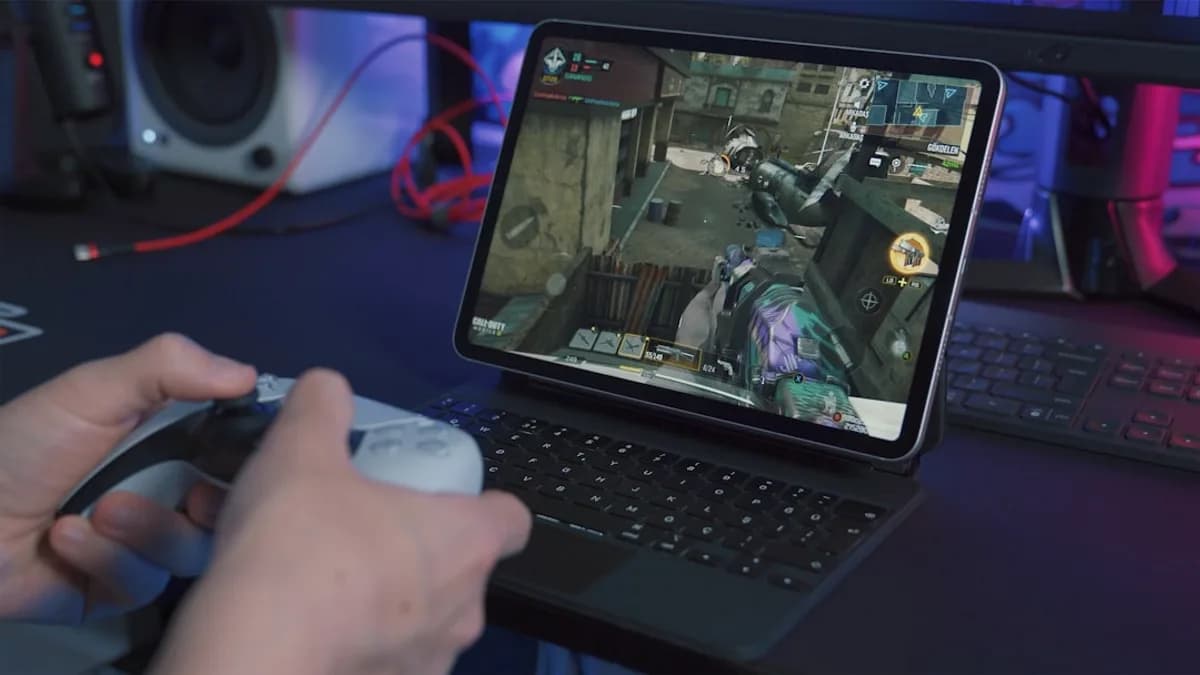
RedMagic’s Gaming Tablet 5 Pro is not just chasing faster Android gaming; it is testing whether a compact tablet can credibly absorb part of the PC gaming experience without becoming a handheld PC. The hardware is aggressive: Qualcomm Snapdragon 8 Elite Gen 5, liquid cooling, a 9.06-inch 185 Hz OLED, and a built-in PC emulator with Steam support, which could matter for discounted PC titles like Plague Inc: Evolved on Steam.
The device launched in China as the direct successor to the RedMagic Astra, according to Notebookcheck. It starts at CNY 4,999 ($735) for 12 GB of RAM and 256 GB of storage. Internationally, it is expected to arrive as the RedMagic Astra 2, though RedMagic has not announced a global launch date or price.
RedMagic is treating throttling as the enemy, not screen size
Most compact tablets sell convenience first. RedMagic is selling sustained performance. That changes the product’s center of gravity.
The Snapdragon 8 Elite Gen 5 is the headline chip, but the more revealing choice is the cooling system around it. RedMagic has added liquid cooling and made it visible through a transparent rear cover with RGB lighting. That is partly theater. It is also a clear signal: this tablet is meant to run hard for longer gaming sessions, not just spike in benchmarks and back off when heat builds.
Notebookcheck’s source material says the cooling setup means the chip does not need to be “severely throttled” during extended play. That is the real pitch. In a small chassis, heat is often the constraint. RedMagic is trying to turn thermal headroom into a product feature.
The trade-off is focus. A tablet built around gaming mode, RGB, and visible cooling is not trying to be neutral productivity glass. It is telling buyers exactly what it wants to be.
The 185 Hz OLED makes the tablet feel built for input, not just visuals
The display spec is unusually pointed for a mini-tablet, even alongside a 144Hz Snapdragon tablet. RedMagic uses a 9.06-inch OLED panel with a 185 Hz refresh rate, 1,600 nits peak HDR brightness, and 1,100 nits full-screen brightness.
That combination matters because gaming tablets are judged on more than resolution or color. A higher refresh ceiling can reduce perceived latency and make fast motion cleaner when games support high frame rates. OLED also gives RedMagic a contrast advantage over typical LCD tablet panels, at least on paper.
| RedMagic Gaming Tablet 5 Pro feature | Buyer-facing implication |
|---|---|
| Snapdragon 8 Elite Gen 5 | Flagship-class Android gaming performance target |
| Liquid cooling | Lower throttling risk during extended sessions |
| 9.06-inch 185 Hz OLED | Fast motion, high refresh ceiling, strong contrast |
| 8,300 mAh battery | Large capacity for a compact gaming slate |
| 80 W charging via two USB-C ports | Faster top-ups and more flexible cable placement |
| 363 grams, 6.9 mm thick | Portable, but still larger than a gaming phone |
The 8,300 mAh battery and 80 W charging help support that performance-first approach. The two USB-C ports are also practical for a gaming device, since charging and accessories can compete for the same port on smaller hardware.
RedMagic has added a fingerprint sensor in the power button and a red slider that activates gaming mode. Those are small details, but they reinforce the device’s purpose. This is a slate designed around entering and staying in a game session quickly.
Steam support is the bold promise—and the obvious failure point
The PC emulator with Steam support is the feature that makes the RedMagic Gaming Tablet 5 Pro more interesting than a standard Android gaming tablet. It suggests a device that can move beyond native mobile titles and attempt access to PC games through Steam.
That promise carries a hard limit. Notebookcheck states clearly that compatibility is not universal:
“such emulators are not compatible with all games, and a gamepad is recommended for more comfortable gaming sessions.”
That sentence should shape buyer expectations more than the Steam logo does. Steam support does not mean a Steam Deck-like experience. It means the tablet includes a route into Steam through emulation, with unknown real-world compatibility.
MLXIO analysis: the core test is not whether the emulator launches. It is whether recognizable games run smoothly enough, with controls that feel natural enough, for buyers to trust the feature. If setup feels experimental, the audience narrows to hobbyists. If RedMagic makes game discovery, presets, controller pairing, and performance settings feel simple, the tablet becomes more than a specs showcase.
Steam also carries brand gravity. RedMagic benefits from that instantly, but it inherits expectations too. For separate context on how Steam-related news keeps pulling gamer attention, see MLXIO’s coverage of the 92% Steam Cut Turns Mass Effect Into a $4.79 Steal and Valve Mocks Half-Life 3 Leakers With One Brutal Code Joke. RedMagic is not Valve, but it is using Steam access as a reason to look twice.
The form factor solves one problem and creates another
A 9.06-inch tablet gives players more screen than a phone without dragging them into laptop territory. At 363 grams and 6.9 millimeters thick, the RedMagic Gaming Tablet 5 Pro stays meaningfully portable.
But the tablet shape creates an ergonomic gap. Notebookcheck notes that a gamepad is recommended for more comfortable gaming. That matters. A gaming tablet without integrated controls can deliver a beautiful screen and strong thermals, then still feel incomplete for long sessions unless the accessory setup is right.
MLXIO analysis: RedMagic’s hardware makes the tablet credible as a performance device. Its usability will depend on the surrounding kit. Detachable controllers, stable gamepad support, charging while playing, and consistent gaming-mode behavior could decide whether the product feels like a system or just a powerful slab.
That is especially true because Steam compatibility raises the control burden. Android touch games and PC games are built around different assumptions. RedMagic has to bridge that gap in software and accessories, not just silicon.
China pricing gives the first hard constraint
The China launch price is CNY 4,999 ($735) for the 12 GB RAM / 256 GB storage model. That gives the RedMagic Gaming Tablet 5 Pro a clear enthusiast positioning from day one.
The international version is expected to launch as the RedMagic Astra 2, but the unresolved details are important:
- Launch timing: RedMagic has not announced when it will arrive outside China.
- Global price: No international pricing has been disclosed.
- Configuration spread: The verified launch detail is the 12 GB / 256 GB China model at CNY 4,999 ($735).
- Software support: The long-term handling of the PC emulator and Steam compatibility remains unproven in the supplied source material.
MLXIO analysis: the global price will matter because this device asks buyers to value a hybrid promise. It is not only an Android tablet. It is not a full PC handheld either. Its value depends on how much buyers trust the middle ground.
The RedMagic Astra 2 needs proof, not louder specs
The RedMagic Gaming Tablet 5 Pro has the right ingredients for an enthusiast mini-tablet: Snapdragon 8 Elite Gen 5, visible liquid cooling, a fast OLED display, a large battery, and Steam access through a PC emulator. On paper, that is a sharp identity.
The risk is equally clear. The hardware can attract attention, but the software will decide whether the Steam feature becomes useful or ornamental. Compatibility, gamepad behavior, thermal stability under long sessions, and global pricing are the evidence points to watch.
If the future RedMagic Astra 2 arrives internationally with clear compatibility guidance, polished controller support, and pricing that matches the China positioning, RedMagic will have a credible argument for a third portable gaming category: bigger and cooler-running than a phone, smaller and more touch-native than a laptop. If those pieces are missing, the tablet remains an impressive Android gaming device with a Steam promise buyers will need to treat carefully.
The Bottom Line
- RedMagic is positioning a compact Android tablet as a bridge toward PC-style gaming with built-in Steam support.
- Liquid cooling and the Snapdragon 8 Elite Gen 5 suggest the device is designed for sustained performance, not just peak benchmarks.
- The China launch starts at CNY 4,999 ($735), but global pricing and availability remain unconfirmed.