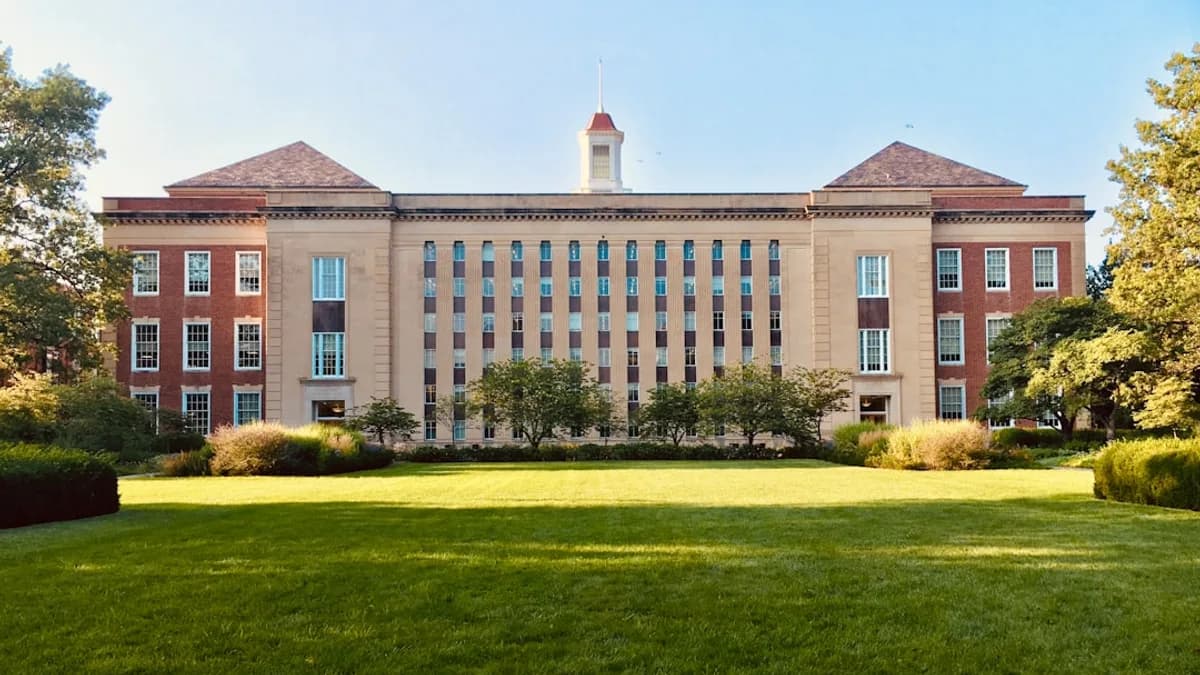
More than 75 Interdisciplinary PhD in Statistics students have defended successfully under Alexander “Sasha” Rakhlin’s orbit at MIT’s Statistics and Data Science Center, making his new directorship as much about talent formation as research direction.
Rakhlin, the Distinguished Professor in Data, Systems, and Society at the MIT Institute for Data, Systems, and Society and a professor of brain and cognitive sciences, has been named the next director of the MIT Statistics and Data Science Center. He succeeds Ankur Moitra, who has led SDSC since 2021, according to MIT News AI.
MLXIO analysis: this is not just a campus appointment. MIT is placing a theorist of machine learning, statistics, optimization, and computation at the center of its data science operation at a moment when AI systems are being asked to explain themselves, fail safely, and operate across scientific and public domains.
Rakhlin’s appointment puts mathematical AI foundations back in the foreground
Rakhlin’s profile fits a specific pressure point in AI: the gap between systems that perform impressively and systems whose behavior can be bounded, audited, or trusted under stress.
MIT’s source material does not say the appointment represents an institutional strategic shift. But the language around Rakhlin’s role points clearly toward rigor. He describes AI safety and security not as branding problems, but as statistical and mathematical ones.
“As AI enters medicine, energy, and public life, its safety and security are, at their core, statistical and mathematical questions: quantifying uncertainty, providing guarantees, understanding failure, and resisting manipulation.”
That sentence is the hinge of the story. It frames SDSC as a place where the next phase of AI is not only about bigger systems or broader deployment. It is about the science of knowing when a model is reliable, when it is brittle, and what kind of evidence should count.
Rakhlin also said SDSC’s strength comes from “students, postdocs, and faculty from across MIT” who bring different perspectives to problems in statistics, machine learning, and AI. That matters because the center is housed within IDSS, where data science is treated as a bridge across fields rather than a narrow technical silo.
The hard numbers MIT gives are about people, dates, and institutional continuity
The MIT announcement does not include data on AI funding, compute costs, enrollment pressure, or labor demand. So the useful numerical story here is narrower: leadership continuity, program scale, and Rakhlin’s long connection to SDSC.
Reported figures and dates from the source:
- 2021: Ankur Moitra became SDSC director.
- 2024-25: Philippe Rigollet served as interim director.
- 2025: Rakhlin became the inaugural holder of the Distinguished Professorship in Data, Systems, and Society, an endowed chair created by Richard “Dick” Larson.
- 2016: Rakhlin was connected to SDSC as a visiting professor.
- 2018: He formally joined MIT in Brain and Cognitive Sciences and IDSS.
- Over 75: IDPS PhD students have successfully defended during his time as initial chair of the Interdisciplinary PhD in Statistics program.
That last number is the most revealing. SDSC is not just producing papers. It is producing researchers trained across departments, including IDSS’ Social and Engineering Systems program.
MLXIO analysis: for universities, the scarce asset in AI is not only compute. It is faculty who can train students to move between theory, computation, and domain problems without losing mathematical discipline.
Machine learning theory meets the messy problem of uncertainty
Rakhlin’s work sits at the intersection of machine learning, statistics, and optimization. His SDSC profile highlights online prediction: machine learning that processes information sequentially rather than all at once.
That niche matters because many real decision problems do not arrive as clean, static datasets. They unfold over time. New information changes the model’s position. The system must update, choose, and manage uncertainty in sequence.
His research has also examined connections among online prediction, optimization, and probability, along with statistical inference in structured problems, model selection, and the statistical complexity of neural networks. His research group also lists interests in reinforcement learning, decision-making, overparametrized models, and large language models.
This is where SDSC’s new directorship becomes relevant beyond MIT. Rakhlin’s stated focus maps onto the hard questions facing AI builders: how to reason about failure, how to quantify uncertainty, and how to make guarantees that mean something outside benchmark tables.
For readers tracking how AI and data systems are moving into user-facing products, that question shows up in very different corners of technology — from consumer interfaces discussed in ChatGPT Takes a Second Shot at Your Apple Health Data to workflow tools such as Meta Hands Facebook Sellers Their Own iPhone Command Center. The common thread is not the product category. It is the need to know when automated systems are dependable.
From Moitra to Rakhlin, SDSC keeps a theory-heavy center of gravity
The leadership transition also signals continuity. Moitra is the Norbert Wiener Professor of Mathematics, associate director of IDSS, and a faculty member in EECS. Rigollet, who served as interim director in 2024-25, is the Cecil and Ida Green Distinguished Professor of Mathematics and a core IDSS faculty member.
| SDSC leader | MIT roles named in source | Signal for SDSC |
|---|---|---|
| Ankur Moitra | Norbert Wiener Professor of Mathematics; IDSS associate director; EECS faculty | Theory, mathematics, computation |
| Philippe Rigollet | Cecil and Ida Green Distinguished Professor of Mathematics; IDSS core faculty | Statistical foundations and continuity |
| Alexander Rakhlin | Distinguished Professor in Data, Systems, and Society; Brain and Cognitive Sciences professor | Machine learning theory, statistics, optimization, AI foundations |
This is not a pivot away from theory. It is a reinforcement of theory as the backbone of data science at MIT.
Fotini Christia, the Ford International Professor of the Social Sciences and director of IDSS, framed Rakhlin as both a research leader and mentor.
“Sasha is one of the sharpest theoretical minds working in statistics and machine learning today, and also one of the most devoted mentors I know.”
That mentor point is not ornamental. If SDSC’s mandate is interdisciplinary, leadership depends on building a shared technical language across departments that do not naturally use the same methods or incentives.
Different groups will read the same appointment differently
For faculty, Rakhlin’s appointment reinforces SDSC as a cross-MIT connector. He explicitly describes statistics as “a shared language across MIT,” linking economics, political science, physics, engineering, biology, and nuclear fusion.
For students, the message is sharper. Future data science training at MIT will likely demand more than model operation or coding fluency. MLXIO analysis: the center’s emphasis, as reflected in Rakhlin’s remarks, points toward probability, inference, optimization, computation, and a deeper grasp of what models can and cannot justify.
For industry partners, the practical implication is talent and methods. The MIT announcement does not name corporate partnerships or commercial programs. But Rakhlin’s language about guarantees, failure, and manipulation speaks directly to organizations that need AI systems to withstand scrutiny.
For policymakers, SDSC may become more important as an independent technical source on AI safety and reliability. That is an inference, not a claim from MIT. The source supports it only insofar as Rakhlin explicitly links AI in medicine, energy, and public life to statistical and mathematical questions.
The next test is whether SDSC can turn rigor into usable AI practice
Rakhlin says one goal as director is to deepen interdisciplinary connections and help make SDSC “the Institute’s home for the rigorous foundations of data science and AI.” That is the clearest forward signal in the announcement.
The watch item is execution. Evidence supporting the thesis would include more visible cross-department work on uncertainty quantification, guarantees, failure analysis, secure AI systems, and scientific applications of statistics. Evidence weakening it would be a directorship that remains mainly administrative, with little change in programs, collaborations, or research focus.
MIT’s bet, as reflected in this appointment, is that AI’s next hard problems are not only engineering problems. They are statistical questions with real-world consequences. Rakhlin now has the job of turning that premise into an institutional agenda.
Why It Matters
- MIT is putting a machine learning and statistics theorist in charge of a major data science center as AI trust and safety become central concerns.
- Rakhlin’s focus on uncertainty, guarantees, failure, and manipulation aligns SDSC with foundational questions behind reliable AI systems.
- His role also highlights SDSC’s influence in training researchers, with more than 75 interdisciplinary PhD students having successfully defended under his orbit.