Price is the harder part of the Onexplayer 3 story: the handheld has moved from crowdfunding into official pre-order availability, and the post-campaign pricing picture is less straightforward than a simple launch-channel change.
The device has shifted from Indiegogo to OneXPlayer’s official store, where it is now available for pre-order, according to Notebookcheck. The headline is availability. The real issue is whether buyers still see the Intel Arc G3 Extreme handheld as a bargain once the early-backer context disappears.
A Retail Price Change Tests Onexplayer 3’s Pricing Power
The Onexplayer 3 entered crowdfunding one month ago with campaign-era pricing that helped frame the device as an aggressive premium handheld. That campaign has ended. The same product family is now being sold through OneXPlayer’s own storefront, where buyers need to check the live configuration pricing before treating any earlier campaign number as current.
That matters because crowdfunding prices do more than move early units. They set the first public reference point for value. Once a product leaves that environment, buyers compare the new price not with the company’s internal cost structure, but with the number they already saw.
MLXIO analysis: this is the risk in launching premium hardware through crowdfunding first. Early pricing can make a device look unusually aggressive. Retail pricing then has to carry heavier expectations: clearer support, more predictable fulfillment, stronger warranty confidence, and fewer unknowns around delivery.
For Onexplayer, the bet is that the Onexplayer 3’s modular design and lower entry positioning versus the closest cited Arc G3 rival still justify the device’s premium tier. For buyers, the question is sharper: does the move to official pre-order make the device feel safer, or does the changed pricing make waiting for reviews the more rational play?
From Indiegogo to Official Store: The Buyer’s Risk Profile Changes
The commercial shift is straightforward. The Onexplayer 3 is no longer just a crowdfunding campaign product. It is now available for pre-order through OneXPlayer’s official store.
That changes the psychology of the purchase. A crowdfunding backer accepts campaign risk in exchange for early access and a lower price. A retail pre-order buyer usually expects a cleaner transaction: clearer payment terms, customer support, order tracking, cancellation rules, warranty handling, and a delivery window that feels less speculative.
The source confirms the channel change, but it does not provide the store’s full return policy, cancellation terms, tax treatment, shipping fees, warranty specifics, or a confirmed delivery schedule for every pre-order. Those missing details now matter more because the buyer is no longer judging the product only as a campaign pledge.
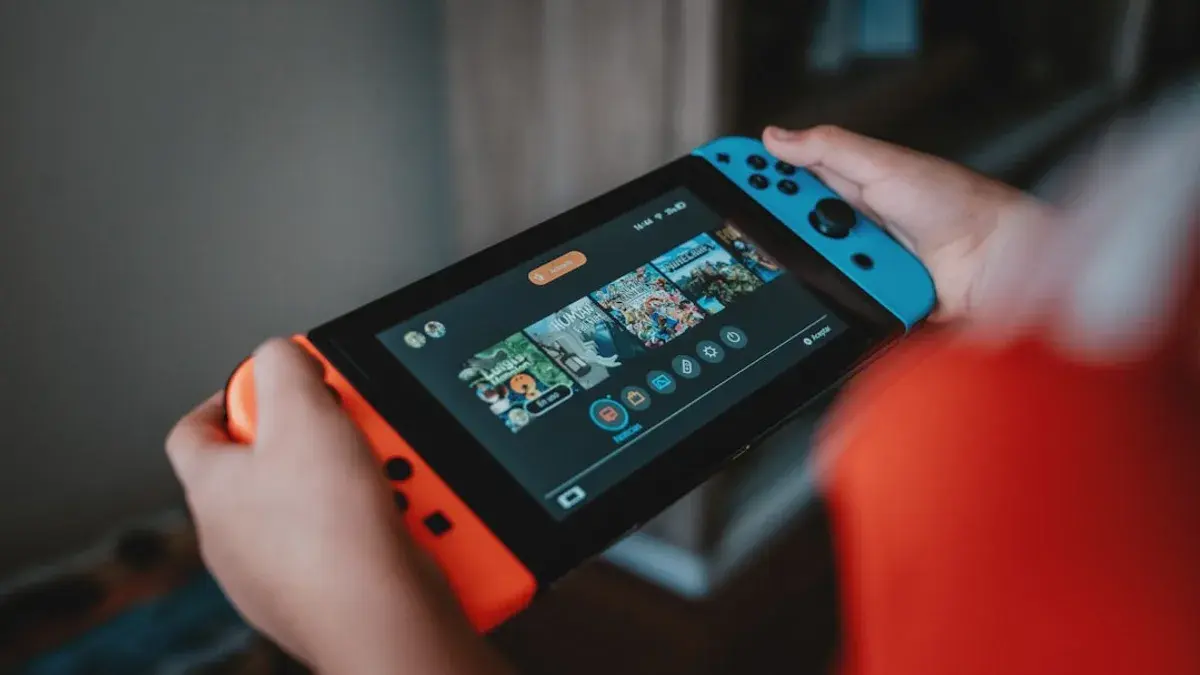
The Onexplayer 3 is marketed as a “3-in-1 gaming and productivity handheld”.
That phrase is doing a lot of work. Onexplayer is not pitching only another handheld gaming PC. It is selling a device that is supposed to operate across handheld, tablet, and laptop-style use cases. The post-campaign pricing shift puts pressure on that promise. If buyers are paying official-store pre-order pricing, the modular pitch has to be more than a spec-sheet flourish.
This is similar to the pricing tension we tracked in cloud gaming with GeForce Now Bets India Gamers Will Pay U.S. Prices: when a gaming product asks buyers to accept premium pricing, the service or hardware experience has to make the premium feel intentional, not opportunistic.
The Onexplayer 3 Price Math Is Less Clear
The pricing story is revealing, but not as simple as a single uniform increase across every configuration. The primary report confirms that the Onexplayer 3 is now available for pre-order and that prices have changed, while supplementary coverage has shown early-bird figures that differ from a clean rounded-price comparison.
| Onexplayer 3 configuration | Supplementary early-bird price cited by PC Guide | Official pre-order context |
|---|---|---|
| 24GB/512GB | $1,438.16 | Pre-order availability should be verified on the live store |
| 24GB/1TB | $1,540.96 | Pre-order availability should be verified on the live store |
| 32GB/1TB | $1,746.56 | Pre-order availability should be verified on the live store |
The useful takeaway is not that every configuration rose by the same amount. It is that the device has moved out of its crowdfunding phase, and buyers now need to evaluate the current storefront offer against earlier campaign expectations, taxes, shipping, accessory bundles, and support terms.
The closest comparable alternative named by Notebookcheck is the MSI Claw 8 EX AI+, which starts at $1,799 for its 32GB/1TB version. That makes the higher Onexplayer 3 configurations especially important to judge carefully, because the price gap versus MSI can narrow depending on which configuration and store listing a buyer is comparing.
A broader spec comparison from PC Guide shows where Onexplayer’s argument may still hold: the Onexplayer 3 has an 8.8-inch FHD+ 1920 x 1200 AMOLED display with 30~144Hz VRR, an 85Wh battery, detachable controllers, and Intel Arc G3 Extreme; the MSI Claw 8 EX AI+ uses an 8-inch FHD+ 1920 x 1200 IPS-Level panel with 48~120Hz VRR, an 80Wh battery, and non-detachable controllers, according to PC Guide.
MLXIO analysis: the price change does not kill the Onexplayer 3’s value case. It changes which version has the strongest case. The lower configurations may still be easier to defend against the MSI’s cited starting price, but buyers choosing the higher-end 32GB/1TB Onexplayer 3 should compare the live store price directly with the Claw before assuming a clear advantage.
Modularity Is Now the Main Differentiator, Not Just the Chip
Both the Onexplayer 3 and MSI Claw 8 EX AI+ overlap on the key silicon: Intel Arc G3 Extreme. That makes differentiation harder. Once two devices share the same headline processor class, buyers start weighing the parts around it.
Onexplayer’s strongest distinction is modularity. Notebookcheck says the device is intended to function as a handheld, tablet, and laptop. The MSI Claw, by contrast, has non-detachable controllers and lacks modular accessories such as keyboard attachments or controller grips.
That creates a clear split:
| Product | Shared ground | Main difference cited |
|---|---|---|
| Onexplayer 3 | Intel Arc G3 Extreme handheld PC | Detachable/modular design for handheld, tablet, and laptop-style use |
| MSI Claw 8 EX AI+ | Intel Arc G3 Extreme handheld PC | Fixed-controller handheld design |
The pricing move makes that distinction more important. At crowdfunding prices, Onexplayer could argue from both price and flexibility. At official pre-order prices, especially on the top configuration, flexibility has to carry more of the sales pitch.
This also raises a practical question: how much will buyers actually use the modular modes? A detachable-controller design can be compelling if the accessories are comfortable, easy to carry, and included or priced sensibly. The supplied source does not specify final accessory bundles, accessory pricing, or whether every retail buyer receives the same package as campaign backers.
That gap matters. Modularity can increase value. It can also shift value into add-ons.
Premium Handheld Buyers Are Paying for Execution, Not Just Specs
The Onexplayer 3 is entering a segment where enthusiast buyers already know how to read a spec sheet. The processor, memory, storage, screen, battery, and controller design all matter. But in this premium handheld price band, execution matters just as much.
MLXIO analysis: the higher retail context raises the standard for everything the source does not yet prove. Buyers will want to see thermal behavior, battery life under real games, fan noise, driver maturity, suspend/resume reliability, controller quality, docked performance, keyboard accessory quality, and Windows handheld usability.
The source does not provide benchmark results, review conclusions, repairability details, or long-term support commitments. That does not mean the device will disappoint. It means the pricing case is incomplete until independent testing fills those gaps.
This is where boutique handheld makers face a difficult trade-off. Crowdfunding rewards novelty and early enthusiasm. Retail punishes ambiguity. Once a product is sitting in an official store at premium pricing, buyers compare it against devices with similar chips, named specs, and clearer retail expectations.
The same dynamic appears elsewhere in gaming distribution. Our coverage of Epic Games Store Bets on 2 Free Roguelites, Not Hits showed how gamer attention often turns on perceived value, not just product availability. Hardware is less flexible than software, but the psychology is similar: price changes reshape the story.
Backers, Late Buyers, and MSI Will Read the Same Price Differently
Early backers may see the new prices as validation. If they secured a lower campaign tier, the official-store pricing can confirm that they received a meaningful early-backer benefit. That can strengthen confidence in backing early.
Late buyers may see something else: a penalty for caution. Waiting for the official store can feel safer than backing an Indiegogo campaign, but the buyer may now be comparing against a less generous post-campaign offer. For someone who wanted less campaign risk, the cost of that caution depends on the configuration and the live store pricing.
Onexplayer’s likely business logic is understandable. Hardware margins are unforgiving. Retail sales can bring different support expectations, logistics costs, payment processing structures, and post-sale obligations than crowdfunding. The source does not state the company’s reason for changing prices, so that remains inference, not confirmed motive.
For MSI, the pricing shift is useful in one specific way. The higher Onexplayer 3 32GB/1TB configuration sits close enough to the MSI Claw 8 EX AI+ that buyers have a cleaner comparison to make: modular AMOLED handheld from Onexplayer, or fixed-controller MSI handheld at the cited MSI price point.
The pressure sits most heavily on Onexplayer’s lower configuration. If it keeps a clear gap below the MSI alternative, and reviews show strong performance with acceptable trade-offs, that model could remain the most defensible configuration. If reviews are mixed, the post-campaign price movement will be one of the first issues critics point to.
How to Judge an Onexplayer 3 Pre-Order
A buyer considering the Onexplayer 3 should not compare only the crowdfunding and retail sticker prices. The useful comparison is total purchase risk.
Start with the configuration. The 24GB/512GB model appears to have the strongest price-separation argument from the MSI alternative cited by Notebookcheck. The 32GB/1TB model has the strongest spec alignment, but buyers should compare the live Onexplayer store price directly with the MSI Claw 8 EX AI+ before assuming a major gap.
Then check what is included. The modular pitch depends on accessories. If keyboard attachments, controller grips, or other pieces are separate purchases, the effective price could move beyond the headline pre-order number. The supplied source does not confirm the full accessory package.
Buyers should also verify:
- Shipping: check the current store estimate rather than assuming a fixed delivery window.
- Warranty: official-store support terms should be checked before ordering.
- Taxes and fees: listed product prices may not equal total landed cost.
- Cancellation rules: pre-order flexibility can matter if reviews arrive before shipment.
- Review timing: independent performance data is still central at this price.
MLXIO analysis: the price change makes waiting more defensible for buyers who are not committed to the modular form factor. The lower configuration may still have a clear price argument. The top model has to win on design, screen, accessories, or support because its advantage over the cited MSI competitor is less automatic.
Shipping and Reviews Become the Next Proof Points
The Onexplayer 3 pre-order shift signals a harder phase for premium Windows handhelds: post-crowdfunding pricing has to survive retail scrutiny.
If Onexplayer ships on schedule, delivers the modular experience it is advertising, and early reviews support the Arc G3 Extreme performance case, the pricing change may look like a normal transition from campaign pricing to retail pricing. If shipping slips, accessories are unclear, or reviews expose weak thermals, battery trade-offs, or software friction, the changed pricing will look less like retail discipline and more like overreach.
The evidence to watch is specific: final shipping dates, included accessory details, warranty terms, independent benchmarks, battery tests, controller impressions, and direct comparisons with the MSI Claw 8 EX AI+.
For now, the Onexplayer 3 still has a credible entry-price argument. But the move from crowdfunding to official-store pre-order changes the burden of proof. At this tier, buyers are no longer just funding an idea. They are pricing a finished product against alternatives.
Key Takeaways
- The Onexplayer 3 is now easier to order through the official store, but its value depends on updated configuration pricing.
- Early crowdfunding prices may make later retail pricing feel less competitive to buyers.
- The move to official pre-orders raises expectations for support, fulfillment, and warranty confidence.