Does the Oppo K15 actually need the cooling fan Oppo is putting inside it?
That is the question behind the July 24 China launch, and my answer is blunt: the K15 looks less like a thermal breakthrough than a carefully dressed midrange phone built to feel more expensive than its chipset suggests. Oppo has confirmed the standard K15 will launch in China on July 24, following the K15 Pro and K15 Pro+ that arrived in April, according to Notebookcheck.
The spec sheet is loud: 8000mAh battery, 80W wired charging, three 50MP cameras across the front and rear setup, a metal middle frame, an RGB breathing light, and a built-in active cooling fan. The problem is the quieter line underneath: the base model reportedly uses MediaTek’s Dimensity 7360, a step down from the Pro series’ silicon.
That makes the K15 interesting for the wrong reason. Oppo may have built a phone whose most useful feature is the battery, while its most memorable feature is the fan.
Does the Dimensity 7360 give Oppo’s fan enough work to do?
Not obviously.
Notebookcheck frames the chipset choice as the awkward part of the product. The Dimensity 7360 sits below the Dimensity 8500 Super used in the Pro series, and the source argues that the base model’s chip is not demanding enough to make active cooling feel necessary in the same way.
That does not mean the fan is useless. It means the burden of proof shifts to Oppo.
A built-in cooling fan makes intuitive sense when a phone is designed around sustained gaming loads, aggressive clocks, and long sessions where thermal throttling becomes visible. In the K15, the fan has to justify itself beside a more modest processor. If the chip rarely pushes the thermal ceiling in ordinary use, the fan becomes less of an engineering answer and more of a visual promise.
That promise is easy to understand. Fans, vents, lights, and “gaming” cues signal power before a benchmark ever runs. Buyers can see them in a render. Retail pages can highlight them in one image. Short launch clips can turn them into identity.
But performance is not a costume. A fan only matters if it changes the experience: steadier frame rates, lower surface temperatures, less throttling, quieter charging heat, or better endurance under load. Until those are tested, the Oppo K15 cooling fan should be treated as an unproven feature, not a performance credential.
“Full pricing and availability details are expected to be disclosed July 24.”
That line matters because price will decide whether the fan feels like a bonus or a distraction.
Is the 8000mAh battery the real reason to care about the Oppo K15?
Yes. The 8000mAh battery is the K15 spec that needs the least marketing spin.
A large battery changes daily use in a way most buyers can feel. Streaming, navigation, messaging, video calls, social feeds, and travel all punish smaller packs. Pair that capacity with 80W wired charging, and Oppo has a cleaner story: endurance without making charging feel painfully slow.
That is the coherent part of the product. The cooling fan asks buyers to imagine performance gains. The battery offers a practical benefit before the first review unit arrives.
The K15 also measures 8.27mm thick and weighs 205g, according to the supplied specs. Those numbers matter because an 8000mAh phone could easily become a brick. Oppo appears to be trying to keep the device within a familiar smartphone shape while pushing battery capacity hard.
Here is the sharper read:
| Feature | What it clearly offers | What still needs proof |
|---|---|---|
| 8000mAh battery | Longer potential endurance | Real-world screen-on time |
| 80W charging | Faster top-ups than slow large-battery phones | Heat and battery behavior over repeated cycles |
| Active cooling fan | A visible premium/gaming cue | Sustained performance gains on Dimensity 7360 |
| 50MP cameras | Strong spec-sheet symmetry | Image quality, processing, lens performance |
This is where Oppo should focus the launch message. If the K15 is priced well — and pricing has not been disclosed — battery life could be the feature that gives the phone its strongest case. Not the RGB light. Not the fan. The battery.
For related context on how hardware brands use one headline spec to frame a device, see MLXIO’s coverage of TCL’s $338 4K Gaming Monitor Hits 320Hz — in China. The product categories differ, but the lesson is familiar: the headline number gets attention; testing decides whether it matters.
Do three 50MP cameras make the K15 more premium than its chip suggests?
They make it sound that way. That is not the same thing.
The K15’s camera hardware includes a 50MP main sensor, a 50MP ultrawide, and a 50MP front camera. On paper, that is tidy and marketable. Every camera that matters gets the same headline resolution. No awkward low-resolution selfie camera. No obvious weak number beside the main sensor.
But megapixels are not image quality. Sensor size, optics, stabilization, processing, tuning, and low-light behavior all decide whether a phone takes good photos. The source material confirms the resolutions; it does not prove flagship-grade output.
That distinction matters because the K15’s camera setup works in the same way as the fan. Both make the phone feel more premium than the Dimensity 7360 would suggest on its own. Both photograph well in product marketing. Both need real-world testing before they deserve trust.
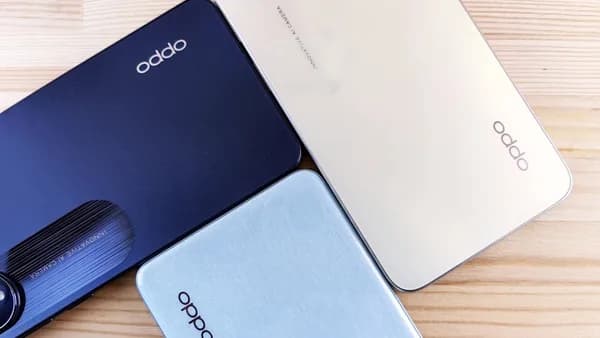
Oppo’s build choices reinforce that positioning. The K15 reportedly has a metal middle frame, comes in black and white colorways, includes a short-focus optical fingerprint sensor, and places an RGB breathing light on the rear. These are not random details. They build a phone that looks more expensive, even if Oppo has chosen a less demanding chipset than the Pro models.
That is not automatically bad. A midrange phone can be good because it spends money where users notice it. The question is whether Oppo spent on substance first or spectacle first.
Could Oppo’s fan still help more than skeptics expect?
Yes, and this is the strongest counterargument.
Even a midrange chip can heat up under sustained workloads. Long gaming sessions, video recording, navigation, charging, and hot ambient conditions can expose thermal limits. A cooling fan could help the K15 hold performance longer, reduce surface heat, or manage charging heat more gracefully.
The source also mentions dual-frequency GPS, triple-frequency BeiDou, and support for standards including Glonass and Galileo. That suggests Oppo is not treating the K15 as a bare-bones device with one flashy gimmick. The phone carries a cluster of practical hardware choices.
So the generous interpretation is simple: Oppo brought down a feature from the Pro line, paired it with a large battery, and built a standard model that feels unusually equipped. If pricing lands aggressively, buyers may not care whether the fan is essential. They may see it as a free extra.
That case holds only if Oppo does not oversell the fan. The K15 can be credible as a battery-first phone with extra cooling. It becomes questionable if the fan is presented as proof of gaming-class performance that the chipset cannot support.
For another MLXIO angle on battery-first trade-offs in hardware design, read Lecoo Air 14 LNL Ditches Ultra-Light for 80Wh Battery Bet. Bigger batteries can be a rational bet. They just need to be sold honestly.
Is the K15 really flagship theater at controlled cost?
That is the cleanest interpretation of the current facts.
Notebookcheck notes that ongoing DRAM shortages and rising chip prices may be pushing OEMs toward cheaper SoCs while keeping premium-feeling extras such as fans and RGB lighting to protect product positioning. That is an important point because it explains the K15’s strange mix: useful battery, polished materials, high camera numbers, visible cooling, but a less ambitious chip than the Pro family.
This is not deception by default. It is product packaging.
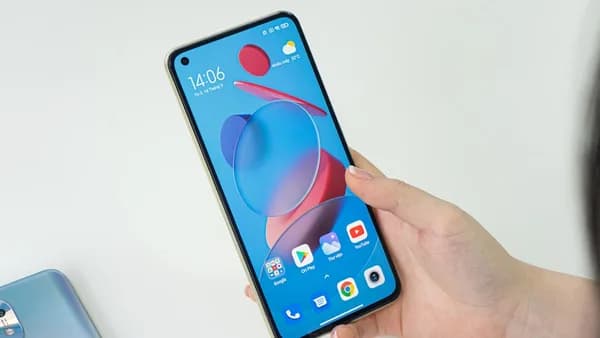
The 6.59-inch, 2760 x 1256 LTPS flat display reportedly supplied by Tianma gives the phone a serious-looking front. The 205g weight and metal middle frame give it heft. The active fan gives it a performance story. The 8000mAh battery gives it a practical anchor.
The tension is that not all premium cues carry equal value. A big battery changes behavior. Fast charging changes routine. A better camera can change output, if the hardware and tuning deliver. A fan on a modest chip may do less than its presence implies.
Oppo’s credibility will depend on reviews that measure the boring things: sustained frame rates, fan noise, surface temperature, charging heat, battery drain during gaming, and camera consistency. If those results are strong, the K15 becomes more than a spec-sheet stunt. If they are weak, the fan will look like decoration with moving parts.
Should buyers judge the Oppo K15 by the fan or by everything around it?
Buyers should judge the Oppo K15 by battery endurance, charging behavior, camera output, display quality, and final price — not by the novelty of an active cooling fan.
The fan is the story Oppo wants people to notice. The 8000mAh battery may be the reason people should actually care.
Reviewers should not let the device pass on spec-sheet drama. Test sustained gaming. Test temperature. Test fan noise. Test battery drain with the fan active. Test the 50MP cameras against real scenes, not just resolution labels. Then compare those results with the price Oppo announces on July 24.
The K15 may still be a smart phone to buy. But until real-world testing proves otherwise, treat the fan as decoration — and make Oppo earn the performance claim.
The Bottom Line
- The Oppo K15’s 8000mAh battery could be its most practical selling point for heavy users.
- The built-in cooling fan may be more about gaming-style branding than actual thermal necessity.
- The Dimensity 7360 chipset makes the phone’s premium-looking features feel harder to justify.