Apple’s iPhone 18 Pro Max camera roadmap has leaked through a manufacturing artifact, not a rumor mill, and that makes this breach harder to dismiss. An ISP diagnostics log tied to leaked internal Tata Electronics files appears to confirm several camera details for Apple’s next top-end phone before the company has announced it.
The log, reported by Notebookcheck, comes from a broader file trove that surfaced in late June after a breach attributed to the World Leaks ransomware group. The material reportedly totaled more than 630GB across over 200,000 files, including supplier lists, component specifications, internal photos, and iPhone 18 Pro prototypes undergoing testing.
This is not a normal pre-launch leak. A social post can be wrong. A case-maker render can be outdated. A factory diagnostics log sits closer to iPhone 18 Pro production. It exists because engineers and manufacturing partners need to validate components, calibration data, and behavior under test conditions. That does not make every launch feature final. But it does make the camera hardware direction more credible than the usual rumor cycle.
The larger signal is sharper than the spec sheet. Apple’s secrecy now depends not only on Cupertino, but on a global chain of partners handling prototypes, diagnostics, and validation files. The iPhone 18 Pro Max leak shows how Apple’s hardware roadmap, supplier security, and computational photography strategy are becoming harder to keep sealed until keynote day.
Apple’s iPhone 18 Pro Max camera secrecy just cracked through a factory diagnostics log
The thesis: this leak matters because it appears to validate camera hardware from inside the testing process, not from outside speculation. Apple usually choreographs iPhone camera upgrades around controlled demos: night shots, video samples, creator workflows, and claims about image pipelines. Here, a diagnostics artifact appears to have moved first.
The breached company, Tata Electronics, is described in the source material as one of Apple’s key international partners and one of its key manufacturing partners in India. That position makes the leak more sensitive than a single component rumor. The stolen material reportedly included far more than device specs, which Notebookcheck says were “hardly the most sensitive data stolen.” That detail matters. The camera information may grab consumer attention, but the deeper risk is operational.
Diagnostics logs are built for verification. In this case, the relevant log appears tied to the image signal processor, or ISP, which coordinates how camera modules communicate with the phone and how the system validates capture behavior. In practical terms, that can include sensor detection, calibration blocks, actuator behavior, exposure handling, and the data the camera pipeline needs before software processing even begins.
The counterpoint is simple: pre-launch diagnostics do not prove Apple’s final marketing language, camera modes, or image quality. Hardware under test can change. Features can be held back. Software tuning can transform or limit the same component. Still, the leak narrows the plausible range of outcomes. If the diagnostics data is authentic, Apple’s launch surprise shifts away from “what sensors are inside?” toward “what can Apple make them do?”
The diagnostics log points to a Sony IMX905 main sensor and variable aperture
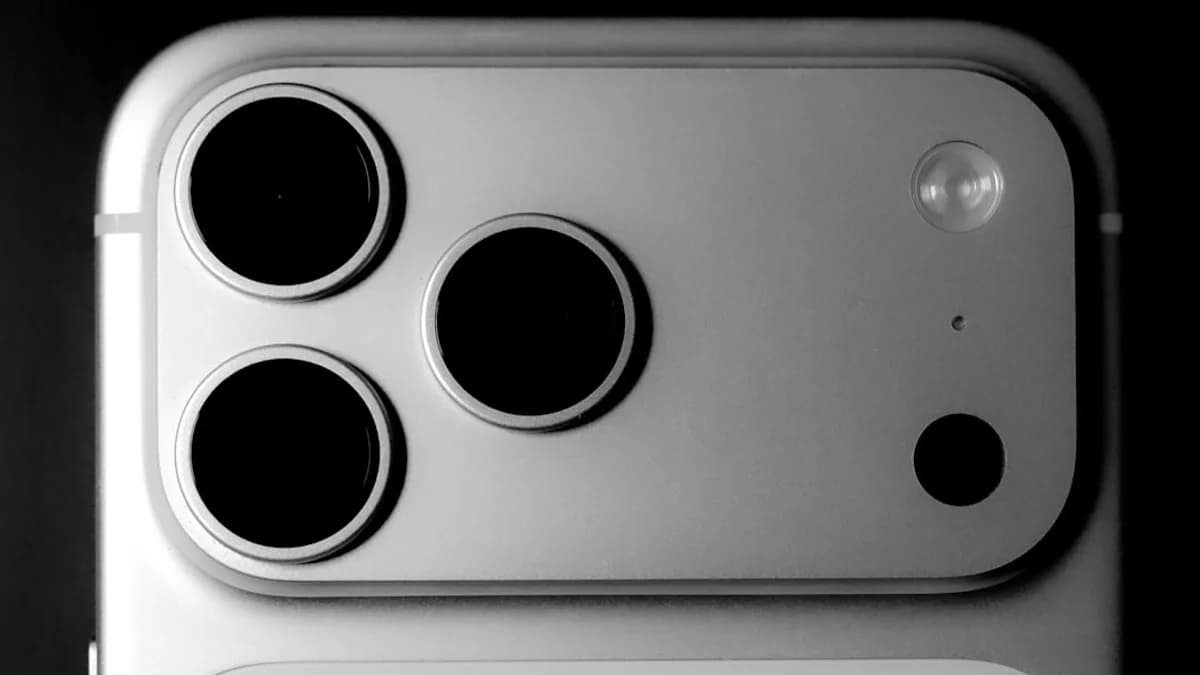
The strongest hardware signal is a new main camera sensor: the log identifies a Sony IMX905 replacing the iPhone 17 Pro Max’s main sensor. Notebookcheck reports that the pixel size remains 1.22μm, which suggests Apple is not chasing a larger-pixel headline in this specific change. The upgrade appears centered instead on variable aperture support.
That is the most meaningful camera detail in the leak. The log reportedly confirms variable aperture support on the new main sensor and includes a calibration block that reads actuator data tied to the aperture mechanism from the sensor’s non-volatile memory. Non-volatile memory matters here because calibration data stored on or with a component can persist without power, giving the system reliable module-specific information during testing and operation.
The source also says variable aperture is already available on flagship phones from other manufacturers. So this would not be an industry first. It would be a first for iPhone. That distinction is important because Apple often arrives later to camera hardware features and then leans on consistency, processing, and video behavior to justify the wait.
The rest of the camera stack appears less dramatic. The telephoto Sony IMX973, ultrawide Sony IMX972, LiDAR receiver Sony IMX591, and selfie camera Sony IMX914 reportedly carry over unchanged from the iPhone 17 Pro Max. The telephoto sensor is listed with 0.7μm native pixels that bin to 1.4μm, with stabilization described as a 3-axis spherical actuator for gimbal-style OIS, consistent with the prior generation.
That mix points to a selective upgrade, not a full camera rebuild. Apple may be changing the main camera’s light-control behavior while relying on existing telephoto, ultrawide, LiDAR, and front-camera modules. The counterpoint: “unchanged sensor” does not mean unchanged output. ISP tuning, calibration, lens behavior, capture stacking, and processing can still move image quality. But based on the log, the hardware delta appears concentrated on the main camera.
The numbers behind the leak show a narrow camera upgrade inside a much larger breach
The camera data is only one slice of a much larger supplier-side exposure. The reported file cache surfaced in late June after Tata Electronics suffered a breach earlier this year. The source material says the trove supposedly totaled more than 630GB and more than 200,000 files, spanning supplier lists, component specifications, internal photos, and prototypes under test.
That scale changes the story. A camera leak can affect Apple’s launch narrative. A supplier file breach can affect vendor trust, prototype handling, and manufacturing access controls. For Apple, the camera specs are the visible damage. The bigger issue is that factory-side documentation and validation artifacts may now be treated as high-value intelligence.
| Camera component | iPhone 18 Pro Max detail indicated by log | Change versus iPhone 17 Pro Max, per source | Confidence from supplied material |
|---|---|---|---|
| Main camera | Sony IMX905 | Replaces prior main sensor | Reported from diagnostics log |
| Main pixel size | 1.22μm | Unchanged | Reported from diagnostics log |
| Main aperture system | Variable aperture support | New for iPhone | Reported from diagnostics log |
| Telephoto | Sony IMX973 | Carries over unchanged | Reported from diagnostics log |
| Telephoto pixels | 0.7μm native, bins to 1.4μm | Consistent with prior generation | Reported from diagnostics log |
| Telephoto stabilization | 3-axis spherical actuator for gimbal-style OIS | Consistent with prior generation | Reported from diagnostics log |
| Ultrawide | Sony IMX972 | Carries over unchanged | Reported from diagnostics log |
| LiDAR receiver | Sony IMX591 | Carries over unchanged | Reported from diagnostics log |
| Selfie camera | Sony IMX914 | Carries over unchanged | Reported from diagnostics log |
Small numbers can still move real-world performance. Pixel size affects how much light each photosite can collect. Aperture behavior affects exposure, depth of field, and how the camera balances sharpness against low-light capture. Stabilization affects video and longer exposures. Pixel binning can improve effective light capture at lower output resolution.
The counterpoint is that none of these figures, on their own, prove better photos. A 1.22μm pixel size with variable aperture could deliver meaningful flexibility, or it could produce a subtler gain than the spec implies. The evidence would weaken if Apple ships different hardware, disables variable aperture behavior, or limits it to narrow use cases. For now, the log supports a focused main-camera change rather than a sweeping module-by-module overhaul.
Apple’s slow-burn Pro Max camera strategy is showing again
This leak fits Apple’s pattern of selective camera changes rather than spec-sheet escalation across every module. The reported iPhone 18 Pro Max setup does not show new sensors everywhere. It shows one key hardware change on the main camera, while telephoto, ultrawide, LiDAR, and selfie hardware remain stable.
That strategy gives Apple room to make the software pipeline do more of the work. A new main sensor with variable aperture can feed the ISP different capture conditions. The company can then tune exposure, depth rendering, low-light behavior, and video consistency around that hardware. If the telephoto and ultrawide carry over, Apple can still improve multi-camera matching through calibration and processing rather than new silicon in every module.
This also explains why the diagnostics log is so revealing. Camera quality in modern phones is not just a sensor list. It is the interaction between sensor, actuator, lens, ISP, stabilization, calibration data, and software processing. A log that references aperture actuator data and sensor memory gets closer to that interaction than a simple bill-of-materials rumor.
The marketing dynamic changes, though. If buyers already know the headline — Sony IMX905 plus variable aperture — Apple has less room to build suspense around hardware. It still controls the more important part: proof. The launch will need to show whether the variable aperture materially improves everyday shooting, video, low-light scenes, or creator workflows.
The strongest counterpoint is that Apple has repeatedly sold camera upgrades on output, not component names. Most users do not buy an iPhone because of a Sony sensor model number. They buy it because the photos and videos look reliable. That remains Apple’s advantage if the final results are strong. But pre-launch confirmation raises the bar: a feature that leaks early has to perform visibly when the product arrives.
Apple, Tata Electronics, buyers, and rivals will read the same log differently
For Apple, the camera leak is probably less alarming than the path the leak took. Apple has never commented on the leak, according to the source material. Silence is expected. Acknowledging it would give oxygen to stolen internal files and could validate material Apple would rather leave unaddressed.
The supplier-security question is harder to ignore. Tata Electronics is part of Apple’s manufacturing base in India, and the breach raised concerns about supply chain security. If internal photos, supplier lists, component specifications, and diagnostics artifacts were exposed, Apple has an incentive to tighten access around prototype validation and factory test data. That is MLXIO analysis, not a reported Apple response.
For Tata Electronics, the issue is reputational and operational. The company is described as a key Apple manufacturing partner, which means the breach will be judged not only by what leaked, but by what controls failed and what remediation follows. The source material does not describe Tata’s response, remediation steps, or Apple’s internal assessment. Those gaps matter.
Consumers will read the leak differently. Camera-focused buyers may see the iPhone 18 Pro Max as the model to wait for, especially if they care about low-light behavior or creative control. That could intersect with other reported Pro Max hardware rumors, including the battery-focused leaks we covered in 5,425 mAh Leak Teases Huge iPhone 18 Pro Max Battery and 5,425 mAh iPhone 18 Pro Max Battery Leak Widens Pro Gap. Those reports are separate from the camera diagnostics log, but together they point to the same commercial theme: Apple’s largest iPhone may keep widening its feature gap.
Investors and competitors will focus on premium positioning. Notebookcheck says the iPhone 18 Pro Max is expected to launch with the rest of the iPhone 18 lineup in September 2026, and that Apple may raise the Pro Max’s price by an average of $200, driven partly by higher camera and memory production costs. Apple has not confirmed that. If pricing does move higher, Apple will need the camera story to justify more than a marginal upgrade.
Buyers and creators should separate confirmed hardware signals from unproven image quality
The practical takeaway is that the leak clarifies direction, not results. A variable aperture main camera could matter for photographers and video creators because aperture affects light intake and depth behavior before software processing begins. That gives the system another physical variable to tune, rather than relying only on exposure time, ISO behavior, stabilization, and computational stacking.
For mobile filmmakers, journalists, and social video producers, the more important question is not whether the aperture changes. It is whether Apple exposes meaningful control, improves automatic transitions, preserves color consistency across lenses, and avoids artifacts when moving between scenes. The diagnostics log cannot answer that. It can confirm that the hardware appears capable of variable aperture behavior, but it cannot show whether the final camera app makes that capability visible or useful.
There is also a Pro-versus-Pro Max question. The supplied source material concerns the iPhone 18 Pro Max specifically. It does not establish whether the smaller Pro gets the same main camera hardware or whether Apple reserves the strongest imaging setup for the Max. That distinction could shape upgrade decisions and resale timing, especially if Apple pairs camera differentiation with battery or memory differences.
The uncomfortable part is where the information came from. Ransomware-linked leaks create a reporting tension: the specs are newsworthy, but the breach also reflects an extortion market built around stolen corporate data. Even if the camera details excite buyers, the method of exposure raises harder questions about how much sensitive manufacturing data sits outside Apple’s direct walls.
Apple’s launch now has to prove the photos, not hide the parts
If the leak holds, Apple’s September 2026 camera pitch will hinge less on secrecy and more on visible proof. The company is unlikely to acknowledge a stolen diagnostics log. It can instead emphasize controlled demos, side-by-side image examples, video capture, and creator use cases that show why variable aperture matters on an iPhone.
MLXIO’s read: Apple’s strongest response is not denial. It is execution. If the Sony IMX905 and variable aperture system deliver cleaner low-light shots, better video exposure behavior, or more natural depth control, the leak becomes pre-launch noise. If the improvement is subtle, the early confirmation could make the launch feel thinner than Apple wants.
The supply chain response may be more durable. A breach involving more than 630GB and over 200,000 files gives Apple reason to push for tighter compartmentalization of diagnostics data, stricter factory access controls, and tougher vendor cybersecurity requirements. The source does not report those steps, but the incentive is clear.
The evidence that would confirm the thesis is straightforward: Apple ships the iPhone 18 Pro Max in September 2026 with a variable aperture Sony IMX905 main camera and makes image quality the centerpiece of the Pro Max pitch. The evidence that would weaken it is just as clear: different hardware, no usable variable aperture behavior, or a launch where the camera barely features. Until then, the leak points to a premium iPhone camera strategy built around one targeted hardware change — and a supply chain secrecy problem Apple cannot solve from Cupertino alone.
Why It Matters
- The leak appears to come from manufacturing diagnostics, making the iPhone 18 Pro Max camera details harder to dismiss than typical rumors.
- The breach highlights how Apple’s secrecy now depends on supplier security across its global hardware chain.
- The reported trove of more than 630GB and over 200,000 files suggests broad exposure of internal testing and component data.