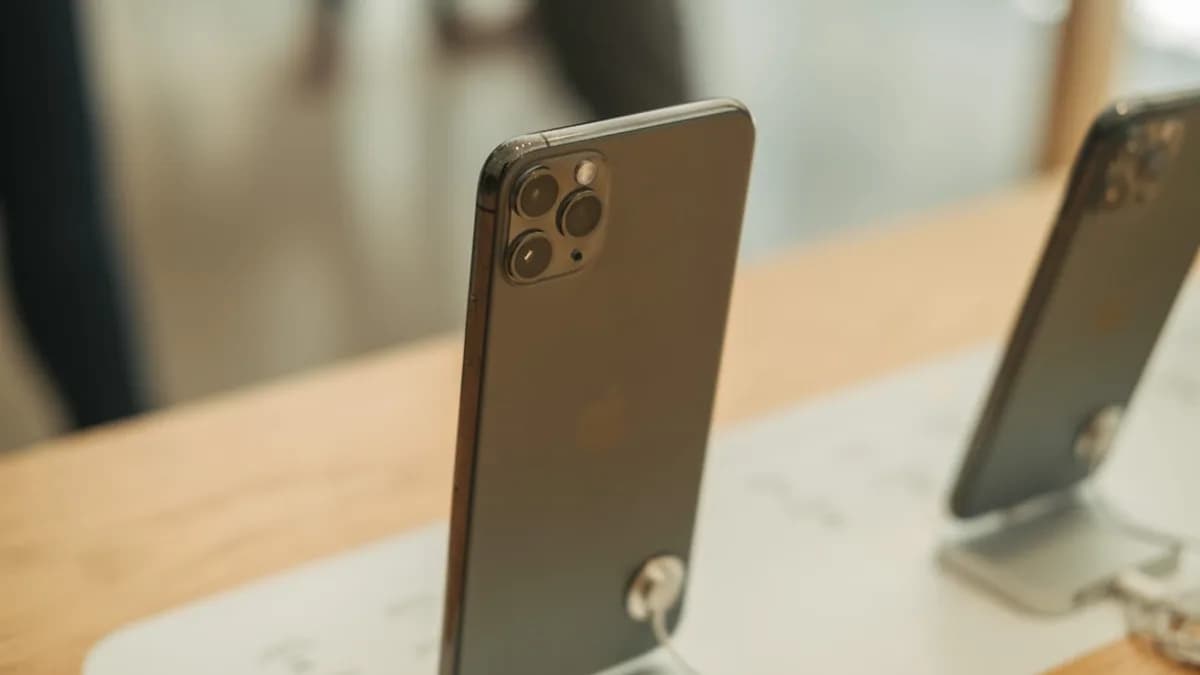
Apple climbed to second place in China’s 618 smartphone rankings by cutting iPhone prices, but the market still shrank 13% year over year — a result that makes the win look more defensive than triumphant.
The data, from Counterpoint Research and reported by 9to5Mac , shows the core tension in Apple’s China business: the iPhone 17 Pro series was discounted heavily enough to lift Apple’s ranking, yet not enough to escape a year-over-year sales decline.
Apple gained rank, but the promotion did the heavy lifting
Apple started its 618 campaign about one month before the shopping day, offering total savings of up to CNY 2,000 on the iPhone 17 Pro series through official discounts, platform promotions, and trade-in incentives.
That worked in one clear way. Counterpoint said the price cuts “quickly translated into stronger sales,” lifting Apple to the No. 2 spot in China’s smartphone market during the promotional window.
But the same report undercuts any clean victory lap. Apple’s sales were still down 9% year over year, mainly because last year’s 618 period included more aggressive promotional activity around the iPhone 16 series.
MLXIO analysis: that comparison matters. Apple did not simply beat rivals by preserving premium pricing. It defended share through tactical discounting in a weaker market. That is not panic. But it is also not the old version of Apple China growth, where ranking gains could be read as pure brand strength.
The cleaner read is this:
- Before: Apple’s iPhone 17 momentum was viewed as a counterweight to China’s broader smartphone softness.
- After: the 618 data suggests even strong iPhone demand needs price support when the market turns cautious.
- Risk: rank gains can mask unit pressure when the total market is contracting.
That theme also connects to MLXIO’s broader Apple coverage on share pressure and component costs, including Apple Grabs Record Market Share as Rivals Crack and Apple’s CXMT DRAM test.
The 618 numbers show how misleading market-share wins can be
Between May 25 and June 21, Huawei led China’s smartphone market with a 21% share, according to Counterpoint. Apple and OPPO followed at 18% each. vivo held 17%, Xiaomi had 14%, HONOR had 10%, and all other brands combined accounted for 2%.
| Brand | China 618 market share | Year-over-year sales trend cited |
|---|---|---|
| Huawei | 21% | Up 19% |
| Apple | 18% | Down 9% |
| OPPO | 18% | Not individually specified |
| vivo | 17% | Not individually specified |
| Xiaomi | 14% | Not individually specified |
| HONOR | 10% | Not individually specified |
| Others | 2% | Not specified |
Apple’s 9% drop was the smallest among the major brands that lost ground. Counterpoint said Chinese Android rivals that declined fell between 12% and 33%. Huawei was the only major brand in the report to grow, with sales up 19% year over year.
That makes Apple’s second-place finish real, but conditional. It gained relative position because rivals weakened more sharply. In a market down 13%, a higher ranking can reflect resilience, not expansion.
Counterpoint tied the weak overall result to costs rather than a lack of promotions alone:
The disappointing results were caused “mainly due to price increases triggered by rising memory prices,” with “higher costs limited promotional intensity during this year’s 618 shopping festival compared with previous years, further suppressing already weak consumer demand.”
That sentence is the operating core of the report. Vendors wanted sales. Discounts existed. But higher memory costs limited how hard brands could cut prices.
Discounted iPhones found buyers, but not enough to reverse the market slide
The iPhone discounts did what discounts are supposed to do: they moved demand. Counterpoint’s wording is direct — the cuts translated into stronger sales and gave Apple a sequential rebound.
The unresolved question is whether that rebound reflects durable demand or purchases pulled into the 618 window by a better deal. The source material does not prove either case.
MLXIO analysis: in a promotion-heavy period, the distinction matters. If Apple’s 618 performance came from buyers who were already planning to buy an iPhone but waited for discounts, the result supports near-term sell-through but says less about future demand. If it brought new buyers into the iPhone base, the ranking gain has more strategic value.
The year-over-year decline leans toward caution. Apple offered up to CNY 2,000 in savings and still sold fewer iPhones than in the comparable period last year. That does not mean the iPhone 17 cycle is weak. The source says prior reports and analysts had viewed the lineup as countering a market-wide lull in China. But 618 shows that product momentum alone did not overpower price pressure and weaker consumer demand.
For Apple, the advantage is that its decline was smaller than most major rivals that lost ground. The problem is that even a better relative performance came with discounts attached.
Huawei’s growth changes the China premium fight
Huawei’s 21% share and 19% year-over-year sales growth make it the standout in Counterpoint’s 618 data. Apple did not just compete against a shrinking market. It competed against one major local player that grew while nearly everyone else fell.
That changes the meaning of Apple’s second-place result. It was not dominance. It was resistance.
OPPO, vivo, Xiaomi, and HONOR remained material players by share, but Counterpoint’s summary shows the pressure on Chinese Android vendors that lost ground. Their declines ranged from 12% to 33%, while Apple’s fell 9%. Apple outperformed that declining group, but Huawei set the pace.
MLXIO analysis: the premium buyer fight in China now looks less like a simple Apple-versus-Android split and more like a margin test. If memory costs keep promotions shallower, brands must decide whether to protect profitability or chase share. Apple chose enough discounting to move into second place. Other vendors, based on the reported declines, did not match Huawei’s growth or Apple’s relative resilience during the same window.
The report does not provide device-level explanations for Huawei’s growth, nor does it detail why each Android rival fell. That limits how far the competitive analysis can go. The hard fact is narrower but still important: Huawei grew, Apple discounted into second place, and the broader market contracted.
Apple’s China playbook now runs through targeted promotions
The most useful historical comparison in the supplied data is not Apple’s entire China history. It is last year’s 618 campaign versus this year’s.
Last year, Counterpoint says Apple faced a tougher comparison because the iPhone 16 series had more aggressive promotional activity during the same period. This year, Apple used discounts, platform promotions, and trade-in incentives on the iPhone 17 Pro series — but sales still dropped year over year.
That suggests targeted China promotions are not a one-off tool. They are becoming part of how Apple manages demand around major shopping periods.
MLXIO analysis: this is a careful balancing act. Apple can cut through official discounts and channel incentives without changing global list prices. That gives it flexibility by market and by season. But repeated discount windows can also train some buyers to wait, especially when the gap reaches CNY 2,000 on premium models.
The report does not provide margin data, average selling prices, or Apple China revenue. So the profitability impact cannot be measured from this material. But the strategic trade-off is clear: Apple bought ranking support in a market where full-price demand was not enough to prevent a decline.
Investors, suppliers, rivals, and buyers will not read this result the same way
The same Counterpoint data supports several different interpretations, depending on who is reading it.
- Investors: Apple’s move to No. 2 is reassuring on competitive position, but the 9% sales decline and heavy discounts raise questions about China durability.
- Suppliers: Better iPhone sell-through is positive for Apple-linked volume, but the broader 13% market contraction signals weak demand across the category.
- Rivals: Apple’s willingness to discount shows that premium positioning does not remove price pressure in China.
- Consumers: Large 618 savings reward patience. MLXIO analysis: if similar promotions recur, some buyers may delay future upgrades until major shopping periods.
The strongest signal is not that Apple is losing China. The data does not support that. The stronger signal is that China is becoming a harder market to win profitably, even for Apple.
The next iPhone cycle needs proof that demand can survive without deeper cuts
The next evidence to watch is whether Apple can hold or improve China sales outside promotion-heavy windows. A sequential rebound during 618 proves discounts can still move iPhones. It does not prove underlying demand has recovered.
Three signals would strengthen the bullish read:
- Stable share: Apple keeps a top-tier China position after the promotional period ends.
- Smaller declines: year-over-year iPhone sales improve without larger discounts.
- Cost relief: memory-price pressure eases enough to restore stronger promotional flexibility across the market.
The bearish read gains force if Apple needs deeper incentives to maintain rank, if Huawei keeps growing while the market shrinks, or if the broader China smartphone market remains down despite major shopping campaigns.
For now, Apple’s 618 result is best read as a disciplined defensive win: second place, smaller losses than most declining rivals, and a clear reminder that even the iPhone needs a sharper price in China when component costs rise and demand softens.
The Bottom Line
- Apple’s rise to No. 2 shows discounts can still move iPhones in China.
- A 9% Apple sales decline suggests ranking gains may hide weaker unit demand.
- China’s 13% market contraction raises pressure on premium smartphone brands.