Apple’s MacBook Pro 14 is now the cheaper option in a premium laptop comparison where Lenovo is supposed to have the Windows value story.
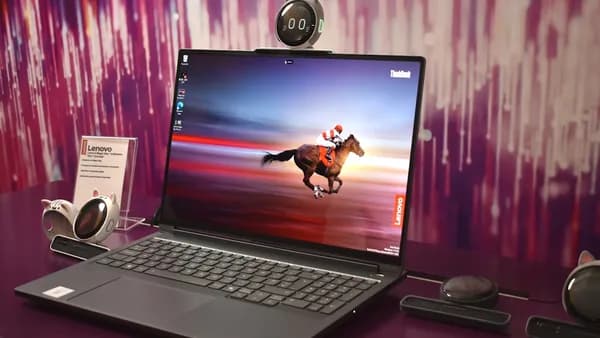
That is the uncomfortable signal from Notebookcheck, which compares the Lenovo Yoga Pro 7i 15 Aura Edition against a discounted MacBook Pro 14 configuration with M5 Pro, 24 GB RAM, and 1 TB SSD available for around $2050. The Yoga, in the cited comparison, costs around $600 more.
That flips the usual Mac-versus-PC script. The issue is not that Lenovo built a bad laptop. Notebookcheck calls the Yoga Pro 7i 15 a strong multimedia machine. The problem is harsher: when Apple is cheaper while also winning on chassis quality, CPU performance, efficiency, quiet operation, and adjusted-brightness battery life, premium Windows laptops lose one of their easiest defenses.
“Apple offers the better overall package for a lower price.”
That line matters because it does not come from Apple marketing. It comes from a laptop review outlet comparing two expensive machines feature by feature.
Lenovo’s Problem: The Yoga Pro 7i 15 Has to Defend a Higher Price Against Apple
The Yoga Pro 7i 15 Aura Edition sits in the premium multimedia category, where buyers expect a strong display, enough performance for demanding creative and productivity work, good speakers, solid battery life, and a chassis that feels expensive.
The MacBook Pro 14 has long been the reference point in that class. The surprise is that Lenovo now has to argue upward from a higher price, not downward from a cheaper Windows alternative. If the Windows machine costs around $600 more, what exactly is the buyer paying extra for?
Lenovo does have real advantages in Notebookcheck’s comparison:
- Gaming: The Yoga’s RTX 5060, paired with Windows’ broader game selection, gives it the edge if games matter.
- Keyboard: Notebookcheck says the Yoga has the better keyboard.
- Ports: The Yoga includes two regular USB-A ports, still useful in daily use.
- Display options: The Yoga’s OLED panel has strong brightness and color accuracy, a higher refresh rate, and can be configured with a touchscreen.
But those advantages do not erase Apple’s wins. The MacBook Pro 14 brings a better chassis impression, Thunderbolt 5, superior CPU performance from the M5 Pro, quieter daily behavior, and stronger battery runtime at adjusted brightness.
That is a tough value equation for Lenovo. Windows compatibility and the RTX 5060 matter, but they need to matter specifically to the buyer. Otherwise, the MacBook looks less like the premium indulgence and more like the rational pick.
The Price Table Makes the Squeeze Obvious
Notebookcheck’s comparison is narrow, but the numbers are enough to show the pressure. The MacBook Pro 14 is not being framed as cheap in absolute terms. It is cheap relative to a Windows laptop trying to compete in the same premium multimedia lane.
| Category | Apple MacBook Pro 14 | Lenovo Yoga Pro 7i 15 Aura Edition |
|---|---|---|
| Cited price position | Around $2050 | Around $600 more than the cited MacBook |
| CPU | M5 Pro | Intel Core Ultra 9 386H |
| Memory/storage in cited MacBook config | 24 GB RAM, 1 TB SSD | Source does not provide the exact matched RAM/storage line in this excerpt |
| Graphics angle | Integrated Apple Silicon graphics | RTX 5060, stronger for gaming in this comparison |
| Display | Mini-LED, superior brightness, matte option available | OLED, strong brightness/color accuracy, higher refresh, touchscreen option |
| Ports | Thunderbolt 5 | Two regular USB-A ports |
| Chassis | Better overall quality in the comparison | Minor hinge creaking noted |
| Noise | Very quiet in everyday and short-load use | Fans audible in short load situations |
| Battery | Better at adjusted panel brightness | Better at full brightness, though the panel is darker |
The missing data matters too. Notebookcheck’s excerpt does not establish warranty terms, repair costs, resale values, battery capacity, weight, or long-term ownership costs. So the cleanest reading is not “MacBooks always cost less over time.” The supported point is sharper: in this specific comparison, the MacBook Pro is already ahead before those longer-term variables even enter the discussion.
Could promotions change the picture? Yes, but only if the Yoga’s street price falls enough to restore the old Windows advantage. At the cited pricing, Lenovo is asking buyers to pay more for a machine that wins mainly on gaming, keyboard feel, USB-A convenience, touch support, and OLED preference.
Apple Silicon Turns Quiet Performance Into a Pricing Weapon
The deepest issue for Windows laptop makers is not one Lenovo model. It is that Apple Silicon lets Apple compete on performance, noise, and battery life at the same time.
Notebookcheck says the M5 Pro is superior to the Intel Core Ultra 9 386H in pure CPU performance. It also says the Intel chip has a bigger focus on efficiency but does not stand a chance against the M5 Pro in either performance or efficiency.
That is the trap. Premium Windows laptops can still offer discrete GPUs, more varied form factors, touchscreens, and ports that Apple does not prioritize. But when the comparison moves to CPU performance per watt, quiet operation, and battery life at normalized brightness, the MacBook Pro becomes difficult to attack.
The Yoga’s fans are audible in short load situations, while the MacBook stays very quiet in everyday use and even under brief load. For a multimedia laptop, that is not a minor comfort detail. It affects the daily feel of the machine.
Readers tracking the broader notebook category can see similar pressure points in MLXIO’s coverage of value-driven laptops such as $550 HP OmniBook 3 Puts Apple's Cheap MacBook on Notice and premium display positioning in OLED Report Signals Apple's Pricier MacBook Ultra Era. The common thread is simple: price only works when the hardware story supports it.
Buyers Should Stop Comparing Brand Stereotypes and Start Comparing Street Prices
The old shortcut was easy: Apple is expensive, Windows is flexible, and the right PC gives better specs for less money.
Notebookcheck’s comparison shows why that shortcut can fail. Here, the MacBook Pro 14 configuration is cheaper than the Yoga Pro 7i 15 Aura Edition while offering several advantages that matter every day.
So who should still prefer the Lenovo? Based on the source, the clearest case is a buyer who wants Windows gaming capability from the RTX 5060, values the broader Windows game catalog, wants a touchscreen, prefers USB-A ports, or prioritizes the Yoga’s keyboard. Those are concrete reasons.
The MacBook Pro becomes the stronger choice when the buyer cares more about CPU performance, quiet operation, chassis quality, adjusted-brightness battery life, Thunderbolt 5, and the Mini-LED panel’s brightness. The display comparison is nuanced: the Yoga’s OLED does not fall apart here. Notebookcheck says it performs well on brightness and color accuracy. But its glossy finish is a drawback, while the MacBook is less problematic on reflections and even has a matte-panel option.
One question should guide the purchase: are the Yoga’s Windows-specific advantages worth paying around $600 more for?
If the answer is no, Apple wins the value argument without needing to be cheap.
Intel and Windows OEMs Need Benefits Buyers Can Feel Immediately
For Intel and premium Windows OEMs, the comparison is a warning about visible value. A processor generation, an Aura label, or a premium OLED panel cannot carry a higher price unless the total machine beats the MacBook in ways buyers feel without reading a spec sheet twice.
Notebookcheck’s evidence points to a practical standard:
- If performance is the pitch, the Yoga loses to the M5 Pro on CPU performance.
- If efficiency is the pitch, the Yoga also loses in Notebookcheck’s comparison.
- If premium build is the pitch, hinge creaking undercuts the argument.
- If display is the pitch, the OLED panel is strong, but the MacBook’s Mini-LED brightness and matte option keep Apple highly competitive.
- If gaming is the pitch, Lenovo has its clearest win.
That last point may be the cleanest positioning path. The Yoga Pro 7i 15 Aura Edition makes more sense when treated as a premium Windows multimedia laptop with real gaming capability, not as a cheaper MacBook Pro alternative. Price it above the MacBook, and Lenovo has to sell the RTX 5060 and Windows compatibility hard.
The Next Test Is Whether Discounts Restore the Windows Value Story
The near-term watch item is pricing, not another spec-sheet argument. If the Yoga Pro 7i 15 Aura Edition drops enough in street pricing, the comparison changes. If it stays around $600 above a discounted MacBook Pro 14, Apple keeps the stronger overall position in Notebookcheck’s framing.
Evidence that would weaken this thesis is straightforward: deeper Lenovo discounts, updated configurations that improve efficiency or noise, or a clearer use case where the RTX 5060 advantage outweighs Apple’s CPU and battery strengths for the same buyer.
Evidence that would confirm it is just as clear: more premium Windows multimedia laptops arriving above discounted MacBook Pro pricing while still losing on quiet performance, efficiency, and chassis polish.
The practical takeaway is blunt. Premium Windows laptops can no longer assume they are the value alternative by default. If Apple can undercut them on price while winning several core laptop fundamentals, the Windows premium tier has a positioning problem, not just a discounting problem.
The Bottom Line
- Apple undercutting a premium Windows laptop weakens the usual Mac-versus-PC value argument.
- Lenovo must justify a higher price despite Apple leading in several core laptop metrics.
- Premium Windows laptops may face tougher buyer scrutiny if discounts make MacBook Pros the cheaper option.