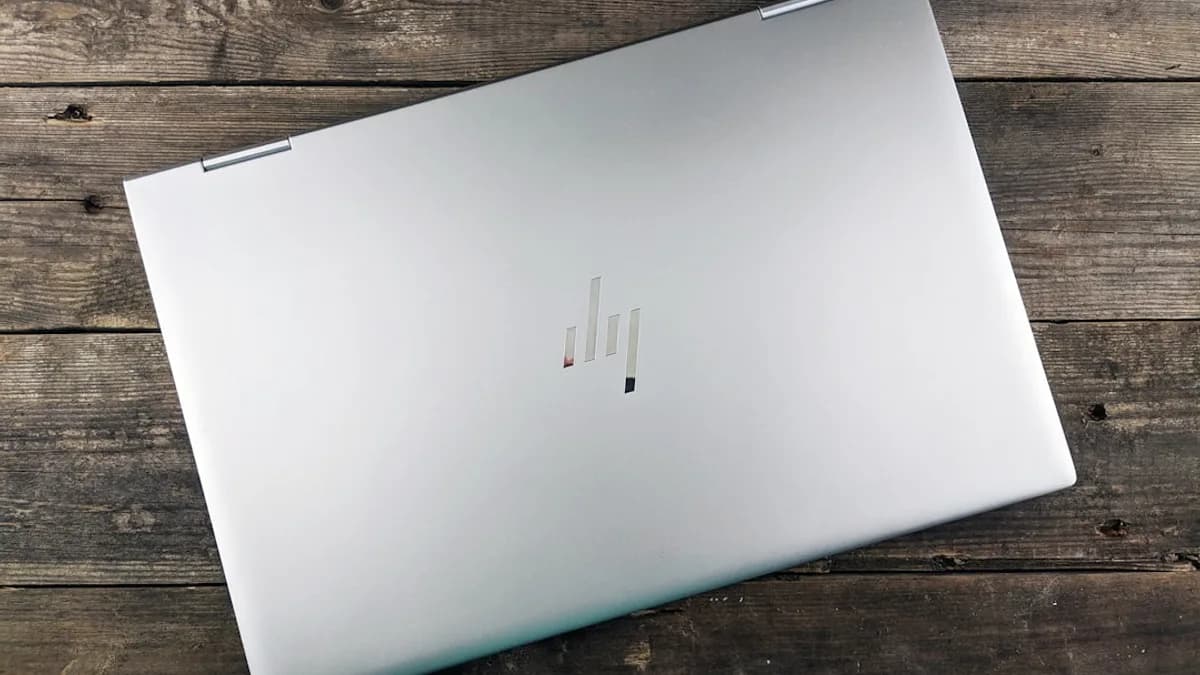
On June 3, 2026, the HP OmniBook 3 14 dropped to $549.99 at Best Buy, putting a Windows laptop with 16 GB of RAM, 512 GB of storage, a 1600p touch display, and a Snapdragon X chip below the psychological $600 line.
That price matters because the comparison target is obvious: the $599 MacBook Neo. As Notebookcheck argues, there have been few Windows laptops that compete cleanly with Apple’s budget MacBook at this level. The OmniBook 3 does not win everywhere. But it attacks the weakest parts of cheap Windows machines: low memory, cramped storage, weak ports, and short useful life.
June 3 deal turns the OmniBook 3 into a real MacBook Neo counterpunch
The headline price is $549.99, with Best Buy listing that as $400 less than a $949.99 “Comparable Value.” Notebookcheck is skeptical of that reference point, and rightly so. The more useful comparison is not to a notional $950 laptop. It is to what buyers usually get around $500 to $700.
“We don’t think you should pay any attention to this $949.99 figure, as the HP OmniBook 3 14 is not a laptop of that price range.”
That is the right framing. The story here is not that HP built a premium machine and Best Buy slashed it. The story is that a low-cost Windows laptop now clears a better baseline.
The HP OmniBook 3 14 configuration includes:
- Processor: 8-core Snapdragon X X1-26-100 ARM SoC
- Memory: 16 GB RAM
- Storage: 512 GB, described by Notebookcheck as replaceable
- Display: 1600p touch-sensitive panel
- Battery: 60 Wh
- Price: $549.99 at Best Buy at the time of writing
That combination is what separates it from the usual budget-bin Windows formula. A cheap laptop can hit a low price by cutting RAM, storage, display quality, battery size, or ports. HP has made different compromises: a less premium chassis and, by implication, the usual risks that come with Windows on ARM.
For readers tracking the pressure Apple has put on this category, this follows the same budget-computing fight we covered in $599 MacBook Neo Traps Dell as Nvidia Targets Apple Silicon. The OmniBook 3 is not trying to beat Apple at industrial design. It is trying to beat Apple on usable specifications.
The spec sheet matters because 16 GB RAM changes the budget-laptop floor
The most important number is not the processor. It is 16 GB.
Notebookcheck contrasts the OmniBook 3 with the $599 MacBook Neo, which comes with 8 GB of soldered RAM, a non-replaceable 256 GB SSD, two Type-C ports, and a 3.5 mm headphone jack. The HP machine doubles memory and storage while adding a wider port mix.
| Device | Price cited in source | Memory | Storage | Ports cited | Battery |
|---|---|---|---|---|---|
| HP OmniBook 3 14 | $549.99 | 16 GB RAM | 512 GB replaceable storage | 2 USB-C, 2 USB-A, HDMI 2.1, 3.5 mm | 60 Wh |
| Apple MacBook Neo | $599 | 8 GB soldered RAM | 256 GB non-replaceable SSD | 2 USB-C, 3.5 mm | 36.5 Wh |
For office work, browser-heavy workloads, video calls, streaming, and background apps, memory is the part that keeps a laptop from feeling old too soon. That is analysis, not a benchmark claim. But it tracks with WIRED’s review context: WIRED said the OmniBook 3 “comes with twice the memory and storage of the MacBook Neo” and called it “the real deal,” while still criticizing its plastic, thicker chassis, cheap-feeling touchpad, and weak speakers.
This is the bargain. HP is not giving buyers a luxury object. It is giving them fewer obvious spec traps.
The port selection also matters. Notebookcheck lists:
- Two Type-C ports with Power Delivery and DisplayPort
- Two Type-A ports
- HDMI 2.1 out
- 3.5 mm audio jack
That is materially more flexible than a two-port machine for students, office workers, and anyone still using USB-A accessories or HDMI displays. It also gives the OmniBook 3 a practical edge that does not show up in CPU charts.
Snapdragon X brings the battery pitch, but ARM remains the buyer’s homework
The OmniBook 3 uses the Snapdragon X X1-26-100, an ARM-based chip. Notebookcheck calls it power efficient and cites HP’s claim that the laptop can last over 20 hours when streaming media online with its 60 Wh battery.
That claim should be treated as a vendor battery estimate, not a universal result. Still, it lines up with the supplied WIRED review context, where the OmniBook 3 16 “came just short of a full 24 hours during a light video-looping test,” while lasting less under heavier workflow use.
The trade-off is compatibility. CNET’s budget laptop roundup flags the broader issue plainly for the Microsoft Surface Laptop 7: “Your Arm-on-Windows compatibility mileage may vary.” WIRED is more specific on gaming, saying the OmniBook 3 and current Snapdragon X laptops are not likely to fare well for gaming because of the ARM architecture.
So the right buyer profile is narrow but common:
- Good fit: browser-first users, Microsoft 365 users, students, email-heavy workers, streaming, documents, video calls
- Riskier fit: buyers who depend on older Windows apps, niche utilities, specialized hardware, or games
- Poor fit: gaming-first users or people who need guaranteed x86 Windows compatibility
This is where the OmniBook 3 is different from a traditional cheap Intel or AMD laptop. It may deliver better battery life and smoother basic use for the right workload. But buyers should check their must-have apps before assuming “Windows laptop” means “everything works exactly the same.”
That question will only get sharper if more ARM laptops arrive in lower price bands. It is also why our coverage of Leaked Nvidia N1X Puts Intel's Laptop Crown at Risk is relevant context: the laptop CPU fight is no longer only about peak performance. It is also about who can deliver battery life, memory, and usable configurations at prices normal buyers will consider.
The MacBook Neo comparison exposes HP’s real compromise
Notebookcheck says the MacBook Neo remains “clearly better” for build quality, display quality, and single-core performance. That matters. Cheap does not erase those gaps.
WIRED’s review context reinforces the same split. It praised the OmniBook 3 for long battery life, solid performance, twice the MacBook Neo’s memory and storage, and strong value. But it also criticized the plastic chassis, thickness, touchpad, and speakers.
So the choice is not “HP beats Apple.” It is more specific:
- Choose HP if you value 16 GB RAM, 512 GB storage, more ports, Windows, and a lower sale price.
- Choose MacBook Neo if build, display polish, speaker quality, and single-core performance matter more.
- Wait if your required software or peripherals make ARM compatibility uncertain.
That makes the OmniBook 3 a practical machine, not an aspirational one. It wins by removing the most annoying compromises from the budget Windows category.
The next test is whether $549.99 becomes a new floor or just a good sale
Notebookcheck includes the standard warning that retailer pricing can change and may be time-limited. That is the immediate caveat. The deal exists at the cited price only as long as Best Buy keeps it there and units remain available.
The larger test is configuration discipline. If more Windows laptops near $600 ship with 16 GB RAM, 512 GB storage, strong battery claims, and better displays, then 8 GB machines with low-end panels become harder to defend. If prices rebound, or if ARM compatibility keeps tripping up mainstream buyers, the OmniBook 3 looks more like a sharp one-off than a category reset.
For now, the read is simple: the HP OmniBook 3 14 at $549.99 is not a perfect laptop. It is more interesting than that. It shows that a cheap Windows laptop can stop apologizing for itself — if the buyer’s apps fit the ARM trade-off.
The Bottom Line
- The HP OmniBook 3 14 brings 16 GB of RAM and 512 GB of storage below the $600 mark.
- It gives budget Windows buyers a more credible alternative to the $599 MacBook Neo.
- The deal signals that cheap Windows laptops are starting to improve on memory, storage, display quality, and longevity.