A phone built to be used less is being sold through a two-year carrier contract that rewards customers for using even less data.
That is the tension behind Light Phone III teaming up with Noble Mobile, the phone network founded by Andrew Yang. Starting Tuesday, 500 Light Phone III units will be available for immediate shipment through Noble Mobile, but only with a $50-per-month, two-year plan totaling $1,200, according to TechCrunch.
Light Phone and Noble Mobile turn restraint into the product
The obvious read is that this is a hardware distribution deal. The sharper read: Light Phone is turning digital restraint into a bundled consumer product, while Noble Mobile is giving that restraint a monthly financial nudge.
The hardware pitch is familiar to anyone who has followed Light. The phone sits between a full smartphone and an old-school flip phone. It supports calls, texts, directions, a directory app, hotspot functionality, and now an OLED screen with front- and back-facing cameras. It is not trying to be an iPhone substitute feature-for-feature.
The Noble layer changes the business model. For the Light Phone plan, Noble Mobile offers 5 GB of data, with the possibility of getting up to $5 back for each unused GB. Noble’s usual plans, TechCrunch reports, include unlimited talk, text, and data for $50 per month, with the option of getting up to $20 back for each unused GB under 20 GB.
“The Light Phone is designed to be used as little as possible, so it’s on brand with Noble,” Light co-founder Joe Hollier told TechCrunch.
MLXIO analysis: Noble is not directly paying people to reduce screen time. It is paying them for lower data usage. That distinction matters. Data use is an imperfect proxy for doomscrolling, but on a phone intentionally stripped of most engagement loops, the proxy is more credible than it would be on a standard smartphone.
The numbers show a distribution fix, not just a wellness pitch
The most concrete numbers in this story are not about attention spans. They are about access.
Without Noble Mobile, Light estimates customers buying the $699 Light Phone III would not receive it until September. Through Noble, 500 devices will be in stock and ready to ship immediately. TechCrunch says this is the first time the Light Phone III has been available immediately and without paying the full device cost upfront.
That matters because Light’s constraint has not only been product philosophy. It has been execution. The company has shipped 20,000 Light Phone III devices since the model launched last spring, while operating as a small startup against mass producers like Samsung and Apple. TechCrunch also cites the ongoing RAM shortage as a factor that has not helped.
The before-and-after is stark:
- Before Noble: Pay $699 upfront and wait until an estimated September delivery.
- With Noble: Sign a $1,200 two-year plan and get access to one of 500 immediately shipping units.
- Before Noble: Light sells minimalism as hardware.
- With Noble: Light and Noble sell minimalism as hardware plus recurring behavior incentives.
That puts this deal closer to a startup go-to-market experiment than a conventional phone launch. The pressure to convert scarcity into momentum is also why early-stage timing matters across hardware and consumer tech, as we noted in Startup Battlefield 200 Puts $100K on a 7-Day Clock.
Andrew Yang’s carrier bet makes incentives the differentiator
The source identifies Noble Mobile as a phone network founded by Andrew Yang, but it does not provide details about Yang’s broader political or business philosophy. So the grounded point is narrower: Noble’s plan design uses cash-back incentives to make lower data use feel like a gain rather than a sacrifice.
That is the core behavioral trick. Most phone plans sell more: more data, more speed, more device financing, more bundled services. Noble’s Light Phone offer sells less usage as something customers can see on a bill.
MLXIO analysis: That could help the Light Phone avoid one of digital minimalism’s oldest problems. Self-discipline is fragile. A device that blocks distraction helps, but a monthly plan that turns restraint into a visible reward gives the behavior a second reinforcement loop.
The risk is also obvious. Customers may ask how rewards are funded, how usage is measured, and whether the economics remain attractive if too many people become “good” low-data users. The TechCrunch source does not answer those questions.
Minimalist phones keep colliding with modern necessities
Light’s design challenge is not whether people want fewer distractions. It is how much modern convenience they are willing to give up.
The Light Phone III includes calls, texts, directions, directory search, hotspot support, and cameras. Those choices show that Light is not building a purist anti-tech object. It is trying to decide which functions count as tools and which functions become traps.
Hollier described users adapting the phone in different ways. TechCrunch reports that most Light Phone customers use it as their primary phone, while some keep an old smartphone without a SIM card and connect it through the Light Phone hotspot when needed. Others are using two phone numbers, closer to a work-phone/home-phone split.
“It’s been really cool to see all the different ways that people fit the Light Phone in, because it’s not really a one-size-fits-all situation,” Hollier said.
That flexibility is useful, but it also exposes the compromise. If minimalism requires carrying a second phone, the product has not eliminated smartphone dependence. It has moved it into a backup layer.
This is why device timing and feature sequencing can matter as much as ideology in phone launches. The tension also shows up in broader handset strategy, including launch-order decisions like Nothing Delays CMF Phone 3 Pro, Shifts to Budget Phones First.
The camera shows where Light draws the line
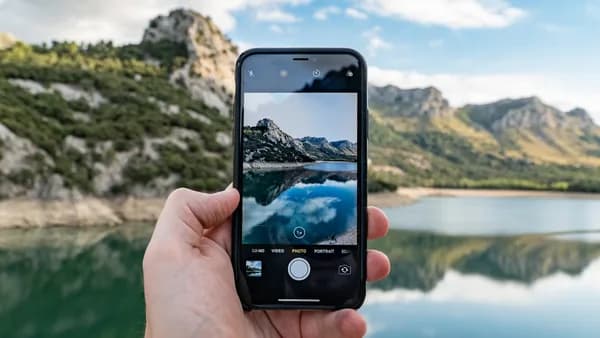
The new model’s OLED screen enabled a major shift from prior e-ink versions: cameras. Light added front- and back-facing cameras, and TechCrunch reports they will be useful when the phone soon supports video calls.
That sounds like a concession. Light’s founders seem to see it as a controlled compromise.
Kaiwei Tang told TechCrunch that some users described taking enormous numbers of iPhone photos they never revisited:
“We talked to people who are like, I took 27,000 iPhone photos last year, and I’ve looked at them zero times, because it’s like, 10 of one meal,” Tang said. “I can tell you how many film photos I took last year.”
Hollier said Light tried to remove the part of smartphone photography that pulls users away from the moment: sharing and waiting for reactions.
“On our camera, we added a physical shutter button, and you can open it with one touch, and you can half-press to start to focus … We wanted it to be fun, sort of nostalgic. It’s not doing any sort of AI sharpening or covering your blemishes. It’s just exactly like an old point-and-shoot camera.”
MLXIO analysis: This is the clearest example of Light’s product philosophy. It is not rejecting technology. It is rejecting the engagement layer that usually surrounds technology.
The weak spot is messaging, not philosophy
The Light Phone still has a practical problem: it does not support RCS texting. It relies on basic SMS, which TechCrunch notes means clunkier group chats, no end-to-end encryption, and compressed photos and videos.
That limitation may not bother Light’s target user. It may even filter for people who care less about how their messages appear to iPhone-heavy social circles. But it is still a real trade-off, especially for anyone whose daily communication depends on modern group messaging norms.
The source also raises questions the product has not fully settled:
- Ride-share apps: Safety feature or Big Tech compromise?
- WhatsApp: Essential for international communication or another app dependency?
- Two-device use: Practical fallback or proof that minimalism remains incomplete?
- Video calls: Necessary modern utility or another step toward smartphone creep?
These are not edge cases. They are the product.
The next test is whether restraint can survive convenience
The Noble partnership should draw attention because it fixes two immediate Light Phone problems: upfront cost and wait time. A customer can now avoid the $699 upfront payment and get one of 500 units right away, as long as they accept the $1,200 carrier commitment.
But the larger test is not the first batch. It is whether paid disconnection feels useful after the novelty fades.
Evidence that would support the thesis: Light sells through the Noble inventory, customers use meaningfully less than 5 GB, and the cash-back model becomes part of why they stay. Evidence that would weaken it: users keep falling back to old smartphones, messaging limitations become deal-breakers, or the rewards feel too small to change behavior.
The anti-doomscrolling economy may grow, but this deal shows the hard part. People may want freedom from smartphones. They may also want maps, cameras, group chats, video calls, work access, and international messaging. The winning version of digital minimalism will not be the purest. It will be the one that makes restraint practical enough to keep.
The Bottom Line
- Light Phone and Noble Mobile are packaging digital minimalism as a paid carrier product.
- The deal ties lower data usage to cash rewards, even if data use is only an imperfect proxy for screen time.
- The two-year, $1,200 commitment tests whether consumers will pay for a phone experience designed around restraint.