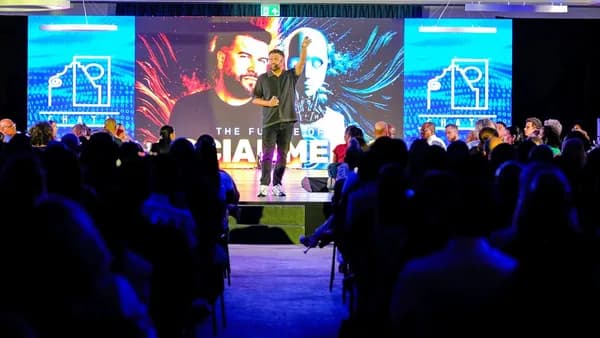
Founders waiting for a cleaner deck are about to run out of time: Startup Battlefield 200 applications and nominations close May 27, with selected startups getting a shot at $100,000 in equity-free funding and a stage at TechCrunch Disrupt 2026. The program will bring 200 early-stage startups to Disrupt, held October 13-15, according to TechCrunch.
The deadline matters because this is not just a pitch slot. Selected companies get investor exposure, TechCrunch visibility, pitch training, and access to an event audience of 10,000+ attendees, including VCs, media, and potential partners.
“Startup Battlefield 200 has never been a competition for the most polished companies. It’s a competition for the most promising ones.”
That line from TechCrunch captures the tension. The program is built for startups that may still be early, unfinished, or pre-revenue — but need to prove they are more than a clever demo.
Founders waiting to look polished have one week left
The assumption many early founders make is that public pitching should wait until the company looks finished. Startup Battlefield 200 is pushing the opposite message: apply before the company is fully sanded down, if the product and market case are strong enough.
Applications are open globally and across industries. TechCrunch says most selected companies are pre-Series A, though some Series A startups may qualify case by case.
Founders can apply directly. Investors, operators, mentors, and community members can nominate startups, but a nomination is not the finish line. TechCrunch warns that nominated startups still need to complete the application before May 27.
The basic bar is not cosmetic. Applicants should have:
- Product: A functional MVP.
- Demo: A clear product demonstration.
- Market: Strong market potential.
- Team: Founders with vision, execution, and real traction.
MLXIO analysis: That mix tells founders where to spend the final week. A sharper demo and a clearer market argument likely matter more than a heavily designed pitch deck. The application itself becomes a test of whether the company can explain why it should exist now.
Related MLXIO reading: $2M Bet Targets Fragrance’s 50-Year Lab Bottleneck, AI patent search, Fresha’s beauty booking bet, India travel payments, and Deep Fission’s nuclear AI IPO.
The prize is $100,000, but the real fight is for attention
The headline incentive is simple: one startup wins $100,000 in equity-free funding. But the broader package is built around distribution, access, and signal.
Every selected company receives a place inside the Startup Battlefield 200 cohort. TechCrunch says each of the 200 selected startups gets a fully funded three-day exhibition booth at Disrupt, free team passes, dedicated pitch training, founder masterclasses with VCs and operators, a featured startup profile in the event app, press list access, and lead-generation opportunities.
Every selected company also pitches. Some pitch on the Disrupt Stage. Others pitch on the Pitch Showcase Stage. The top 20 finalists pitch live on the Disrupt Stage, and one winner takes the prize.
That creates a clear before-and-after for founders:
- Before selection: A startup is one of thousands trying to get investor attention.
- After selection: It is one of 200 companies presented inside a curated TechCrunch program.
- Before finalist status: The company gets visibility, training, and access.
- After finalist status: It competes in front of the main-stage audience for the $100,000 prize.
MLXIO analysis: For founders preparing seed or pre-seed fundraising, the money is not the only asset. The forced pitch discipline, VC feedback, and media access can shape the next financing conversation. That does not replace traction. It can make traction easier to explain.
Battlefield’s alumni record raises the stakes for this cohort
TechCrunch points to a track record that gives the application deadline more weight. More than 1,700 companies have competed in Startup Battlefield 200. Together, they have raised over $32 billion and produced more than 250 exits, including acquisitions by Microsoft, Google, Salesforce, Uber, and Amazon.
The alumni list includes Dropbox, Cloudflare, Discord, Fitbit, Trello, and Mint. TechCrunch also notes that Dropbox acquired fellow Battlefield 200 alum DocSend in 2021.
That history is useful context, but it should not be read as a guarantee. Battlefield participation can validate a startup enough to open doors. It cannot prove product-market fit by itself.
The more practical lesson is narrower. Companies that later became large or strategically valuable were once early enough to benefit from public scrutiny. A strong Battlefield application is not just a marketing form; it is a compressed argument for why a startup deserves investor time.
The May 27 cutoff shifts pressure from ideas to execution
The final week changes the job for applicants. Founders do not need to solve every weakness before applying, but they do need to show that the company is more than a thesis.
A competitive application should make the core case quickly:
- Problem: What is broken or underbuilt?
- Product: What has been built, and how does it work?
- Differentiation: Why is this approach meaningfully different?
- Traction: What evidence shows execution or customer pull?
- Scale: Why could this become category-defining?
- Founder fit: Why is this team credible for this market?
Nominators face their own clock. If they know a founder with a strong product but limited visibility, the nomination needs to happen early enough for the founder to finish the application.
TechCrunch says thousands apply every year, 200 are selected, 20 become finalists, and one wins. That funnel is steep enough that rushed submissions carry obvious risk.
MLXIO analysis: The best use of the remaining time is focus. Founders should cut vague ambition and show evidence. A company can be pre-launch or pre-revenue, but it still needs a concrete demo, a market argument, and a reason judges should believe the team can execute.
After May 27, the signal moves to the selected 200
Once applications close, the next phase will center on who makes the Startup Battlefield 200 cohort and which companies advance toward live pitching at TechCrunch Disrupt 2026.
The source does not provide a selection announcement date. It also does not say how the 200 slots will break down by sector, though TechCrunch tags the program across areas including AI, Biotech & Health, Climate, Fintech, Fundraising, Startups, and Venture.
That makes the cohort itself the next signal. The selected startups will show which early-stage companies TechCrunch chooses to place in front of investors, media, and a large startup audience.
For founders and nominators, the practical takeaway is immediate: the window closes May 27. After that, the opportunity shifts from submitting an application to watching which startups earned the stage.
Key Takeaways
- Founders have until May 27 to apply or complete a nomination for Startup Battlefield 200.
- Selected startups get exposure at TechCrunch Disrupt 2026 in front of 10,000+ attendees.
- The program targets promising early-stage startups, including many pre-Series A companies with functional MVPs.