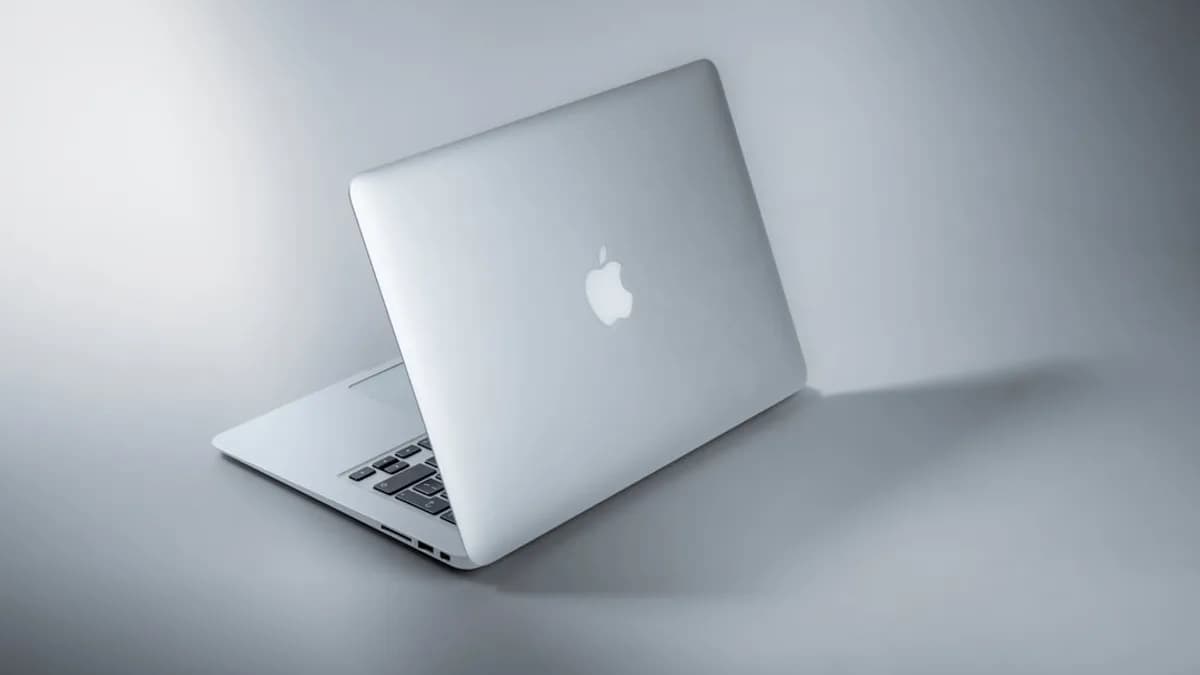
Apple needed five long years to unwind the 2016 MacBook Pro redesign, and that is exactly why the rumored MacBook Ultra should not replace the MacBook Pro.
If Apple’s next major laptop redesign is truly a thinner, touch-enabled, OLED-equipped flagship, it should get a new name and a new lane, according to 9to5Mac . My view is simple: MacBook Ultra would be good news for MacBook Pro users because it would let Apple experiment without turning its core professional laptop into a test bed again.
Apple should call the radical OLED redesign MacBook Ultra and leave MacBook Pro alone
The MacBook Pro name now carries a practical promise. Not glamour. Not thinness above all else. It means performance, battery life, ports, thermals, keyboard reliability, and predictable workflows for people who buy laptops to make money with them.
That is the real branding issue. If Apple ships a dramatic redesign as the next MacBook Pro, every pro user gets dragged into the trade-off. If Apple calls it MacBook Ultra, buyers understand the bargain: this is the aspirational machine, not necessarily the safest professional default.
The rumored package sounds exciting. OLED, a touch screen, a thinner and lighter body, and possibly a cellular option all point to a Mac that pushes the line forward. But progress has costs. Thin bodies can pressure battery size, thermals, and port selection. Touch can be useful, or it can become another feature that looks better in a keynote than in a studio.
That is why the name matters. Product segmentation is not just marketing when it protects the right users from the wrong compromises.
The 2016 MacBook Pro redesign showed what happens when Apple experiments on its core pro laptop
The cautionary tale is not theoretical. In 2016, Apple introduced a MacBook Pro redesign that 9to5Mac describes as problematic on several fronts: the unreliable butterfly keyboard, an all-USB-C port setup, the controversial Touch Bar, and a thinner design that did not align with what many pro users valued most.
“Apple’s current MacBook Pro is, in many ways, an apology model.”
That line lands because it is true. The current MacBook Pro design, first introduced in 2021, did not win back trust by being radically clever. It won by undoing pain. Apple restored ports like HDMI, SDXC card, and MagSafe. It ditched the Touch Bar. It fixed the keyboard direction. It bulked up to support performance and battery life.
That was not nostalgia. It was a correction.
The lesson for Apple is blunt: a dramatic redesign can be thrilling, but it should not automatically replace the machine professionals already trust. The 2016 model tried to force elegance, novelty, and minimalism into the Pro slot. The 2021 model restored the idea that “Pro” should mean fewer compromises, not prettier ones.
A MacBook Ultra tier would protect the MacBook Pro from another thinness-first cycle
A separate MacBook Ultra would give Apple room to chase the future without weakening the MacBook Pro’s identity.
Here is the healthier split:
| Laptop path | Best fit | Trade-off Apple can make |
|---|---|---|
| MacBook Pro | Users who need ports, battery life, sustained performance, and workflow predictability | Refine the current formula without chasing every new design idea |
| MacBook Ultra | Buyers who want the newest display tech, thinner hardware, touch, and a more premium machine | Push bolder industrial design without forcing it on every pro |
This is segmentation done right. Not fewer choices. Clearer choices.
Readers following the display side of this story should also see our OLED MacBook Pro screen production coverage and our OLED MacBook Pro panel-yield reporting. The point is not that OLED is bad. The point is that new display technology should arrive in a product tier where buyers knowingly accept the first-wave trade-offs.
The MacBook Ultra could be Apple’s halo laptop. Let it be thin. Let it be expensive. Let it carry the most ambitious screen and the riskiest interface ideas. Just do not make every MacBook Pro buyer pay for that experiment.
MacBook Pro buyers need stability more than a headline-grabbing redesign
Apple currently describes the 14-inch and 16-inch MacBook Pro as “The most advanced Mac laptops for demanding tasks,” according to Apple. That phrase sets expectations. Demanding tasks do not benefit from surprise port removals or uncertain thermal compromises.
Many pro buyers do not upgrade because a laptop looks new. They upgrade when the machine removes friction. Fewer dongles. Better battery life. Reliable typing. Strong displays. Enough headroom to work under pressure.
The current Apple silicon MacBook Pro line rebuilt that trust because it gave users a machine that felt designed around production rather than presentation. MagSafe, HDMI, SD card support, a dependable keyboard, and longer battery priorities are not nostalgic features. They are infrastructure.
That matters for studios, freelancers, developers, and teams planning hardware purchases. A conservative MacBook Pro path lets them buy with confidence. The best professional laptops often improve through refinement: better chips, better displays, quieter cooling, longer battery life, and fewer workflow disruptions.
Apple can still innovate. It just should not confuse reinvention with progress.
MacBook Ultra branding could still make Apple’s laptop lineup messier
The strongest counterargument is fair: another MacBook name could confuse buyers.
Apple’s Mac page already presents MacBook Neo, MacBook Air, and MacBook Pro. Adding MacBook Ultra risks turning a clean lineup into a hierarchy that only Apple obsessives understand. If Ultra simply means “more expensive Pro,” users will read it as upselling, not clarity.
There is also a sharper risk. Apple could reserve the best screens, chips, or features for Ultra and leave MacBook Pro users feeling artificially constrained. That would poison the strategy. The Pro tier cannot become the “almost best” laptop for people who cannot stretch to Ultra.
But the branding still works if Apple draws the line honestly. MacBook Pro should mean professional reliability. MacBook Ultra should mean experimental luxury. If the distinction is clear, the new name reduces confusion rather than adding to it.
Apple’s smartest move is to make MacBook Ultra the halo laptop, not the new default
Apple should keep the MacBook Pro focused on the fundamentals: sustained performance, battery life, ports, keyboard quality, strong displays, and fair configuration choices. That is the machine pros asked Apple to bring back after 2016. Apple should not forget why it worked.
The MacBook Ultra can live somewhere else. It can be the flagship for buyers who want the thinnest design, the newest display technology, touch input, and whatever engineering trade-offs Apple believes are worth making.
That gives both groups a better product. The risk-takers get the future early. The working pros keep the machine that already earns its name.
Apple does not need to make the MacBook Pro its laboratory again. If it wants a laptop that lives on the edge, give it a new name — and let the Pro keep doing the work.
The Bottom Line
- A separate MacBook Ultra line could protect MacBook Pro users from risky design compromises.
- Apple’s 2016 MacBook Pro redesign remains a warning about experimenting on a core professional product.
- Clear product segmentation would help buyers choose between cutting-edge features and dependable pro workflows.