Record revenue should give memory module makers breathing room; instead Adata, TeamGroup, Micron and other firms are raising about $880 million to buy chips before NAND and DRAM prices move further against them.
That is the tension beneath the headline. Storage and memory companies are not chasing rescue capital because demand collapsed. They are raising cash because demand is strong, prices are surging, and inventory has become the scarce asset, according to Notebookcheck.
Memory Makers Are Borrowing Before the NAND and DRAM Window Narrows Further
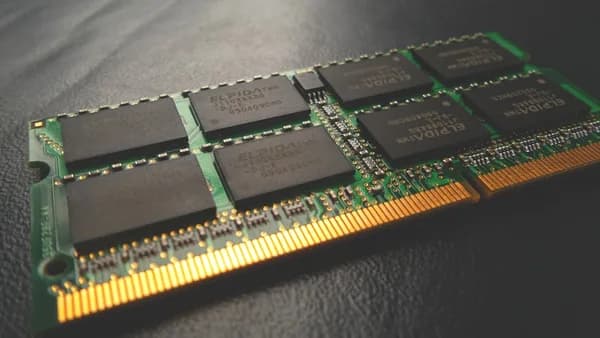
The estimated NT$28 billion, or $880 million, funding push is less a routine capital markets exercise than a race to lock down supply. The companies involved turn raw DRAM and NAND chips into the RAM sticks, SSDs and storage products that move through PCs, laptops, smartphones and consoles.
The unusual part is the timing. Notebookcheck reports that revenues and demand are at all-time highs, yet manufacturers still need outside capital to afford enough inventory. That tells investors something important: in a tightening memory cycle, customer demand is not the binding constraint. Chip access is.
The funding mix shows how seriously these firms are treating the shortage risk:
- Debt: bank loans and bonds to fund near-term chip purchases.
- Equity: private share sales to strengthen buying capacity.
- Inventory strategy: buy more NAND and DRAM before replacement costs rise again.
This is the core analytical split. If prices keep climbing, debt-funded inventory protects margins and keeps orders moving. If prices peak sooner than expected, that same inventory can become a balance-sheet trap.
$880 Million Shows How Quickly NAND and DRAM Pricing Power Has Shifted
Adata is leading the capital raise. The company has already issued NT$2 billion in convertible bonds and secured NT$12 billion in syndicated bank loans. It also plans to privately sell 30 million new shares.
Other firms are moving too. Goldkey Technology has raised NT$4.5 billion. TeamGroup has raised NT$2 billion through bonds. Apacer added NT$1 billion. Innodisk, Transcend and Silicon Power are each preparing to raise hundreds of millions more.
The numbers from related reporting show why they are acting now. Tom’s Hardware cited TrendForce estimates that conventional DRAM contract prices rose 90% to 95% quarter over quarter in Q1 2026, with another 58% to 63% increase expected in Q2. NAND flash contracts climbed roughly 60% in Q1, with a projected 70% to 75% increase for Q2.
That is not a normal procurement headache. It means each delayed purchase can reset a company’s cost base sharply higher.
| Company | Reported financing move | Strategic purpose |
|---|---|---|
| Adata | NT$2 billion convertible bond, NT$12 billion bank loans, planned 30 million share private placement | Build NAND and DRAM inventory |
| Goldkey Technology | NT$4.5 billion raised | Fund chip purchases |
| TeamGroup | NT$2 billion through bonds | Secure supply |
| Apacer | NT$1 billion added | Support inventory needs |
| Innodisk / Transcend / Silicon Power | Hundreds of millions planned | Prepare for tighter allocation |
The useful read-through is simple: module makers are accepting balance-sheet risk because the risk of not having product may now look worse.
Tight Supply Is Rewriting the Usual Memory-Cycle Playbook
Memory markets are cyclical, but this moment has a sharper edge because downstream companies have limited control over allocation. Module makers can assemble SSDs and RAM. They cannot force upstream chip suppliers to ship more finished NAND and DRAM.
Adata Chairman Simon Chen described the shift bluntly in March:
“The chip supply crunch has transitioned the market into a seller’s market.”
He also said NAND flash producers’ inventory had fallen to “an unprecedentedly low level ranging from three to five weeks now.”
That matters because a seller’s market changes behavior. Buyers stop optimizing only for price. They start optimizing for access.
The before-and-after is stark:
- Before: strong demand meant module makers could convert chip supply into revenue.
- Now: strong demand and rising chip prices mean firms must finance inventory just to stay competitive.
- Next pressure point: companies that wait may face both higher costs and weaker availability.
This is also where a longer-cycle risk enters. The shortage case can be true today while the oversupply risk returns later. For readers tracking that opposite scenario, see MLXIO’s related analysis, Chinese DRAM Surge Could Crush Prices by 2027, Ex-Samsung Exec Warns.
Adata, TeamGroup and Micron Face the Same Shortage From Different Positions
The shortage does not hit every player in the same way.
Adata and TeamGroup are exposed as module makers. Their businesses depend on sourcing chips, assembling finished products and selling into end markets. If chip prices jump before they can pass costs through, margins get squeezed. If they cannot source enough chips, revenue opportunities disappear even when customers are ready to buy.
Micron, as a memory manufacturer named in the Notebookcheck report, sits in a different part of the chain. Stronger pricing can help upstream producers, but chipmakers also face supply planning, customer commitments and capital intensity. The source material does not provide Micron-specific financing details, so the cleaner read is structural: upstream firms benefit more directly from pricing power, while downstream module makers must pay that price to keep shelves supplied.
Customers are caught in the middle. The supplied reporting ties NAND and DRAM to PCs, laptops, smartphones and consoles. Tom’s Hardware also notes that memory manufacturers continue to prioritize high-margin server DRAM and HBM over consumer and mobile applications.
MLXIO analysis: that allocation pattern favors buyers with larger, higher-value orders and hurts price-sensitive device categories first. Consumer hardware makers already competing on thin spec differences — the kind of pressure visible in products like Lenovo LOQ 15 Bets on Loud Green, Not Faster Chips — have less room to absorb memory inflation without changing configurations or pricing.
Stockpiling Can Defend Margins—or Build the Next Inventory Problem
Buying early has obvious benefits. A company that secures NAND and DRAM before the next price increase can protect gross margins, fulfill orders during shortages and avoid scrambling in the spot market.
Adata’s own inventory plan shows the scale of the bet. Chen said the company was already sitting on NT$30 billion, or $948 million, in inventory and wanted to lift that above NT$35 billion by the end of March.
That is rational if prices keep rising. It is dangerous if the cycle turns.
Debt-funded inventory magnifies both outcomes:
- Upside: lower average chip cost versus later buyers.
- Downside: expensive inventory if contract prices reverse.
- Cash pressure: more working capital tied up in components.
- Accounting risk: potential write-downs if market prices fall below carrying values.
- Financing risk: interest and repayment obligations remain even if demand cools.
The source material supports the shortage case today. It does not prove how long the shortage will last. That distinction matters.
Higher Memory Prices Will Not Hit Every Buyer Evenly
NAND and DRAM are core components across servers, PCs, smartphones, SSDs, gaming devices and embedded systems. But the ability to absorb higher memory costs varies widely.
Premium enterprise hardware and server-related demand can often tolerate higher component costs if performance or availability matters more than bill-of-material discipline. Budget consumer devices have less flexibility. A small increase in memory or storage cost can force a lower-capacity configuration, a higher retail price or a margin hit.
Procurement teams have a few options, none perfect:
- Longer contracts: secure supply, but risk locking in high prices.
- Earlier ordering: reduce allocation risk, but tie up cash.
- Supplier diversification: helpful only if alternative supply exists.
- Configuration changes: reduce memory or storage, but weaken product appeal.
The biggest practical signal is not just retail SSD pricing. It is whether more downstream firms feel forced to finance inventory rather than fund it from operating cash.
The Next Phase Depends on Pricing, Allocation and Fresh Capital
The next test is whether this remains a controlled upcycle or becomes a broader shortage that forces more companies into debt and equity raises.
Evidence that would support the bullish inventory thesis:
- Contract prices keep rising quarter over quarter.
- Supplier inventories remain near the low levels Chen described.
- More module makers raise capital for chip purchases.
- Server DRAM and HBM continue to receive priority over consumer supply.
Evidence that would weaken it:
- NAND or DRAM pricing stabilizes sooner than expected.
- Inventory levels rebuild across producers.
- Demand softens before module makers can sell through expensive stock.
- Debt-funded buyers report margin pressure or write-downs.
For now, the signal is clear. In memory, access to chips is becoming a competitive advantage. The winners will be the companies that secure supply without overextending their balance sheets. Late buyers may face the worst mix: higher prices, weaker allocation and fewer ways to catch up.
The Bottom Line
- Memory module makers are raising capital because chip access, not demand, is becoming the key constraint.
- Higher NAND and DRAM costs could flow through to SSDs, RAM, laptops, smartphones and consoles.
- Debt-funded inventory may protect margins if prices keep rising, but it creates risk if the cycle turns.