KeySmart SmartCard Pro solves the most obvious AirTag problem Apple still has not addressed: wallets do not want a puck. That matters most to people who carry slim billfolds, MagSafe wallets, or card holders and have spent years choosing between trackability and an ugly bulge.
The new tracker is 2.4mm thin, weighs under 20g, supports Apple Find My and Google Find Hub, and charges wirelessly, according to 9to5Mac . My view: this is not just another AirTag alternative. It is a clean reminder that item tracking has matured faster than Apple’s original AirTag shape.
“It’s ultra-thin, rechargeable, works with both Apple Find My and Google Find Hub, and honestly feels more premium than most trackers I’ve tested.”
That is the whole argument in one sentence. The SmartCard Pro is not trying to beat AirTag by being flashier. It tries to remove the everyday friction AirTag creates in a wallet.
For readers following Apple’s wider product priorities, this sits alongside a familiar pattern we have covered in WWDC 2026 Puts Apple’s Most Annoying OS Gaps on Trial and Case Leak Exposes Foldable iPhone Ultra Before Apple: small design decisions can matter as much as headline hardware.
Wallet carriers: KeySmart SmartCard Pro exposes the AirTag shape problem
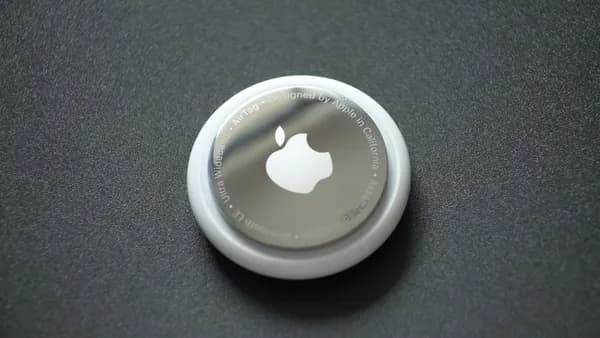
AirTags were a strong product when Apple introduced them five years ago. They worked well, lasted about a year before needing a battery replacement, and fit naturally into Apple’s device-finding system. For keys, bags, and luggage, the round design makes sense.
Wallets are different.
A puck tucked into a billfold changes how the wallet feels. It creates a raised corner. It fights the very reason people buy slim wallets in the first place. The practical question is simple: if a tracker makes your wallet worse every day, how long before you stop carrying it?
That is where the SmartCard Pro lands its first punch. A card-style tracker matches the shape of the object it is protecting. Fernando Silva at 9to5Mac tested it across metal slide-out wallets, traditional leather bifolds, and small MagSafe wallets, and found that it “disappears” among other cards.
That is not cosmetic. It is the product.
A tracker only works if it is present when something goes missing. If the form factor annoys users into leaving it behind, the network does not matter.
Slim-wallet users: a credit-card shape fixes the visible bulge
The SmartCard Pro is described as basically the thickness of 2 regular cards or one metal card. That is the kind of compromise wallet users can accept.
The source also points to a more premium hardware feel: polished aluminum edges, a transparent shell, and a semi-translucent material that shows the battery, charging coil, and pairing button. That matters because third-party trackers often feel like something you hide. This one appears designed to be seen.
| Feature | AirTag | KeySmart SmartCard Pro |
|---|---|---|
| Wallet fit | Round puck creates bulk | 2.4mm card-style body |
| Battery approach | About one year before replacement | Up to 24 months on one charge |
| Charging | Battery replacement | Qi magnetic wireless charging |
| Networks | Apple Find My | Apple Find My and Google Find Hub |
| Weight | Not specified in source | under 20g |
| Water rating | Not specified in source | IPX8 |
The question for buyers is not whether the SmartCard Pro is technically impressive in isolation. It is whether it removes enough annoyance to earn permanent space in a wallet.
On that test, the shape is the story.
Multi-tracker owners: rechargeable hardware cuts the chore, if the claim holds
The second standout feature is the battery model. The SmartCard Pro includes a 350mAh battery, supports Qi magnetic wireless charging, works with MagSafe-style charging, and includes an LED light indicator to show charging status.
That feels more modern than swapping coin cells, especially for users who keep trackers in multiple places: wallet, bag, luggage, keys, travel pouch. A single battery replacement is minor. Several become a chore.
KeySmart claims up to 24 months of battery on one charge. If that holds in normal use, the maintenance burden drops sharply. Charge it, forget it, and come back to it long after you have stopped thinking about the tracker.
The fair question: will real-world battery life match the claim after months of pinging, wallet pressure, heat, and daily carry?
That is where buyers should stay disciplined. The source reports the stated battery life and positive early experience, but long-term wear is still not established. Wireless charging also removes the port concern entirely, based on the listed specs, but the durability of the body, charging coil, magnets, and internal battery over time remains a watch item.
Mixed-device households: Apple Find My plus Google Find Hub is the real power move
The most strategic feature is not thinness. It is dual-network support.
The SmartCard Pro supports both Apple Find My and Google Find Hub, which makes it more flexible than a tracker tied to one phone camp. That matters for families, shared travel gear, and mixed-device households where the person who loses the item may not use the same phone platform as the person who bought the tracker.
Apple says Find My can locate devices and supported items through its network, including when items are offline, using “over a billion iPhone, iPad, and Mac devices around the world,” according to Apple. Apple also highlights features such as playing a sound, Lost Mode, location sharing for lost items, and support for Find My–compatible products.
KeySmart’s move is to sit across the divide rather than force the buyer to choose upfront.
That does not mean Apple and Google have failed at everything. It means accessory makers can win by designing around how households actually behave. People share bags. They lend keys. They travel together. They mix phones.
One question should drive this category now: why should a wallet tracker care which phone brand wins the household?
Apple loyalists: AirTags still win on simplicity and trust
The strongest counterargument is obvious: AirTags remain the safest default for many iPhone users.
They are familiar. They are first-party. They sit deep inside Apple’s Find My experience. Apple’s own Find My page emphasizes privacy, encrypted location relay, Lost Mode, item sharing, and sound playback. For many buyers, that trust beats spec-sheet advantages.
The SmartCard Pro also has open questions. The source praises its loud speaker, easy pairing process, and premium build, but early impressions are not the same as multi-year proof.
Known concerns include:
- Durability: The card is thin, and daily wallet pressure is unforgiving.
- Battery aging: A rechargeable tracker depends on battery health over time.
- Support: Long-term app, firmware, and network support will matter.
- Pricing: The SmartCard Pro costs $49 for one, $127 for a 3-pack, and $174 for a 5-pack.
- Feature parity: The source does not establish that it matches every AirTag capability Apple promotes.
There is also a cheaper KeySmart option. The SmartCard Gen 3 costs $39 and offers the same listed features, but with 11 months of battery rather than up to 24 months.
So yes, AirTag still has a clean argument: buy the Apple thing, pair it, move on.
But that argument weakens inside a wallet.
Apple and accessory makers: the next tracker fight is shape, battery, and network choice
The SmartCard Pro should push Apple to broaden the AirTag line. Not because KeySmart has somehow made AirTags obsolete. It has not. But because KeySmart shows how much practical room remains in item tracking when the shape changes.
A mature tracker category should not be trapped in one design. Keys, luggage, backpacks, wallets, passports, camera bags, and card holders do not all ask for the same hardware.
For buyers, the practical takeaway is narrow but useful: if your tracker lives in a wallet, evaluate thickness, battery maintenance, speaker volume, and network support before brand loyalty. The SmartCard Pro’s 2.4mm body, wireless charging, up to 24-month battery claim, loud speaker, and Apple Find My / Google Find Hub support make it one of the more compelling wallet-first designs described so far.
For Apple, the signal is sharper. AirTag does not need to be replaced. It needs siblings.
The future of item trackers should be thin, rechargeable, and flexible across households. It should not leave a lump in the corner of a wallet and call that good enough.
Key Takeaways
- The SmartCard Pro addresses a common AirTag weakness by fitting wallets without adding puck-shaped bulk.
- Support for both Apple Find My and Google Find Hub makes it useful across more device ecosystems.
- Its rechargeable design reduces the battery-swap friction associated with traditional trackers.