Can Britain force Apple to open iPhone payments without letting Apple decide what “open” costs?
That is the real fight inside the UK’s new proposal. Britain’s Competition and Markets Authority has proposed rules that would require Apple to let developers link users to third-party payment options for apps and subscriptions outside the App Store, according to 9to5Mac . The sharper part is not the link-out right. It is the CMA’s attempt to stop Apple from turning that right into a dead end through fees, warnings, or technical friction.
Can the UK force payment choice without leaving Apple in control of the toll booth?
The CMA is not just asking Apple to permit alternatives. It is trying to define what counts as a meaningful alternative.
The proposal would let developers steer users to payment options outside both Apple and Google app stores. Google has said it is already taking steps to comply, according to the source material. Apple opposes the move.
The UK regulator appears to have studied Apple’s responses in the US and EU and drawn a blunt lesson: a formal right is weak if the platform can attach costs or warnings that make the right unattractive.
That is why the fee language matters. Reuters, cited by 9to5Mac, reported that the CMA would require any fees for steering to be “fair and reasonable” and lower than current app store commissions. The regulator also wants savings passed to consumers or reinvested in innovation.
“While it is only fair for Apple and Google to be compensated for the services they provide, any fees they charge must be justified through a robust, evidence-led framework involving due reference to both cost and value,” Will Hayter, executive director for digital markets, is expected to say, according to an excerpt of his speech cited in the report.
MLXIO analysis: That is the core regulatory move. The CMA is not treating payment steering as a binary permission. It is treating pricing, user flow, and implementation as part of the remedy.
Why does the proposal also reach beyond the App Store and into Apple Pay?
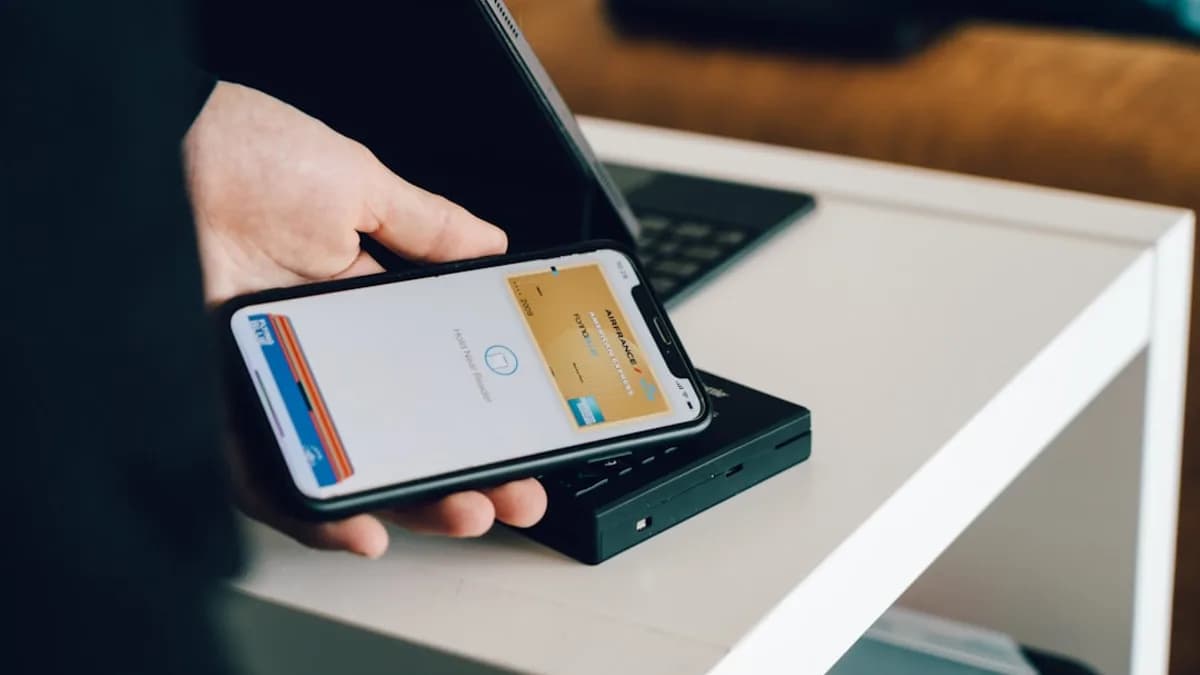
The app-payment proposal is only half the story. The CMA is also considering requiring Apple to open access to the iPhone’s near-field communication technology, the chip capability used for contactless payments.
Today, Apple does not permit banks or other financial institutions to use that NFC access in the way needed to compete directly with Apple Pay on iPhones, according to the source material. The CMA proposal would change that.
The regulator said this could allow developers to offer payment services inside their own iOS apps. It could also let UK fintech companies build alternatives to Apple Wallet, including account-to-account payments and emerging technologies such as digital currencies.
| Area targeted by CMA | Current Apple position described in source | UK proposal’s practical effect |
|---|---|---|
| App Store payments | Developers must work within Apple’s payment structure unless specific exceptions apply elsewhere | Developers could link users to outside payment options |
| Steering fees | Apple has argued in the US that it can charge commissions even on purchases made outside the App Store | Fees would need to be fair, reasonable, and lower than current app store commissions |
| NFC access | Apple does not permit banks or other financial institutions to use the iPhone NFC chip for rival wallet services | Apple Pay rivals could become possible in the UK |
| Apple Wallet competition | Apple controls the default iPhone contactless payment route | Fintechs could build alternative wallet experiences |
The wallet piece is more speculative than the app-payment piece. The CMA is “considering” opening NFC access. That is not the same as imposing a final obligation.
Still, it widens the conflict from software distribution to iPhone payment infrastructure. For readers tracking Apple’s payment ambitions, this sits naturally beside MLXIO’s coverage of Checkout Cash: Apple Pay Turns Amex Points Spendable, though the CMA proposal concerns access for rivals rather than new Apple Pay features.
Is Britain targeting Apple’s rules — or Apple’s method of complying with rules?
The phrase hanging over the UK proposal is “malicious compliance.” In this context, it means technically following a legal requirement while designing the implementation so that few developers or users will actually use it.
The source material points to two examples.
In the EU, Apple was required to permit third-party app stores. 9to5Mac says Apple then used “irritating and scary” screens intended to deter iPhone owners from using competing app stores.
In the US, a court ruled that developers have the right to direct iPhone users to third-party payment platforms for app purchases and subscriptions. Apple then insisted it could charge commissions even on purchases made outside the App Store. 9to5Mac says the net effect would negate any benefit for developers.
That US fight is directly relevant to the UK proposal because the CMA is trying to block the same maneuver before it happens. For more context on that dispute, see MLXIO’s Apple Tries to Freeze Epic Games Fight Over App Store.
MLXIO analysis: The UK approach signals a more aggressive theory of platform regulation. The regulator is not satisfied with Apple opening a door if Apple can put a toll booth, warning sign, and maze behind it.
Who gains from real payment steering, and who bears the risk?
Developers would read the proposal as a chance to reduce dependence on Apple’s in-app payment rails. The source does not provide Apple’s specific commission rates, so the commercial stakes should be framed carefully: the CMA says any steering fees should be lower than current app store commissions, which implies the regulator sees room for developers or consumers to benefit if outside payments are genuinely viable.
Consumers could see more payment choice. They could also face more fragmented checkout flows if developers route purchases outside Apple’s infrastructure.
Apple’s argument is predictable because Apple has already made it. The company says moving users away from its payment system weakens protections.
“When users are directed away from Apple’s trusted payment infrastructure, they lose the protections they rely on Apple to provide,” an Apple spokesperson said, adding that the company would continue to “make our concerns clear” to the CMA.
That is Apple’s strongest line: security, trust, and consistency. The CMA’s challenge is to separate legitimate user-protection claims from design choices that preserve Apple’s commercial control.
The NFC proposal creates a different set of incentives. Fintech companies may care less about app-store billing and more about access to contactless payment functionality inside iOS. The source specifically mentions potential alternatives to Apple’s wallet, account-to-account payments, and digital currencies.
MLXIO analysis: Payment processors are not named as direct beneficiaries in the CMA excerpt. Their opportunity would depend on how developers implement third-party checkout, if the proposal becomes binding.
Why is the UK moving now, after the EU and US fights?
The UK proposal follows two pressure points already described in the source: the EU required Apple to permit third-party app stores, and a US court ruled that developers can direct iPhone users to third-party payment platforms.
Britain is now proposing to apply the latter principle in the UK. But it is doing so with language aimed at preventing Apple from repeating the same compliance pattern.
That makes the UK move narrower than a full rewrite of iOS distribution rules, but potentially more damaging to Apple’s payment economics if implemented cleanly. The App Store link-out right targets the transaction layer. The NFC proposal targets the contactless wallet layer.
MLXIO readers following Apple’s global antitrust exposure may also want to read Copy-Paste App Store Case Puts Apple on Warpath in India, which sits in the same broader category of disputes over Apple’s control of app distribution and payments.
The CMA proposal is now open to comments. That matters. Apple, Google, developers, fintech firms, and consumer groups still have a chance to shape the final remedy.
What evidence will show whether the UK has changed Apple’s playbook?
The first signal will be fee design. If final UK rules require outside-payment fees to be demonstrably lower than current app store commissions, the CMA will have constrained Apple’s most important workaround.
The second signal will be user flow. If developers can link to outside payments without heavy warning screens or cumbersome steps, the rule could produce real adoption. If the flow feels punitive, the UK will have recreated the same problem it is trying to prevent.
The third signal sits inside the NFC proposal. If Apple is forced to open access in a way that lets UK fintech companies build workable Apple Wallet alternatives, the fight moves from app billing into everyday contactless payments.
For now, this is still a proposal, not a final order. Apple can contest the details. The CMA can revise the remedy. The decisive question is whether Britain can write rules precise enough to prevent technical compliance from becoming commercial noncompliance.
Impact Analysis
- The CMA is trying to ensure alternative app payments are genuinely usable, not just technically allowed.
- Apple could lose some control over iPhone app transactions and Apple Pay competition in the UK.
- Lower app payment fees could benefit developers and potentially lead to consumer savings or more innovation.