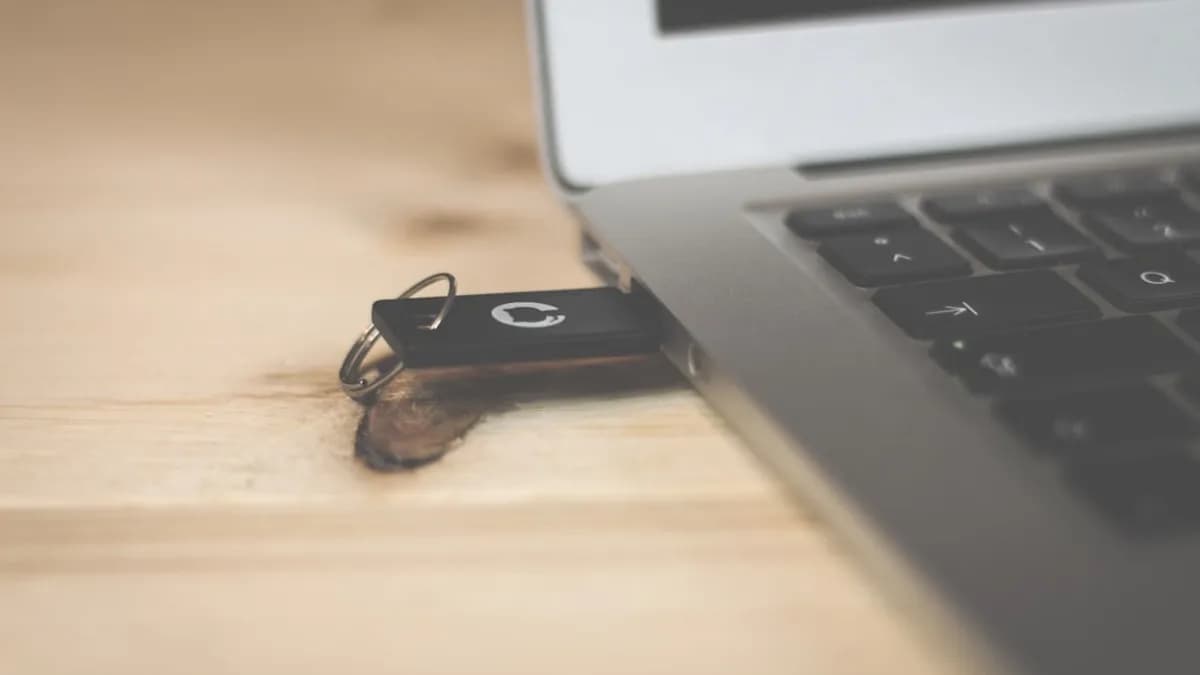
The storage-tier panic is one of the more familiar parts of buying an iPhone. The SANDISK® Phone Drive for iPhone is presented as a simple answer to that problem, according to 9to5Mac , because buyers do not always know years of storage needs on the day they choose a phone.
My view is simple: most iPhone users should stop treating internal storage as a permanent forecast and start treating external storage as a practical safety net. The SANDISK drive does not need to be glamorous for the idea to make sense. Its appeal is the basic promise of giving an iPhone owner another place to put files when internal space becomes tight.
The pitch still deserves a skeptical read, especially because accessory marketing often turns a real inconvenience, like travel charger clutter or a USB-C earbuds deal, into a very tidy product story. But the underlying problem is real enough: storage choices are made upfront, while storage pressure shows up later.
The SANDISK Phone Drive makes the iPhone storage guess less punishing
Every iPhone purchase forces a judgment call: how much storage do you need now, and how much will you need for however long you keep the device? That is a bad question because the honest answer is often “I don’t know.”
The SANDISK Phone Drive for iPhone gives that uncertainty a release valve. The specific value is not in treating the accessory as magic, but in treating removable storage as a buffer between a full phone and an expensive storage-tier decision.
That matters because Apple’s installed base spans different iPhone browser habits, ports, ages and replacement cycles. For readers following how older iPhones keep getting dragged back into current workflows, our coverage of how Apple reopened iOS signing after legacy iPhones got cut off shows why iPhone ownership rarely fits into one neat upgrade path.
Storage tiers make buyers pay for a future they cannot see
The storage-tier decision is annoying because, unlike Apple One price hikes, it is permanent at the device level. If you underbuy, you live with the warning prompts. If you overbuy, you paid for capacity that may sit unused.
That is not a moral failure by the user. It is a design constraint. Phones accumulate content over time, and the usual culprits are obvious: photos, videos, apps, games, downloads and old files all compete for the same fixed internal space.
The SANDISK pitch lands because it does not ask the user to replace the phone. It asks the user to think about overflow. That is a much smaller decision.
MLXIO analysis: external storage does not erase the storage-tier model, but it weakens its grip. It gives cautious buyers a way to see internal storage as one part of a broader storage setup, not the only storage decision they will ever get to make.
Photos, videos and large files are the real pressure points
The most useful part of this kind of product is not a spec sheet. It is the workflow it suggests.
For many users, the real storage pressure comes from media. Photos pile up quietly. Videos grow quickly. Large files are easy to forget until the phone starts asking for space at the worst possible moment.
That is the strongest use case for a dedicated phone drive: it can become a practical overflow tool for people who want to clear space without immediately deleting the files they care about. The key idea is not that every user needs one. It is that some users need a less dramatic option than upgrading the phone or purging a library under pressure.
The drive is also naturally aimed at people who frequently move large files out of their phone workflow. That is not every user. But it is exactly the kind of user who feels punished by internal storage limits.
A dedicated iPhone flash drive beats panic-deleting files
The worst storage decision is the one made under pressure. When space runs low, users often face an ugly choice: delete content now or stop capturing new content.
The SANDISK drive gives users a third path. Move files out of the most crowded place. Keep the phone usable. Sort the archive later when there is time to make better decisions.
That sounds basic, but basic tools often win because they reduce friction. The argument is not only about raw capacity. It is also about having a calmer process when the phone starts to feel cramped.
| Storage option | Best use | Weak spot |
|---|---|---|
| Internal iPhone storage | Always available on-device | Fixed after purchase |
| Cloud storage | Ongoing backup and sync | Can depend on subscriptions, accounts and connectivity |
| SANDISK Phone Drive | Creating local overflow for files | Requires carrying and managing an accessory |
This is also part of a wider iPhone accessory story. Some products try to change how the phone looks or feels, as in Dasung Link 2 betting your iPhone needs an E Ink face. SANDISK’s idea is less flashy: give the phone owner another way to think about space.
Cloud storage helps, but local control still has teeth
Cloud storage is useful. Any serious storage plan should admit that upfront.
But local storage still has a clean appeal. It gives users a physical place to put files, separate from the phone itself and separate from a cloud account. That does not make it better for every situation, but it does make it easier to understand.
The important distinction is control. Cloud services are excellent for sync, backup and access across devices. A local drive is better understood as a hands-on pressure valve: use it when the phone is crowded, when a file needs to be moved, or when the user wants a copy outside the main device.
That combination is the real product idea: local movement and removable capacity in a simple accessory. Not a replacement for every cloud use case. A practical fallback for when internal storage gets tight.
The strongest counterargument is convenience
The case against this drive is obvious: internal storage is simpler. It is always there. You do not have to remember it, carry it, plug it in, or decide what goes where.
That argument wins for some people. If your iPhone is your main production device and you constantly work with large files on-device, buying more internal storage upfront may still be the cleaner choice.
But most storage pain is not constant. It spikes. A trip, a shoot, a busy month, a backlog of videos waiting to be organized — these are exactly the moments where an external storage option can save time and nerves.
MLXIO analysis: the SANDISK Phone Drive is not trying to beat internal storage at convenience. It is trying to beat storage regret at a lower commitment point.
The smarter middle ground is removable capacity
The smarter way to read this product is as a middle ground. It is not an argument that everyone should buy the smallest iPhone storage tier. It is an argument that storage planning should not end at checkout.
Practical use is not complicated:
- Routine offload: Move older photos, videos and files out of the phone’s most crowded space.
- Trip buffer: Bring removable storage when you expect to capture more than usual.
- Large-file cleanup: Use a dedicated drive as part of a regular file-management routine.
- Local backup discipline: Keep important files in more than one place instead of waiting for a storage warning.
The lesson is broader than this one accessory. As iPhone hardware shifts across ports and cable standards, even small accessories shape daily ownership. We saw that same port-era tension in our look at Beats’ Power Pink USB-C cables: cables and connectors are not exciting until they decide what your device can actually do.
Do not let the next storage warning choose for you
The SANDISK Phone Drive for iPhone is not a miracle cure for bad storage habits. It will not organize your library for you. It will not make internal storage infinite.
But it is a sensible answer to a rigid problem. Apple asks buyers to make a long-term storage bet at purchase. SANDISK offers the idea of a removable fallback when that bet turns out wrong.
The practical move is clear: build a storage plan before the next warning forces rushed deletions. If you buy lower-capacity iPhones, external storage should at least be part of the conversation — not an afterthought found only after the phone is already full.
Key Takeaways
- iPhone buyers often have to choose storage before knowing their long-term needs.
- External storage can reduce the pressure to overpay for internal capacity upfront.
- The SANDISK drive is useful as a practical safety net, not a magic fix for every storage problem.