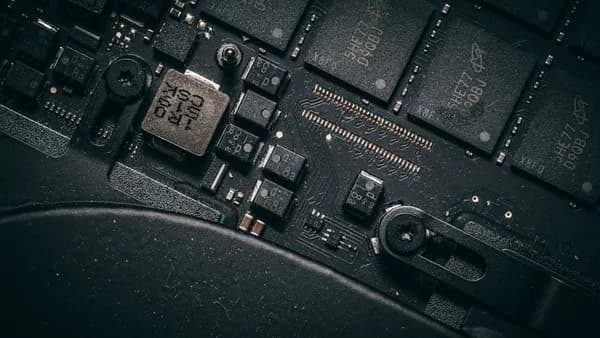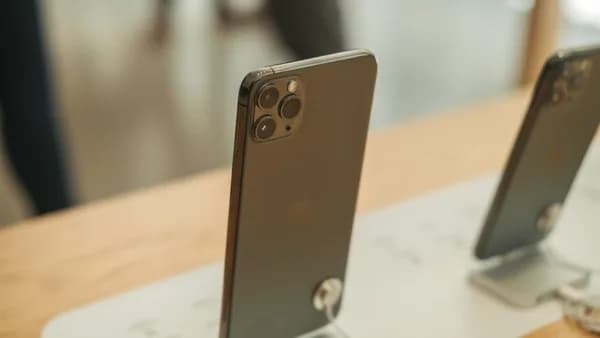
If the iPhone 18 Pro leak is right, is Apple about to make battery capacity depend on whether your region still gets a SIM tray?
That is the sharper question behind the latest numbers. Digital Chat Station claims the iPhone 18 Pro will carry a 4,056 mAh battery in physical SIM variants and a 4,288 mAh battery in eSIM-only models, with Ice Universe subsequently corroborating the figures, according to Notebookcheck.
The raw upgrade sounds modest. The regional shift does not. If Apple expands eSIM-only support to European markets as expected, buyers who previously received the smaller physical SIM configuration could move into the larger battery tier for the first time.
Apple has not confirmed any of these figures.
Is the iPhone 18 Pro battery leak really about capacity, or about regional hardware inequality?
The headline number is 4,288 mAh. The more important number may be the gap beneath it.
Notebookcheck reports two claimed battery configurations for the iPhone 18 Pro:
| Reported iPhone 18 Pro variant | Claimed battery capacity |
|---|---|
| Physical SIM model | 4,056 mAh |
| eSIM-only model | 4,288 mAh |
That is a 232 mAh difference between the two configurations. In percentage terms, the eSIM-only model would have roughly 5.7% more capacity than the physical SIM version.
On paper, that is not a dramatic leap. But Apple’s Pro phones are already dense internal packaging exercises, where small capacity changes matter because they interact with the chip, modem behavior, display tuning, camera system, and thermal design. Battery life is never just mAh.
The leak also says the increases over the iPhone 17 Pro are incremental: about 68 mAh over the China model and 36 mAh for eSIM units. That makes the story less about a single-generation battery jump and more about who gets placed into which hardware configuration.
MLXIO analysis: the leak does not prove that the SIM tray directly “costs” exactly 232 mAh of battery capacity. It only shows a claimed capacity split between SIM configurations. The reasonable inference is that Apple’s internal packaging choices differ by model. The unsupported leap would be saying the physical tray alone explains the entire gap.
Does the 4,288 mAh version become the real iPhone 18 Pro for Europe?
For non-US buyers, Europe is the center of this story because the larger battery is reportedly tied to eSIM-only hardware.
Notebookcheck says the iPhone 18 Pro is expected to expand eSIM-only support to European markets for the first time. If accurate, that means European buyers who might previously have received physical SIM variants with the smaller cell would instead get the 4,288 mAh configuration.
That changes the character of the upgrade. A battery difference that once looked like a regional footnote becomes a mainstream hardware change for a major iPhone market.
The cleaner way to read the leak is this:
- Capacity: The eSIM-only iPhone 18 Pro is said to get 4,288 mAh, versus 4,056 mAh for physical SIM models.
- Efficiency: The phone is expected to pair that battery with the A20 Pro chip on TSMC’s 2 nm process.
- Reach: Europe may move into the eSIM-only group for the first time.
- Caveat: Apple has not confirmed the capacities, the regional rollout, or the final hardware split.
The A20 Pro angle matters because Notebookcheck says real-world gains are expected to outpace the raw capacity change due to efficiency improvements from Apple’s first 2 nm chip. That is where the battery story gets more interesting: a modest cell increase plus a more efficient processor can feel larger in daily use than the capacity table suggests.
This sits inside a broader Apple leak cycle that is increasingly about hardware trade-offs, not just specs. MLXIO has tracked that pattern in 4.5mm Foldable iPhone Ultra Leak Signals Apple’s Big Bet, where thinness and internal design choices are also central to the story.
Is Apple turning eSIM from a connectivity feature into a hardware advantage?
Until now, eSIM has mostly been discussed as a connectivity change. This leak reframes it as a hardware differentiator.
If the reported figures hold, Apple would not need to sell eSIM as abstract convenience. It could let the hardware do the talking. The eSIM-only iPhone 18 Pro would simply have the larger battery.
That matters because consumers do not always care about the internal reasons behind a design choice. They care whether one version lasts longer, runs cooler, or gives Apple more headroom for performance and camera workloads. The leak does not establish those outcomes, but it points to the possibility.
The Pro Max rumors strengthen the pattern. Notebookcheck says earlier Digital Chat Station leaks pointed to a 5,100-5,200 mAh cell for eSIM models and around 5,000 mAh for physical SIM variants. That suggests the regional split may not be isolated to the smaller Pro model.
| Reported model family | eSIM-only battery rumor | Physical SIM battery rumor |
|---|---|---|
| iPhone 18 Pro | 4,288 mAh | 4,056 mAh |
| iPhone 18 Pro Max | 5,100-5,200 mAh | Around 5,000 mAh |
MLXIO analysis: if both Pro models follow the same pattern, Apple’s eSIM transition becomes more than a carrier-policy story. It becomes a Pro hardware segmentation story. The buyer’s region could determine not just activation method, but battery ceiling.
That is the uncomfortable part. A premium iPhone may no longer be exactly the same physical proposition everywhere.
What should non-US buyers actually compare before choosing an iPhone 18 Pro?
The practical question is not whether 4,288 mAh beats 4,056 mAh. It does. The practical question is whether the buyer’s country receives the eSIM-only model.
For anyone outside markets already covered by eSIM-only iPhone hardware, the spec sheet may need closer reading than usual. If the leak is accurate, the battery line could vary by region even when the product name does not.
Buyers should watch for three things when Apple announces the lineup:
- Regional model type: Does the local iPhone 18 Pro ship as eSIM-only or with a physical SIM slot?
- Battery disclosure: Does Apple publish one global battery claim, or do teardown and certification data reveal separate capacities?
- Real-world endurance: Do reviews show a visible runtime gap between the 4,056 mAh and 4,288 mAh variants?
The third point matters most. A 232 mAh capacity difference is measurable, but the A20 Pro and TSMC 2 nm process may dominate the actual battery-life story. If both variants gain similar efficiency, the eSIM model still starts with more capacity. If software and thermal tuning narrow the gap, the spec difference may look larger than it feels.
Apple’s next iPhone cycle is also expected to overlap with major software and AI changes. That makes the power budget more important, especially if on-device features expand. MLXIO covered that pressure in iOS 27 Siri Leak Reveals Apple’s AI Power Grab on iPhone, where Apple’s AI direction raises the stakes for silicon and battery efficiency.
Which evidence would confirm that the SIM tray era is ending through battery math?
The strongest confirmation would be simple: Apple ships the iPhone 18 Pro in Europe as eSIM-only, and teardown or regulatory filings show the 4,288 mAh cell in those models.
A weaker signal would be Apple marketing better battery life in Europe without explaining the hardware distinction. That would still fit the leak, but it would leave buyers dependent on third-party verification to know whether their region received the larger cell.
The thesis weakens if Apple keeps physical SIM models across more markets than expected, if the leaked capacities are wrong, or if real-world testing shows no meaningful endurance gap between the two configurations.
For now, the iPhone 18 Pro battery leak points to a clear scenario: eSIM may stop being just a way to activate service and become a way Apple allocates better hardware. The next evidence to watch is not only the official battery claim. It is whether Europe gets the 4,288 mAh iPhone.
The Bottom Line
- The leak suggests iPhone 18 Pro battery capacity may vary by region depending on SIM tray support.
- An eSIM-only model would reportedly offer 232 mAh, or about 5.7%, more capacity than the physical SIM version.
- European buyers could benefit if Apple expands eSIM-only iPhones beyond current markets.