150 grams is now the FCC’s dividing line between a Chinese-made drone that can re-enter the U.S. market and one that remains caught in Washington’s broader foreign-drone restrictions.
That sounds like relief for importers. It is not relief for DJI. The FCC’s new carveout applies only to a narrow class of “toy” drones with severe limits on weight, range, sensors, connectivity, navigation, speed, altitude, and battery life, according to Notebookcheck. The practical effect is blunt: the agency has reopened the door for simple flying toys while keeping the connected camera drones most buyers associate with DJI outside the exemption.
The 150-Gram Rule Reopens a Door DJI Still Cannot Walk Through
The FCC implemented the exemption through Public Notice DA-26-588 on June 15, removing qualifying toy drones and qualifying foreign-made components from the agency’s Covered List, according to the source material.
The policy rests on a Pentagon determination that national security risks are not posed by:
“unsophisticated low-risk toys” that lack the “organic capabilities and features in range, endurance, sensing payload, connectivity, and data collection and storage” found in regular consumer drones.
That language matters. The FCC is not saying Chinese drones are broadly safe again. It is saying a drone stripped of the features that make modern drones useful — cameras, sensors, network links, GPS, range, endurance — sits in a different risk bucket.
MLXIO analysis: this is less a drone-market reopening than a technical filter. The FCC has drawn a line between toy aircraft and connected aerial devices. DJI’s problem is that its products sit firmly on the wrong side of that line.
The FCC Criteria Remove the Features That Made DJI Useful
To qualify as a toy drone under the FCC’s criteria, a model must stay inside a tight box:
- Weight: No more than 150 grams
- Range: No more than 100 meters
- Visibility: Must remain within direct line of sight
- Sensors: No cameras or sensors that gather data or information
- Connectivity: No network or connectivity features
- Flight time: 10 minutes or less on a single charge
- Navigation: No satellite or GPS navigation of any kind
- Motors: No brushless motors
- Altitude: Maximum 300 feet
- Speed: Maximum 22 miles per hour
- Marketing: Must be sold explicitly as a toy
- Manufacturer status: Cannot be made or imported by any company named in Section 1709 of the 2025 Defense Authorization Act
That list excludes far more than high-end enterprise aircraft. It also excludes small consumer drones whose appeal depends on camera payloads, stabilized imaging, app control, positioning systems, and longer wireless links.
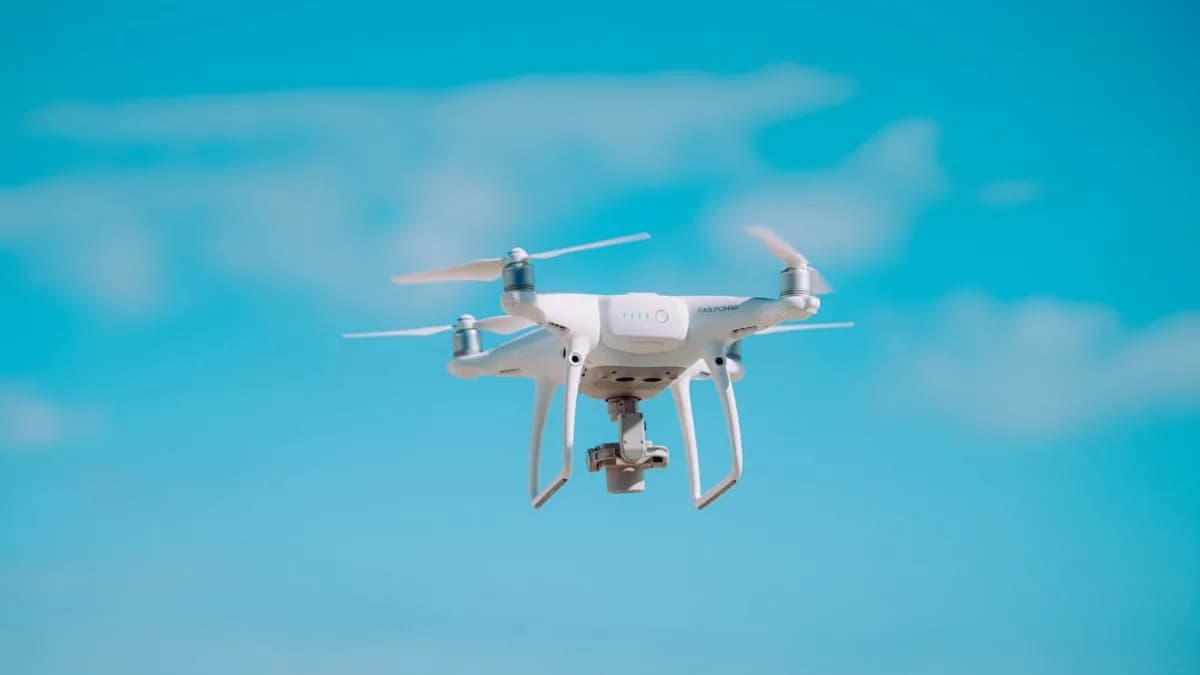
DJI’s smallest currently sold drone, the DJI Neo, shows the gap. It weighs 135 grams, which clears the weight test. But it has a 12 MP camera, shoots 4K video, uses a wireless link over several kilometers, includes GPS navigation, uses brushless motors, and runs for 18 minutes. One qualifying number does not matter when nearly every other feature fails the test.
| Requirement | FCC Toy Drone Limit | DJI Neo, per source |
|---|---|---|
| Weight | 150 grams max | 135 grams |
| Camera/sensors | None | 12 MP camera, 4K video |
| Connectivity/range | No network/connectivity; 100 meters max | Wireless link over several kilometers |
| Navigation | No satellite or GPS | GPS navigation |
| Flight time | 10 minutes max | 18 minutes |
| Motors | No brushless motors | Brushless motors |
The result is clear. A drone can be tiny and still fail the exemption if it behaves like a modern camera drone.
The New Import Window Is Built for Toys, Not Camera Drones
The FCC’s thresholds are narrow by design. The agency did not just set a low weight cap. It paired that cap with restrictions that strip away the core stack of a consumer drone: imaging, positioning, connectivity, endurance, and data capture.
That distinction is why the exemption does little for mainstream drone buyers. A toy drone can fly briefly near its operator. A consumer camera drone can record, navigate, transmit, stabilize, and store useful data. The FCC’s carveout accepts the first category and keeps pressure on the second.
DroneDJ reported that the move follows the FCC’s December 2025 restrictions, which blocked new foreign-made drones and critical components from receiving the FCC equipment authorizations needed for U.S. import and sale, while existing approved products remained legal to own and fly according to DroneDJ.
MLXIO analysis: that distinction creates a slow squeeze rather than an immediate grounding. Current approved drones may remain in use, but future product flow depends on FCC authorization. The new toy-drone exemption does not change that path for DJI-style camera drones.
Section 1709 Keeps DJI Boxed In Even If It Builds a Toy
The most important constraint may not be the 150-gram ceiling. It may be the manufacturer exclusion.
Notebookcheck notes that even if DJI built a drone meeting the FCC’s toy-drone requirements, the company and its products would still remain on the Covered List. The exemption also excludes drones manufactured or imported by companies named in Section 1709 of the 2025 Defense Authorization Act.
That turns the rule into a two-part gate:
- Product test: Does the drone meet the toy-drone technical criteria?
- Company test: Is the manufacturer or importer excluded by federal restriction lists?
DJI fails the first test with current models such as the DJI Neo. The source says it would still face the second even if it engineered around the technical limits.
This is where the policy becomes broader than product specs. The FCC is using equipment authorization and Covered List mechanics to shape what can enter the U.S. market. That is not the same as banning consumers from flying already approved drones. It is a control point over future imports and approvals.
For readers tracking consumer hardware more broadly, that makes this story different from normal spec-cycle coverage like PowerA’s Xbox Flight Deck controller or device-launch competition such as Motorola’s Edge 2026 bundle push. Here, the spec sheet is not just marketing. It determines whether the product can clear a federal gate.
Security Officials Get a Narrower Risk Category; Buyers Get Less Clarity
From the national security side, the FCC’s logic is internally consistent. Drones with cameras, sensors, navigation systems, wireless links, and data storage can collect information. A short-range toy without those features presents a different risk profile.
From the buyer side, the rule is less satisfying. The exemption does not help someone who wants a compact drone for aerial video, roof checks, mapping practice, or creator work. Those use cases depend on the exact features the FCC excludes.
Retailers and importers get a cleaner lane for basic toys, but not a broad reopening. They still need to evaluate whether a product meets every technical limit and whether the manufacturer is barred by federal lists. A drone that is light enough can still fail because it has a camera. A drone with no camera can still fail because it has GPS. A compliant design can still fail because of who made it.
MLXIO analysis: this creates a market split. The low end may see qualifying toys return. The serious consumer segment remains constrained because its value comes from capabilities now treated as risk factors.
The Next Fight Moves From Airframes to Data, Firmware, and Trust
The FCC’s carveout is unlikely to settle the U.S. drone debate. It narrows one category and leaves the larger question untouched: how should regulators treat foreign-made drones that collect imagery, use wireless links, run software, and depend on firmware updates?
The evidence that would confirm the FCC’s current direction is straightforward: more exemptions for drones or components that lack sensitive capabilities, paired with continued limits on camera-equipped and connected models from restricted companies. Evidence that would weaken this thesis would be broader approvals for consumer camera drones with audited data controls, localized storage, or other trust mechanisms accepted by U.S. agencies.
For now, the signal is precise. Washington is willing to let in simple flying toys. It is not ready to reopen the market for DJI drones that look, fly, and collect data like modern connected aircraft.
Impact Analysis
- The FCC’s carveout helps simple toy-drone importers but does not reopen the U.S. market for DJI’s mainstream products.
- The 150-gram threshold shows regulators are separating low-risk toys from connected drones with cameras, sensors, and data capabilities.
- Consumers hoping for easier access to DJI drones are unlikely to see relief from this rule change.