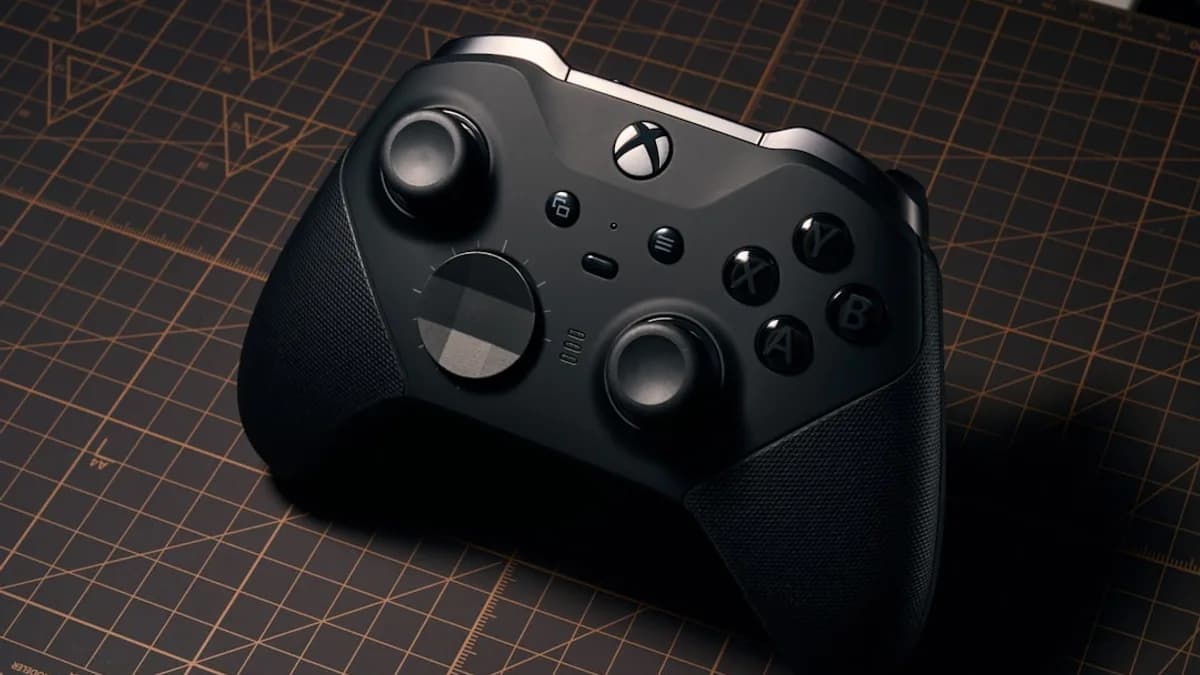
PowerA is trying to compress a flight deck into an Xbox wireless controller, and the players most affected are not cockpit-rig diehards — they are console flight sim users who want more than a standard gamepad without committing to a desk full of hardware.
The device, currently called Project X-Ray Flight Deck Wireless Controller, is being developed by PowerA with Meridian GMT, according to Notebookcheck. The teaser shows an Xbox button, a swappable faceplate for aircraft or helicopter controls, and a front layout that replaces some generic controller real estate with flight-specific inputs.
“Something big is in the works, and we can finally share the news! We joined forces with @MeridianGMT to develop the Project X-Ray Flight Deck Wireless Controller. Project X-Ray is in active development, but you can sign up for updates! We'll reach out the moment it lands.”
The sharper read: this is not just another licensed Xbox controller with a new shell. It is a bet that Microsoft Flight Simulator 2024 and other flight simulation software can support a middle ground between overloaded gamepad mappings and specialist hardware.
Xbox Flight Sim Players Get a Controller Built Around Cockpit Friction
Project X-Ray’s central idea is simple: keep the familiar Xbox controller shape, then print the flight logic directly onto the device. The teaser shows a left thumbstick, ABXY buttons, flaps and engine levers, trim and landing gear knobs, and a dedicated autopilot control where the D-pad would normally sit.
Can printed control guidance make a simulation feel less hostile without flattening the sim itself?
That is the question PowerA and Meridian GMT appear to be testing. A standard Xbox controller can technically handle complex games, but flight sims often bury essential functions behind modifier buttons, menus, or context-sensitive bindings. A labeled faceplate turns some of that memory work into glanceable guidance.
The swappable faceplate matters because aircraft and helicopters ask different things of the player. Notebookcheck says the controller can switch markings to match either an aircraft or helicopter control scheme. That does not mean the hardware replicates rotorcraft controls, but it does suggest the layout is being designed around distinct flight behaviors rather than a one-size-fits-all aviation skin.
MLXIO analysis: The value here is not pure precision. It is reducing hesitation. If the labels line up with common in-game bindings, Project X-Ray could help players spend less time asking “which button did I map that to?” and more time flying.
PowerA and Meridian GMT Are Building for Familiar Hands, Not Full Cockpits
PowerA already makes controllers across platforms, while Meridian GMT brings specialist flight simulation hardware credibility. Meridian GMT was founded by Nicki Repenning, the former CEO and founder of Honeycomb Aeronautical, according to the supplied source material.
What does Meridian GMT add beyond a logo on the box?
The likely answer is layout discipline. A flight controller can fail if it merely adds labels and knobs without matching the mental flow of cockpit tasks. Flaps, trim, gear, engine control, and autopilot are not decorative commands. They are recurring actions in flight sim sessions, and their physical placement affects whether the controller feels coherent or cluttered.
There are execution risks:
- Bindings: The labels need to match supported simulator profiles closely enough to avoid confusion.
- Legibility: The faceplate must remain readable during play, not just in product renders.
- Customization: Experienced users may want remapping depth, while newer users may need defaults that “just make sense.”
- Control limits: A compact controller cannot fully replace analog pedals, large throttle quadrants, yokes, or full cockpit panels.
That last point matters. Project X-Ray should not be judged as a cockpit rig replacement based on the current teaser. It is better read as a compact, wireless attempt to make core flight controls less abstract on Xbox.
Honeycomb’s Echo Sets the Nearest Comparison Point
The most relevant comparison in the supplied material is Honeycomb Aeronautical’s Echo Aviation Controller. Notebookcheck says Honeycomb released the PC and Mac version last December for flight simulation games and programs including Microsoft Flight Simulator 2024 and Lockheed Martin’s Prepar3D. An Xbox version of Echo is confirmed to be coming soon.
Where does Project X-Ray sit against Echo?
| Product | Status from supplied source | Platform details | Known pricing |
|---|---|---|---|
| PowerA Project X-Ray Flight Deck Wireless Controller | In development | Teaser shows Xbox support | No price yet |
| Honeycomb Echo Aviation Controller | PC/Mac version released last December; Xbox version coming soon | PC, Mac; Xbox version confirmed | PC/Mac version costs $150 |
Notebookcheck notes there is “a chance” the Xbox version of Echo lands around the PC/Mac price, but there is no Project X-Ray price yet. That limits any serious pricing call.
MLXIO analysis: The commercial logic for PowerA is still visible. PowerA’s business is built around licensed accessories, and its own site describes the company as making officially licensed accessories for Xbox, PlayStation, Nintendo, and mobile gaming experiences. A flight sim controller gives it a more differentiated pitch than another cosmetic controller variant.
For readers tracking Xbox’s broader hardware and platform questions, this accessory story should be kept separate from wider strategic debates such as Xbox Consoles Face Death as Microsoft Bets on Windows and PS5 Logo Slip Puts Gears of War: E-Day on Trial at Xbox. Project X-Ray is narrower: it shows accessory makers still see value in building around Xbox-specific play patterns.
Buyers Will Judge the Controller by Missing Details, Not the Teaser Render
The teaser does not show the back or full front of Project X-Ray. Notebookcheck says that means we do not yet know whether there are extra buttons or whether the triggers and bumpers have been modified.
Which unknown will matter most to buyers?
For casual players, the answer may be price and simplicity. If the controller offers clear defaults, wireless Xbox support, and readable flight labels, it could reduce the intimidation factor around simulation controls.
For sim enthusiasts, the questions are more technical:
- Precision: How good are the sticks, levers, and knobs under repeated use?
- Latency: Does wireless performance feel native enough for flight adjustments?
- Battery life: Does the added control scheme affect session length?
- Mapping: Can users alter layouts, or are they locked into fixed profiles?
- Back controls: Are there rear buttons, modified bumpers, or trigger changes hidden outside the teaser view?
The faceplate idea also creates a future path PowerA has not confirmed. If swappable plates work well, the company could theoretically support more aircraft-specific or training-oriented layouts. That is speculation, not an announced plan. For now, only aircraft and helicopter markings are supported by the teaser material.
Project X-Ray’s Real Test Is Whether It Makes Complexity Feel Intentional
Project X-Ray points toward a useful accessory category: genre-specific controllers that do more than change colors. Flight simulation is a natural fit because the genre overloads standard pads quickly, yet many Xbox players may not want permanent hardware mounted at a desk.
Can PowerA make a compact controller feel like a credible flight tool rather than a novelty?
That will depend on evidence the teaser does not yet provide. Release date, final name, price, confirmed compatibility, included faceplates, remapping options, rear controls, and build quality are all still open. PowerA says the controller remains in development, and users can sign up for updates on its website.
The watch item is not whether Project X-Ray looks clever. It does. The real test is whether its labeled controls reduce friction in Microsoft Flight Simulator 2024 without frustrating players who expect precision and flexibility. If early hands-on coverage shows clean bindings, readable markings, and useful physical controls, the thesis strengthens. If the labels fight the software or the hardware feels like a standard controller with aviation stickers, the whole concept weakens fast.
Key Takeaways
- Project X-Ray targets Xbox flight sim players who want more control without building a full cockpit setup.
- Its flight-specific levers, knobs, and autopilot controls could reduce reliance on complex button combinations.
- The controller signals growing demand for mid-tier simulation hardware around Microsoft Flight Simulator 2024 and similar games.