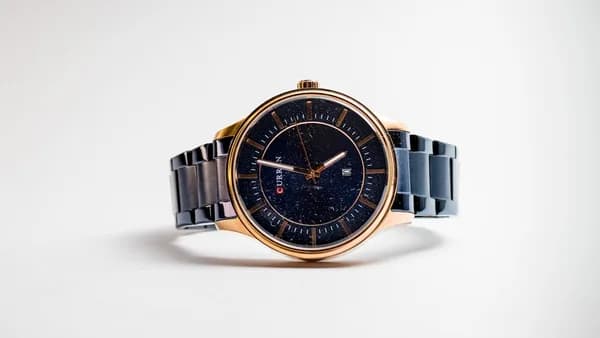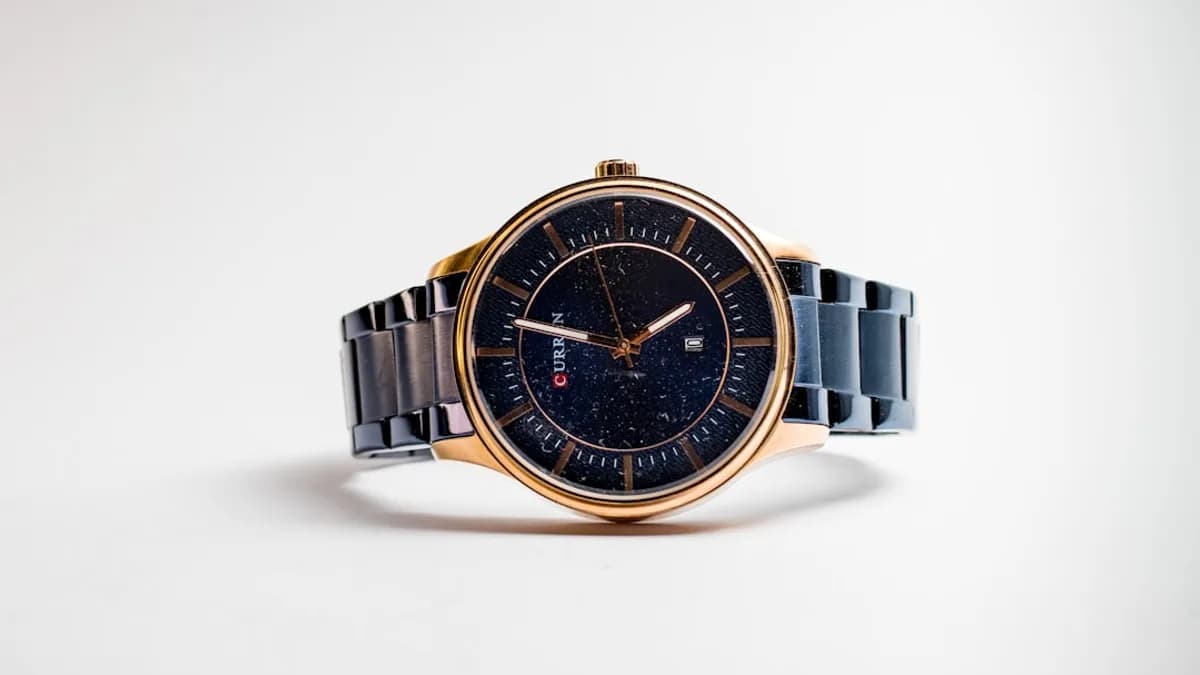
1,800 units is the real story behind Citizen’s new Attesa CC4107-80H Satellite Wave GPS watch: a high-function travel watch dressed as a limited-run space object.
The model has reached the US and UK earlier than Citizen’s previously stated global July timing, with US pricing at $2,195 and UK pricing at £1,595, according to Notebookcheck. Japan is still listed for a July 2 launch at ¥385,000.
1,800 Pieces Turns a Travel Watch Into a Scarcity Test
The Citizen Attesa CC4107-80H is not just another Satellite Wave GPS variant with a darker case. Citizen capped production at 1,800 units worldwide, then wrapped the watch in a “Spaceship Black” design built around DLC-coated Super Titanium, recrystallized titanium, and a gunmetal dial.
That combination changes the product’s signal. Attesa has long sat in Citizen’s tech-forward lane: titanium, solar power, radio or GPS-controlled timekeeping, and travel utility. This release adds a collector hook. The watch still solves practical problems, but Citizen is clearly asking buyers to treat materials and production limits as part of the appeal.
MLXIO analysis: the tension is the point. Citizen’s reputation is tied to useful engineering, not traditional luxury theater. The CC4107-80H tries to move upmarket without abandoning that identity. It does not sell romance through a mechanical movement. It sells precision, autonomy, and a case finish no two buyers should experience in exactly the same way.
The Spec Sheet Is Built Around Travel: GPS in 3 Seconds, 40 Time Zones, 5-Year Power Reserve
The core technical package is the Citizen Caliber F950 Eco-Drive Satellite Wave GPS movement. It is light-powered, so Citizen says it needs no battery changes, and it can receive GPS time signals in as little as three seconds.
The watch can “automatically adjust to local time zones around the world,” with Citizen’s Double Direct Flight feature letting wearers switch between home and local time in a few steps.
The travel feature set is dense:
| Feature | Citizen Attesa CC4107-80H detail |
|---|---|
| Production | 1,800 units worldwide |
| Movement | Caliber F950 Eco-Drive Satellite Wave GPS |
| Power | Light-powered Eco-Drive |
| GPS reception | Time signal reception in as little as 3 seconds |
| World time | 40 time zones / 27 cities |
| Accuracy | ±5 seconds per month without signal reception |
| Chronograph | 1/20-second, measuring up to 24 hours |
| Water resistance | 100 meters / 10 bar |
| Power reserve | Up to 5 years in power-save mode on a full charge |
There is one small spec wrinkle. Notebookcheck describes the case as 43.2mm, while the supplied specification list gives 44.0mm with a 13.7mm thickness. Either way, this is not a discreet dress watch. It is a large technical watch with an integrated bracelet and a strong wrist presence.
For frequent travelers, the practical value is straightforward. Solar power reduces maintenance. GPS timekeeping reduces manual adjustment. Dual time and UTC display make the watch useful across borders without requiring smartphone connectivity in the source material.
“Spaceship Black” Pushes Super Titanium Into a More Aggressive Register
The visual centerpiece is the case and bracelet treatment. The case uses dark gray DLC-coated Super Titanium, while the octagonal bezel and bracelet center links use recrystallized titanium. Citizen says the crystal-like pattern forms by exposing titanium to extreme heat and then cooling it.
That matters because the finish is not just decorative. It gives each watch a distinct pattern, which supports the limited-edition positioning without changing the basic technical architecture of the Attesa platform.
The dial follows the same idea. It is gunmetal gray, textured to echo the recrystallized titanium, with three sub-dials and a date window between 4 and 5 o’clock. A ceramic UTC bezel frames the dial. The result is less traditional luxury and more instrument-panel futurism.
MLXIO analysis: the trade-off is obvious. The aggressive monochrome styling and roughly 43-44mm format will appeal to buyers who want the watch noticed. It may narrow the audience among buyers who prefer smaller cases or a quieter office-watch profile. Citizen is choosing impact over neutrality.
For adjacent consumer-hardware context, MLXIO has also tracked how spec-heavy products compete for attention in pieces like Amazfit Balance 3 Crams 64GB and 3,000 Nits for $369 and $99 AirPods Steal Apple Deals Spotlight From $219 Watch. The Attesa is a different category, but the same basic question applies: which specs actually change the ownership experience?
Eco-Drive and Satellite Wave GPS Keep Citizen in Its Tech-First Lane
The CC4107-80H is best read as an extension of Citizen’s established technology-first identity, not a sudden pivot. The supplied Citizen UK material frames Attesa around titanium expertise and “world-first innovations,” and the lineup includes multiple Attesa Satellite Wave GPS models priced across the range.
That context matters. The new limited edition is expensive by mainstream Citizen standards, but it is not isolated from the rest of the line. Citizen UK’s Attesa listings include models at £995, £1,395, £1,450, £1,595, £1,995, and £2,295, with several Satellite Wave GPS variants. The CC4107-80H’s £1,595 UK price places it within that premium Attesa band rather than outside it.
The differentiation is not the basic presence of GPS or titanium. It is the package: limited production, darker coating, recrystallized details, ceramic UTC bezel, and the specific “Spaceship Black” identity.
MLXIO analysis: Citizen is using familiar technical assets to create a more collectible object. That is safer than inventing a new platform. It lets the brand test demand for a more expressive Attesa without asking buyers to accept unknown technology.
Collectors and Travelers Will Value Different Parts of the Same Watch
Collectors will focus on the 1,800-unit cap, the unusual titanium patterning, and the early US and UK availability. Those are the obvious scarcity markers. But long-term collectability cannot be assumed from the supplied facts. It will depend on real demand, condition, availability after launch, and how buyers view this specific “Spaceship Black” execution over time.
Travelers will read the watch differently. The value is less about rarity and more about convenience:
- Autonomy: Eco-Drive power avoids routine battery swaps.
- Precision: GPS sync and ±5 seconds per month stated accuracy without signal reception.
- Mobility: 40 time zones, 27 cities, UTC display, daylight saving support, and Double Direct Flight.
- Durability cues: Super Titanium, DLC coating, sapphire crystal with anti-reflective coating, and 100 meters water resistance.
For Citizen, the brand calculation is delicate. Limited editions can give Attesa more heat, but too much emphasis on scarcity risks pulling attention away from the line’s practical strengths. The CC4107-80H works because the technical foundation is still visible underneath the finish.
The Non-Smartwatch Pitch Is Precision Without a Software Cycle
The supplied materials describe a watch built around GPS synchronization, solar charging, world time, and physical materials. They do not describe app features, notifications, subscriptions, or software support cycles.
That absence is part of the positioning. The CC4107-80H offers modern precision, but its ownership model remains closer to a traditional watch: charge it with light, wear it, travel with it, and let the GPS function handle timekeeping when needed.
MLXIO analysis: this is the strongest strategic read on the release. Citizen is not trying to out-screen a smartwatch. It is trying to make a high-tech analog watch feel premium enough for buyers who want functionality but do not want the product cadence of connected electronics.
The next evidence to watch is availability. If the US and UK listings move quickly despite the $2,195 / £1,595 pricing, Citizen will have a stronger case for more limited-run Attesa models built around dark finishes, titanium experimentation, and travel-first GPS functions. If stock remains easy to find after launch, the technology may still be compelling, but the scarcity story will look weaker.
The Bottom Line
- The 1,800-unit cap turns a practical GPS travel watch into a scarcity-driven collector release.
- Citizen is testing a more premium position while staying focused on solar power, satellite accuracy, and titanium engineering.
- Early US and UK availability gives buyers in those markets first access before Japan’s July 2 launch.