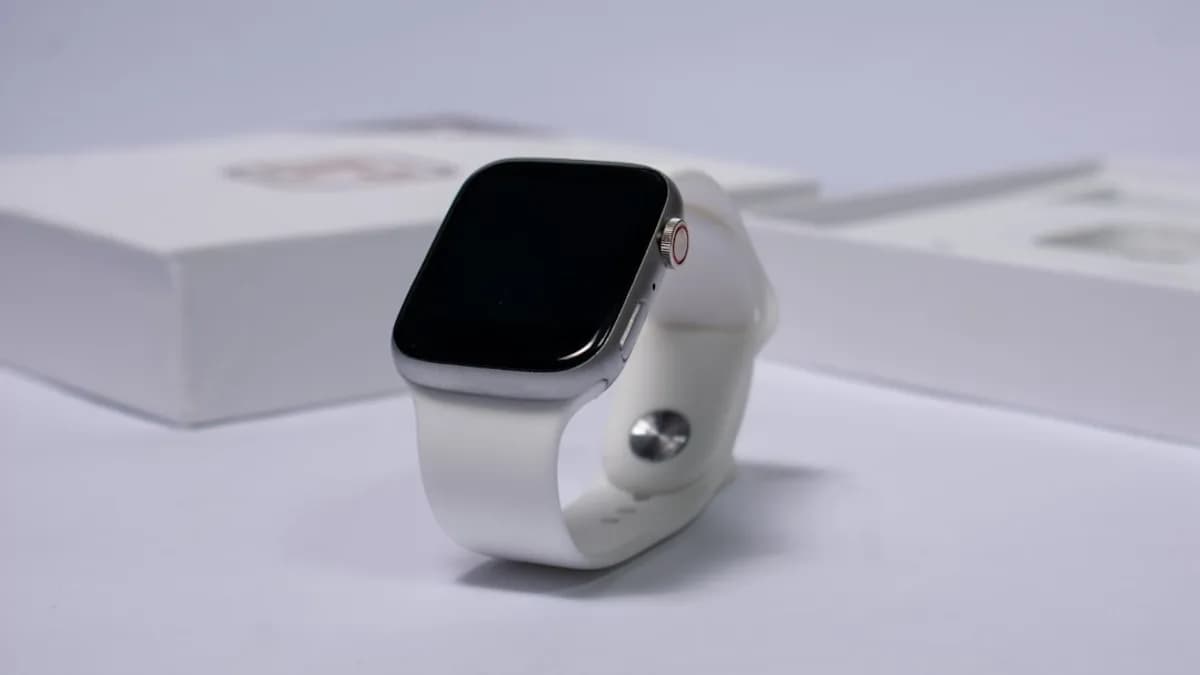
Amazfit Balance 3 is trying to solve three smartwatch pain points at once: outdoor screen visibility, onboard storage and battery life, while keeping the price at $369.99.
The new watch was announced alongside the Balance Ultra and is now available for pre-order, with deliveries expected to start in mid-June, according to Notebookcheck. The headline pitch is aggressive for the price: a 3,000 nits AMOLED touchscreen, 64 GB storage, GPS, NFC, speakers, microphones and a claimed 21-day battery life.
Amazfit Balance 3 debuts at $369.99 with a 3,000-nit AMOLED screen
Amazfit is not treating the Balance 3 like a stripped-down companion to the Balance Ultra. Notebookcheck says the two watches share almost the same feature set, with the main tradeoffs coming down to materials and battery capacity.
The Balance 3 uses a stainless steel body instead of the titanium body used by the Balance Ultra. It still gets 10 ATM water resistance and, more notably, the cheaper model keeps the sapphire crystal display cover.
That matters because sapphire is usually used to protect the most exposed part of a watch: the screen. MLXIO analysis: for buyers comparing spec sheets, the inclusion of sapphire on the lower-priced model makes the Balance 3 look less like a compromise and more like a deliberate price cut around case material and endurance.
The display is large. The Balance 3 has a 51.4 millimetre diameter and a 1.5-inch AMOLED panel, which Notebookcheck describes as very large. The watch is 14.6 millimetres thick including sensors.
Amazfit’s screen-brightness claim is also the number that will catch attention. 3,000 nits puts the Balance 3’s display pitch squarely around outdoor readability, even before independent testing confirms how long that brightness can be sustained.
For more device context around how brands are using brightness claims as a launch hook, see MLXIO’s coverage of 1331 cd/m² Makes Motorola Razr 70 Humble Samsung, Xiaomi and 1,300 Nits Put Alienware’s QD-OLED Monitor on Notice.
64 GB storage, GPS, NFC and calls push the Balance 3 beyond basic fitness tracking
The Balance 3’s feature list reads more like a full smartwatch than a simple fitness band. Amazfit includes 64 GB of storage for map data, apps and music, according to Notebookcheck.
That storage figure is one of the most practical specs here. Maps and music are exactly the types of features that can make a watch feel less dependent on a phone during outdoor workouts or travel, assuming the Amazfit software experience supports them cleanly.
The watch also includes a GPS module. That gives it the hardware foundation for outdoor activity tracking without relying only on a paired phone’s location signal.
Amazfit adds built-in speakers and microphones for phone calls and conversations with AI assistants. The source does not specify which assistant services are supported, how calls are routed, or whether all functions will work identically across regions.
The NFC chip is listed for contactless payment. Regional payment support is not detailed in the supplied source material, so that remains one of the practical questions buyers should check before treating NFC as a guaranteed daily-use feature.
Balance 3 versus Balance Ultra on the confirmed specs
| Feature | Amazfit Balance 3 | Amazfit Balance Ultra |
|---|---|---|
| Case material | Stainless steel | Titanium |
| Water resistance | 10 ATM | Not separately detailed in source comparison |
| Display cover | Sapphire crystal | Sapphire implied by comparison |
| Battery capacity | 658 mAh | Larger than Balance 3; exact capacity not stated |
| Claimed battery life | 21 days | 30 days |
| Always-on display battery life | 7 days | 10 days |
| Price | $369.99 | $230 more than Balance 3 |
The pricing gap is the cleanest comparison. Notebookcheck says the Balance 3 is exactly $230 cheaper than the new Balance Ultra.
MLXIO analysis: that puts the Balance 3 in an interesting position inside Amazfit’s own launch. If buyers care more about sapphire, storage, GPS and health tracking than titanium and the longest battery claim, the cheaper model carries much of the same functional pitch.
21-day battery claim gives Balance 3 its strongest spec-sheet weapon
The Balance 3 uses a 658 mAh battery. Amazfit claims that translates to 21 days of battery life, or seven days with an active always-on display.
That is lower than the Balance Ultra’s quoted 30 days, or ten days with always-on display. The tradeoff is size: Notebookcheck says the smaller battery helps make the Balance 3 slightly thinner.
Battery life is more than a convenience spec for this type of watch. Continuous heart-rate monitoring, sleep tracking, outdoor GPS sessions and notifications all become less useful if the watch spends too much time on a charger.
The Balance 3 can monitor heart rate, blood oxygen saturation, skin temperature and stress levels around the clock. It can also alert users to an unusually high or low heart rate, low blood oxygen saturation or excessive stress.
Sleep tracking and cycle tracking are included, along with more than 180 sports modes. The source does not provide accuracy data for these sensors, so the claims should be treated as feature availability rather than proof of performance.
MLXIO analysis: the battery claim is the spec that ties the whole package together. A bright screen, GPS, health monitoring, calls and music storage all draw power; the real test is how much of the quoted 21 days survives when those features are active.
Battery-life claims are increasingly central to hardware launches across categories, not just wearables. MLXIO recently covered that same buyer calculus in Intel Gives Razer Blade 16 Battery Life a 12-Hour Win, where endurance shaped the product story as much as raw performance.
Pre-orders are live, but testing will decide whether the value case holds
The Balance 3 can now be pre-ordered through Amazfit’s online store, with delivery expected to begin in mid-June. The confirmed list price is $369.99.
That price makes the Balance 3 look strong on paper against the Balance Ultra because the cheaper model keeps the sapphire cover, large AMOLED panel, health tracking suite, GPS, NFC, speakers, microphones and 64 GB storage. The stated sacrifices are stainless steel instead of titanium and shorter battery life.
The next step is independent testing. The specs to verify are clear:
- Display: whether the 3,000 nits brightness claim holds up in real outdoor use.
- Battery: how close typical use gets to 21 days, especially with always-on display, GPS, calls and continuous health tracking.
- Location: whether the GPS module delivers consistent workout tracking.
- Audio: whether the speakers and microphones are good enough for calls.
- Software: whether maps, apps, music and AI-assistant interactions feel responsive on the watch.
The unknowns are mostly practical rather than theoretical. The source does not establish regional availability beyond the pre-order listing, nor does it detail payment-network support, assistant compatibility or health-sensor accuracy.
For buyers, the prescription is simple: treat the Balance 3 as a strong spec-sheet launch, not a proven field performer yet. If reviews confirm the display, battery and software claims, Amazfit’s cheaper Balance model may be the one that makes the Ultra justify its $230 premium.
Key Takeaways
- The Balance 3 offers premium smartwatch specs like a 3,000-nit AMOLED display and 64 GB storage at $369.99.
- Keeping sapphire crystal on the cheaper model makes it feel less compromised than many lower-tier watches.
- The claimed 21-day battery life targets buyers frustrated by frequent smartwatch charging.