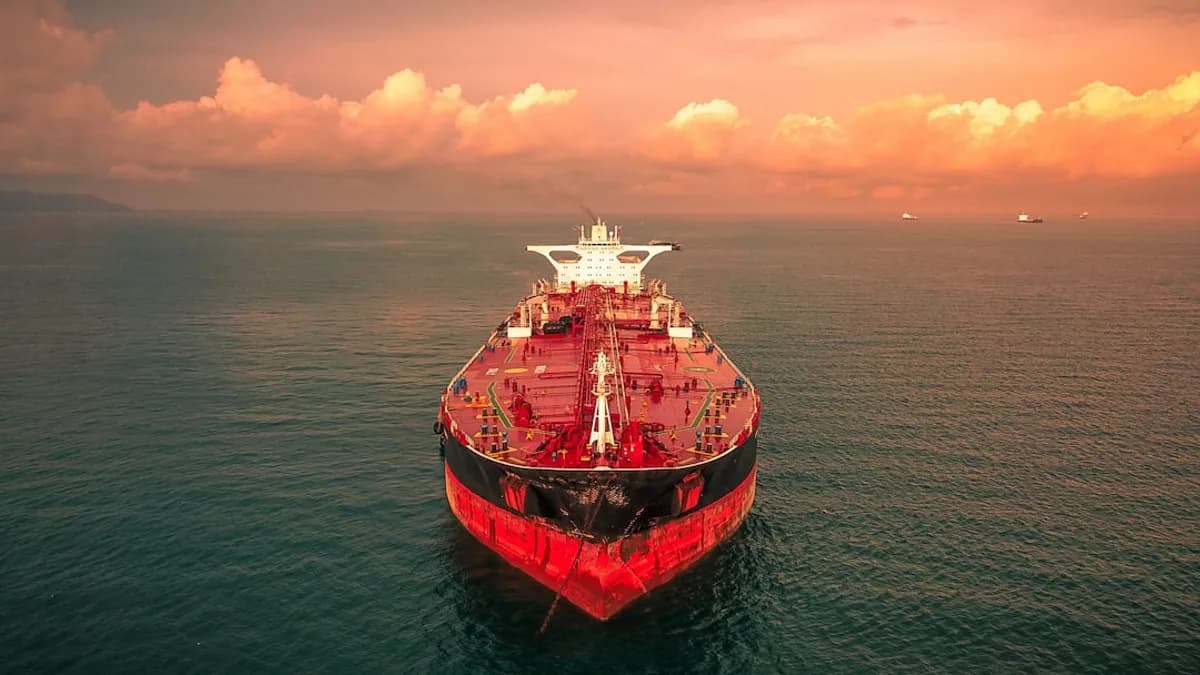
On Tuesday, the oil shock shifted from battlefield risk to sanctions risk: Washington paired new strikes against Iran with renewed restrictions on Iranian oil sales while traders were already responding to danger around the Strait of Hormuz.
That timing matters. The market reaction shows concern that military retaliation, tanker attacks, sanctions enforcement, and Iranian countermeasures could start tightening supply before physical barrels disappear. CryptoBriefing reported that the escalation raised oil prices and supply concerns around the Strait of Hormuz. CNN separately reported Brent crude rose 3% to $76, while US oil surged nearly 6%, moving back above $70 for the first time since June 30.
Tuesday’s strikes turned a maritime incident into an oil-sanctions test
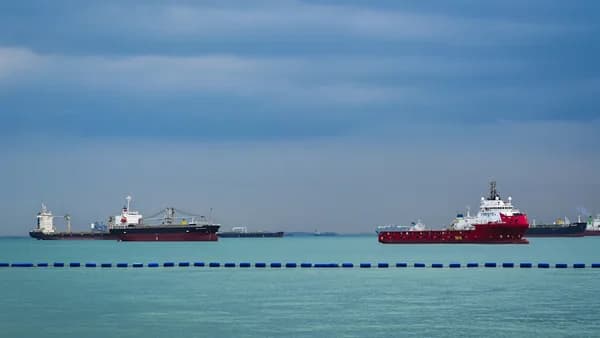
The trigger was direct and dangerous. The US launched strikes after Iranian attacks on commercial vessels near the Strait of Hormuz, turning a maritime security incident into a broader test of sanctions enforcement and oil-market confidence.
CNN’s account adds a sharper policy layer: the US also reimposed sanctions on Iranian oil sales. US Central Command said the strikes were a response to Iranian attacks on three commercial vessels transiting the strait.
“The U.S. strikes are in response to Iranian attacks on three commercial vessels that were transiting the Strait of Hormuz,” US Central Command said, according to CNN. “Iran’s demonstrated aggression was unwarranted, dangerous, and a clear violation of the ceasefire.”
The important market signal is not only the military exchange. It is the withdrawal of a concession that had helped reopen trade flows. The US Treasury Department had granted a 60-day sanctions waiver for Iranian oil sales as part of the ceasefire framework. That relief has now been “revoked and superseded in its entirety,” CNN reported, with buyers given until July 17 to wind down transactions already in progress.
MLXIO analysis: oil traders are treating this as a two-track risk. One track is kinetic: missiles, drones, and vessel attacks. The other is financial: sanctions, insurance access, payment channels, and buyer confidence. Either can slow supply.
Hormuz risk does not require a full closure to move crude prices
The Strait of Hormuz matters because it sits between Persian Gulf supply and global buyers. The supplied sources do not quantify its exact share of global oil flows, so this analysis will not attach an unsupported percentage to the chokepoint. But the market behavior described in both reports shows that traders see Hormuz as central enough to move Brent and WTI immediately.
A full shutdown is the cleanest nightmare scenario. It is not the only one.
Partial disruption can still raise delivered crude costs if vessels face attack risk, delays, tracking disputes, sanctions uncertainty, or reduced access to insurance and financing. CNN reported that sanctions relief had allowed Iran to transport, insure, sell, and receive proceeds from its oil through financial institutions. Once that relief disappeared, the supply chain became more legally and commercially complex again.
Iran’s position also complicates shipping. CNN reported that Iranian Foreign Ministry spokesperson Esmaeil Baghaei said commercial vessels face risks if they use routes not coordinated with Iran or tamper with tracking equipment. The US position, per CNN, is that the strait is an international waterway and Iran has no right to impose restrictions on maritime travel.
That disagreement is enough to create a risk premium. It tells traders that the issue is not only whether oil can move, but under whose rules.
By July 17, the sanctions deadline becomes the next price catalyst
The numbers in the supplied record point to a market testing its cushion while waiting for the next policy deadline.
| Signal | Source-supported detail | Market reading |
|---|---|---|
| US strikes | US strikes followed attacks on commercial vessels near the Strait of Hormuz | Military escalation has moved into the oil-market frame |
| Commercial shipping | Attacks on three commercial vessels, per CNN | Hormuz risk has moved into live shipping lanes |
| Brent crude | Up 3% to $76, per CNN | Oil benchmarks responded immediately to escalation |
| US oil / WTI proxy | Nearly 6% rise back above $70, per CNN | US benchmark reacted sharply to escalation |
| Sanctions waiver | 60-day relief revoked | Iranian oil sales face renewed legal and payment risk |
| Wind-down date | Buyers have until July 17 | Near-term deadline for traders and counterparties |
CNN reported that sanctions relief had allowed Iran to transport, insure, sell, and receive proceeds from oil sales through financial institutions. With that waiver revoked, buyers and intermediaries now face a compressed wind-down period and renewed uncertainty over which transactions can clear.
MLXIO analysis: that explains why sanctions and shipping security are now fused. For Washington, oil sanctions are pressure. For Tehran, oil exports are strategically important. For traders, that means each military headline now has a sanctions-enforcement shadow.
The missing historical comparison is a warning, not a weakness
The supplied source material does not provide verified comparisons to prior Gulf crises, so this article will not import unsourced references to older conflicts or past infrastructure attacks. That omission matters because historical analogies can make oil moves look more predictable than they are.
The live record gives enough to work with. The ceasefire had already depended on traffic through the strait increasing and sanctions relief staying in place. CNN reported that Treasury Secretary Scott Bessent characterized the initial relief as a sign of confidence in “productive talks.” The latest strikes and sanctions reversal show how quickly that structure can unwind.
“Iran will only reap benefits if they exhibit good behavior,” a US official said, according to CNN. “Iran’s actions in the Strait were wholly unacceptable to the United States and will be met with consequences.”
The playbook now is immediate causation, not historical symmetry: vessel attacks trigger strikes; strikes trigger retaliation risk; sanctions return; buyers reassess; oil prices reprice.
Washington, Tehran, buyers, and risk assets are exposed in different ways
Each stakeholder faces a different version of the same Hormuz problem.
- Washington: The US is trying to impose costs for attacks on commercial shipping without turning enforcement into a broader supply shock. CNN said the administration did not immediately signal how long sanctions would remain or what conditions could bring relief back.
- Iran: The regime faces renewed pressure on oil sales after the waiver reversal, with maritime control and sanctions relief now linked to the same crisis.
- Oil buyers: Buyers have until July 17 to wind down transactions already in progress, making compliance timing and payment risk immediate concerns.
- Shipping-linked counterparties: The sources do not document a specific insurance spike or charter-rate move. MLXIO analysis: if those costs rise, they would be a confirmation that the risk premium has moved from futures screens into physical trade.
- Broader finance: The immediate evidence is in crude, not equities or crypto. Still, liquidity-sensitive markets tend to watch energy shocks closely. That same caution toward financial operating risk showed up in a different context in MLXIO’s coverage of 290 Jobs Vanish as Robinhood Claims Record Strength, where headline strength did not remove pressure underneath.
The key point: not every exposed party needs an actual closure to change behavior. A legal deadline, a vessel attack, or a payment-risk question can be enough.
Three scenarios now hinge on containment, enforcement, and July 17
Base case: elevated oil, no confirmed full disruption.
This is closest to the evidence in the supplied reports: crude prices rose after strikes and sanctions returned, while the record does not document a confirmed full closure of the Strait of Hormuz. Confirmation would look like continued vessel movement, no major new retaliation, and limited sanctions spillover beyond Iranian barrels.
Oil-shock case: shipping risk becomes physical constraint.
This strengthens if more commercial vessels are attacked, if Iran expands missile or drone activity, or if buyers and service providers step back before the July 17 wind-down deadline. Evidence would include sustained price gains beyond the initial reaction, official warnings about transit security, or signs that Iranian barrels cannot clear the market.
De-escalation case: risk premium fades but does not disappear.
This would require credible signals from the US and Iran that negotiations or maritime rules are stabilizing. CNN reported no immediate US timeline for lifting sanctions again, so the burden is on policy signals. A weaker thesis would be falling crude prices alongside calm shipping conditions and clarity on sanctions enforcement.
For now, the market is not saying Hormuz is closed. It is saying the cost of being wrong just rose.
Disclaimer: This MLXIO analysis is for informational and educational purposes only. It is not financial, investment, legal, tax, or professional advice. It does not provide buy, sell, hold, price-target, portfolio, or personalized recommendations. Verify information independently and consult qualified professionals before making decisions.
Impact Analysis
- The escalation raises the risk of supply disruption near the Strait of Hormuz, a critical oil transit route.
- Renewed sanctions on Iranian oil sales could tighten supply even before physical barrels are lost.
- Higher oil prices can feed into fuel costs, inflation expectations, and broader market volatility.