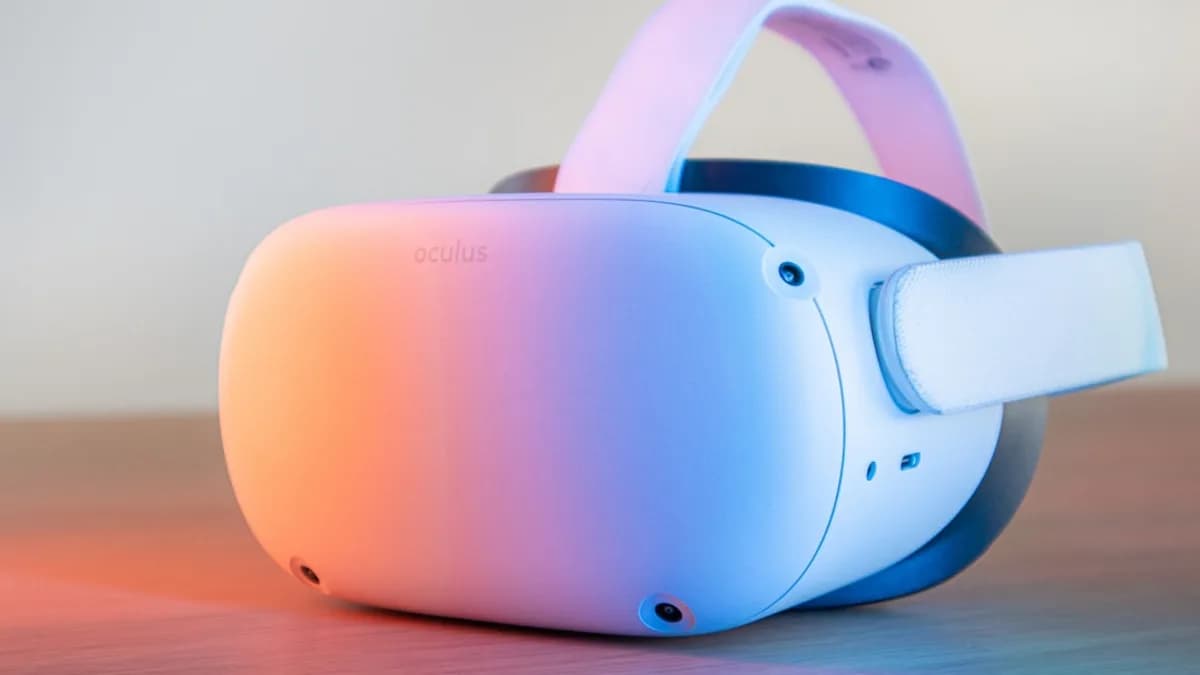
Valve now has a 1,656 KG shipment labeled “HMD + VR controller accessory” at its US warehouse, a logistics signal that matters most to developers, accessory makers, and VR buyers waiting to see whether Steam Frame is finally moving from demo hardware into launch prep.
The shipment, reported by Notebookcheck, does not confirm a release date. Valve has not announced one. But hardware launch cycles do not usually begin with a press release. They begin with pallets, manifests, compatibility work, storefront tagging, and support material arriving before the public sees the buy button.
Valve’s 1,656 KG Steam Frame Shipment Turns a Rumor Cycle Into a Launch Countdown
The meaningful part is not just that Valve received another VR-related shipment. Notebookcheck says Valve has been receiving VR headset shipments for weeks. The shift is the description: this is the first major shipment at Valve’s US warehouse described as “HMD + VR controller accessory.”
That phrase points toward headset-adjacent retail hardware, not a generic Steam Deck replenishment or ordinary replacement part. HMD refers to the headset itself, while the controller accessory language suggests something paired with the input system or fit package.
“HMD + VR controller accessory”
Could this still be something other than launch inventory? Yes. It could be a press/demo support batch, a developer-facing accessory run, a late-stage logistics test, or components staged for packaging. But the scale makes it harder to dismiss as internal tinkering.
The most useful question is not “does this prove launch day?” It does not. The better question is: why would Valve move this much Steam Frame-related hardware into US infrastructure unless the company needed real distribution capacity soon?
MLXIO analysis: shipment records are evidence of operational readiness, not product strategy by themselves. Their significance rises when they line up with other public-facing signals. In this case, they do. Valve has also added a “Great on Steam Frame” category to the Steam Store and begun assigning Steam Frame compatibility ratings to games, similar to systems used for Steam Deck and Steam Machine.
That combination matters. Logistics without storefront work could be testing. Storefront work without logistics could be marketing prep. Together, they look more like a launch machine being assembled.
For Valve’s Hardware Team, the Weight and Label Matter More Than the Leak
The known number is precise enough to be useful but not precise enough to convert into units: roughly 1,656 kilograms of goods arrived under a VR-related label. Notebookcheck says the shipment is one of the biggest associated with the upcoming headset so far, specifically under the “HMD + VR controller accessory” description.
Without unit count, declared value, carton dimensions, or allocation channel, no one can responsibly say how many Steam Frame kits this represents. A full retail headset package, a comfort accessory bundle, controller straps, replacement parts, and developer kits all produce very different unit math.
| Shipment clue | What it supports | What it does not prove |
|---|---|---|
| 1,656 KG weight | A meaningful logistics movement, not a small parcel batch | Exact unit count |
| “HMD” label | Headset-related goods | Final retail configuration |
| “VR controller accessory” label | Controller or fit accessory involvement | That every box contains a complete headset |
| US warehouse destination | Domestic staging for Valve | Public release date |
The broader customs trail adds context. VR.org reported that roughly 32,000 kg of hardware labeled Virtual Reality Devices cleared customs into Valve’s US warehouses in June, and that the FCC embargo on Steam Frame motion controllers lifted June 18. VR.org also described Steam Frame as a standalone SteamOS VR headset with a dedicated 6GHz wireless dongle for PC VR streaming and said Valve had confirmed a summer 2026 release window.
One embedded question matters for operations: if Valve is not close to launch, why pair warehouse movement with Steam Store compatibility infrastructure now?
MLXIO analysis: the answer could still be “because Valve is preparing, not launching.” Hardware companies often stage accessories, review kits, regional support stock, and retail allocation weeks before announcement. But that distinction is narrowing. The shipment does not name the day; it moves the story from speculation toward sequencing.
The contrast with Valve’s other hardware rollout is also relevant. The Steam Machine has already entered the market at $1,049, as we covered in Steam Machine Hits $1,049 — Valve Ditches Console Pricing. Steam Frame now looks like the remaining major piece in the same 2026 hardware cycle.
For Accessory Builders, “HMD + VR Controller Accessory” Points to Fit as a Launch Variable
Notebookcheck connects the “VR controller accessory” wording to the comfort kit Valve showed during initial Steam Frame press demonstrations. That kit, also called the “ergonomic kit,” reportedly includes a top strap for the headset and controller straps that tighten around the hands.
This is not cosmetic. In VR, fit affects whether people keep using a headset after the novelty wears off. A top strap can spread headset weight across the head instead of concentrating pressure on the face. Controller straps can let players open their hands without dropping the controllers, similar to the straps used with Valve Index controllers.
The accessory angle also says something about positioning. Valve may be preparing Steam Frame as more than a single headset box. It may be treating comfort, controller retention, and modular fit as part of the launch experience.
Why comfort hardware becomes platform hardware
A headset can have strong displays and still fail in long sessions if the fit drifts, the face pressure builds, or controller handling feels insecure. Accessories are where those problems get solved or exposed.
The practical question for accessory makers is: will Valve ship the comfort kit as standard equipment, a separate enthusiast add-on, or part of a launch bundle?
Notebookcheck does not answer that. It only says the shipment label may refer to the comfort kit shown in press demonstrations. Alternative readings remain live:
- Replacement straps: support inventory for post-launch service.
- Controller add-ons: straps or retention accessories packaged separately.
- Developer samples: hardware meant for studios testing Steam Frame input.
- Non-final components: accessories staged before final retail packaging.
MLXIO analysis: the label’s importance is that Valve appears to be preparing the physical layer around Steam Frame, not just the headset core. That is a different kind of readiness. It suggests Valve is thinking about how the device behaves in hands and on heads, not only how it benchmarks.
For PC VR Buyers, Steam Frame Is Not Arriving in the Valve Index Era
Steam Frame is entering a market that has changed since Valve Index set expectations for premium PC VR. The Index reference still matters because Notebookcheck says Steam Frame’s controller straps resemble the straps used with Valve Index controllers. But the buyer’s frame of reference is no longer only tethered PC fidelity.
VR.org describes Steam Frame as a standalone SteamOS VR headset with PC VR streaming through a dedicated 6GHz wireless dongle. That is the strategic center of the device if the reporting holds: Steam Frame is not merely a PC accessory, and not merely a standalone headset. It is a Steam-native bridge between both modes.
The reported spec picture from VR.org makes that positioning clearer:
| Steam Frame element reported by VR.org | Strategic implication |
|---|---|
| SteamOS | Keeps the device tied to Valve’s software stack |
| Dedicated 6GHz wireless dongle | Makes PC VR streaming a core feature rather than an afterthought |
| Snapdragon 8 Gen 3 | Supports standalone operation |
| 16GB LPDDR5X | Gives Valve memory headroom, but also exposes it to component-cost pressure |
| Eye tracking | Supports rendering and streaming optimization claims |
For buyers, the key question becomes: does Steam Frame replace a PC VR headset, a standalone headset, or a living-room Steam device?
Valve appears to want the answer to be “some of all three,” but the final value depends on details still missing from the official record. Notebookcheck confirms no official release date. VR.org said that as of July 4, 2026, there was no official price and no reservation date.
That uncertainty can freeze purchase decisions. A buyer considering another headset may wait for Valve to clarify price, field of view, tracking quality, wireless performance, compatibility, and controller design. If Steam Frame lands soon, its biggest early advantage may be the Steam relationship itself: users already own libraries there, and Valve controls the store surfaces that will tell them what works.
MLXIO analysis: Steam Frame does not need to outsell every headset to matter. If it changes which games developers optimize for, which compatibility badges buyers trust, and which wireless PC VR setup becomes the default Steam recommendation, it can redirect attention even with a controlled launch.
For Developers and Rivals, Storefront Signals May Matter as Much as Boxes
Developers should read the shipment alongside the Steam Store changes. Notebookcheck says Valve recently added a “Great on Steam Frame” category and has begun assigning Steam Frame compatibility ratings to games. That is a direct signal to studios: Valve is preparing a discoverability layer for the headset.
Compatibility ratings are not just consumer labels. They become production targets. Developers can choose to chase the badge, ignore it, or wait until Valve clarifies the technical threshold. VR.org reported that Steam Frame Verified requires 90 FPS for standalone VR, which would make optimization more than a box-checking exercise.
The embedded question for studios is: how much launch-window visibility will Valve give games that clear Steam Frame compatibility early?
That is where rivals may care more about software routing than shipment volume. A 1,656 KG accessory shipment is not, by itself, a threat to established headset makers. Steam storefront placement is. Valve can put Steam Frame compatibility in front of PC gamers at the point of purchase, refund risk, wishlisting, and library management.
Skeptics still have a good argument. One shipment does not equal launch. Valve hardware has often arrived on its own timing, and availability can be limited or unconventional. Even Steam Machine performance questions remain active across the new hardware cycle; our reporting on how Steam Machine loses 20% performance over one RAM stick shows why configuration details can matter as much as branding.
MLXIO analysis: the developer risk is waiting too long for certainty. If Valve opens reservations and store categories at once, the first wave of compatible games could get disproportionate visibility. If launch slips, studios that optimized early may sit on work with no immediate sales lift. The shipment raises urgency, not certainty.
For Buyers and the Hardware Market, a Near-Term Launch Could Freeze Purchase Decisions
A near-term Steam Frame launch would immediately complicate headset buying. Not because the shipment proves Steam Frame will be cheap, broadly available, or technically superior. It does not. It complicates buying because Valve still has several unanswered variables that matter to PC VR users.
Those variables include:
- Pricing: Valve has not announced the official Steam Frame price.
- Compatibility: Steam Store ratings are appearing, but buyers need scale.
- Wireless performance: The dedicated 6GHz PC streaming approach is central to the pitch reported by VR.org.
- Controller design: The shipment label and ergonomic kit references suggest input accessories matter.
- Availability: Shipment activity suggests supply movement, not open stock.
The buyer’s question is simple: why buy another headset this week if Valve may name Steam Frame pricing and reservations soon?
That pause can ripple. Developers may hold announcements until compatibility status is clearer. Hardware buyers may wait for reviews. Accessory makers may delay third-party designs until they know what Valve includes in the box. Retail and repair planning may depend on whether comfort accessories are bundled, optional, or treated as service parts.
There is also a pricing overhang. VR.org reported that Valve’s Steam Machine launched June 30 at $1,049 through a randomized reservation lottery, and that Valve had previously said memory costs affected schedule and pricing. Steam Frame’s final price is still not official in the supplied material, so any number would be speculation. But buyers now have a reason to wait for Valve’s actual terms instead of relying on estimates.
MLXIO analysis: if Steam Frame launches with strong availability, clear compatibility labels, and a convincing wireless story, it could pull PC VR attention back toward Steam-native play. If pricing lands high or supply is thin, the headset risks becoming another enthusiast device: influential, discussed heavily, but not broad enough to reset developer priorities.
Valve’s Narrowing Steam Frame Window: Bundles, Stock, and Signals to Verify
The safest forecast is that Valve’s announcement window appears to be narrowing. A 1,656 KG shipment under “HMD + VR controller accessory”, prior VR-related warehouse activity, a summer 2026 release window reported by VR.org, and new Steam Store compatibility surfaces all point in the same direction.
They do not point to an exact date.
The next public move could be a reservation page, a pricing reveal, review seeding, developer documentation, or a bundle announcement. It could also be more logistics activity before any consumer-facing launch. Hardware operations often move before marketing, and Valve has not said the shipment is Steam Frame retail inventory.
The practical question now is: which signal would confirm that this is launch stock rather than pre-launch staging?
Watch for evidence in this order:
- Valve pricing: the missing variable that turns interest into purchase intent.
- Reservation mechanics: randomized lottery, queue, direct order, or regional rollout.
- Bundle contents: whether headset, controllers, top strap, and controller straps are standard.
- Compatibility scale: how many games receive Steam Frame ratings before launch.
- Review timing: whether press units arrive before or after reservations open.
- Support pages: repair, replacement accessory, and setup documentation.
MLXIO analysis: accessory-led messaging would make sense. The shipment label highlights controller accessories, while Notebookcheck’s comfort kit detail suggests Valve may emphasize ergonomics and session quality, not only display specs. A controlled rollout also remains plausible, especially if Valve wants to avoid overselling early stock before it sees real demand and support load.
The shipment does not prove Steam Frame’s launch date. It does materially raise the probability that Valve’s next VR hardware cycle is no longer distant. The evidence that would strengthen that thesis is straightforward: official pricing, reservations, review kits, and a wider wave of Steam Frame compatibility ratings. The evidence that would weaken it would be silence from Valve while warehouse activity continues without consumer-facing pages or developer guidance.
The Bottom Line
- Valve’s large VR shipment suggests Steam Frame may be moving closer to launch prep.
- Developers and accessory makers may need to prepare for imminent hardware availability.
- Buyers waiting on Valve’s next VR headset now have a stronger logistics signal, though no release date is confirmed.