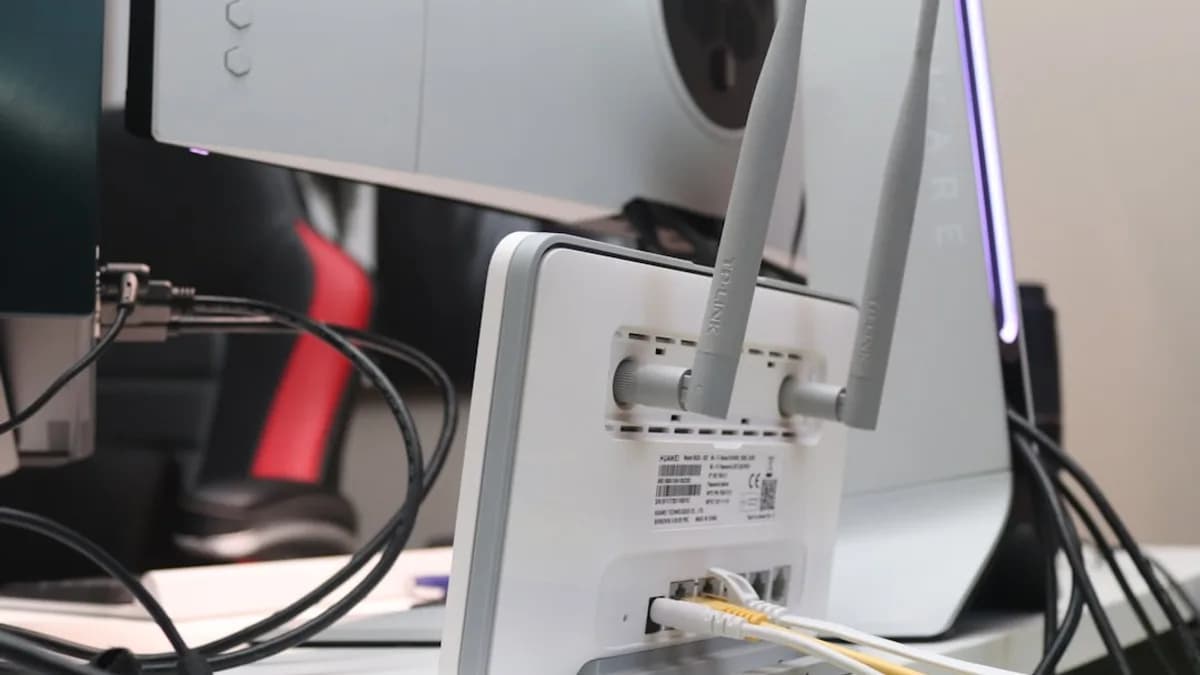
Xiaomi Unveils Affordable BE7200 Pro WiFi 7 Router with Advanced 8-Antenna Design
Xiaomi just dropped its BE7200 Pro WiFi 7 router at a price that undercuts most next-gen competitors—CNY 1,199, or roughly $176. The BE7200 Pro goes on sale this week in China, targeting buyers who want flagship wireless speeds without paying a premium according to Notebookcheck.
The headline feature: an 8-antenna array designed to maximize WiFi 7’s theoretical throughput and multi-device stability. That’s a configuration usually reserved for top-tier models costing far more. Xiaomi claims this setup supports up to 7,200 Mbps peak wireless speed—enough bandwidth to handle 8K streaming, cloud gaming, and dozens of smart home devices simultaneously.
There’s a catch. Unlike the BE19000 Pro, Xiaomi’s ultra-premium router, the BE7200 Pro drops built-in NAS (network-attached storage) features. No USB drive or SSD slot for easy home server use. This keeps the price low, but means power users looking for all-in-one networking and storage will need to look elsewhere.
How Xiaomi’s BE7200 Pro Stands Out in the Emerging WiFi 7 Router Market
WiFi 7 is still more buzzword than norm in 2024. The new standard—formally IEEE 802.11be—promises up to 40 Gbps theoretical speeds, lower latency, and better performance in congested environments. Most WiFi 7 routers on shelves now are flagship models from Netgear, TP-Link, and Asus, and they rarely go for less than $350.
Xiaomi’s BE7200 Pro lands at half that price, while still packing 8 antennas and tri-band support. By comparison, TP-Link’s Archer BE800 (also 8 antennas and WiFi 7) retails for $399, while Asus’s ROG Rapture GT-BE98 hits $699. The BE7200 Pro’s 7,200 Mbps max speed doesn’t match the 18,000 Mbps of Xiaomi’s own BE19000 Pro or the 19,000 Mbps on Netgear’s Nighthawk RS700, but for most households, the real-world difference is negligible—gigabit fiber is still a bottleneck.
The absence of NAS capabilities is the BE7200 Pro’s main tradeoff. For households that just want fast, stable WiFi for streaming, gaming, and work, it’s irrelevant. But for power users running Plex servers, automated backups, or home surveillance storage, the lack of USB or drive bays is a dealbreaker. Xiaomi is betting that most buyers at this price point don’t need a router doubling as a mini server.
Xiaomi’s strategy is clear: flood the mid-tier with advanced hardware at a price that puts pressure on legacy brands. In China, the company’s routers already dominate online sales charts. If Xiaomi can replicate that success overseas, it could force rivals to rethink their pricing for WiFi 7 hardware—and accelerate adoption of the standard.
What to Expect Next: Xiaomi’s Role in Expanding WiFi 7 Adoption and Future Router Innovations
Xiaomi rarely stands still in the networking market. The BE7200 Pro is likely the first of several WiFi 7 models targeting different price tiers. As the price of WiFi 7 chipsets drops, expect Xiaomi to push these speeds into even cheaper routers for mass-market buyers.
If Xiaomi’s strategy works, WiFi 7 adoption could jump in 2024 and 2025. Affordable hardware is the missing piece: most consumers aren’t upgrading because their old routers “just work,” and WiFi 6 is still more common than fast enough. Xiaomi’s aggressive pricing could flip that equation, especially in markets like India and Southeast Asia where the company has a massive installed base.
The next battleground: value-added features. With the BE7200 Pro, Xiaomi skipped NAS support to hit a low price. But as rivals bundle mesh networking, AI-driven security, and parental controls, Xiaomi will need to respond. The company’s track record—fast product cycles, strong partnerships with Chinese ISPs, and relentless price competition—suggests it’s ready.
For tech buyers, the takeaway is clear. Waiting just got more attractive. The BE7200 Pro signals that WiFi 7 is about to get affordable, and the real feature wars are only beginning. For now, keep an eye on Xiaomi’s next moves—especially any global launch plans, firmware updates for advanced customization, or models that add the storage and pro features missing here. The router wars are about to get a lot more interesting.
Key Takeaways
- Xiaomi is making advanced WiFi 7 technology more accessible by offering its BE7200 Pro router at a much lower price than competitors.
- The 8-antenna design delivers high speeds and stability typically found in pricier models, benefitting users with demanding connectivity needs.
- The lack of built-in NAS features means some power users may still need to opt for higher-end routers if they require integrated storage.