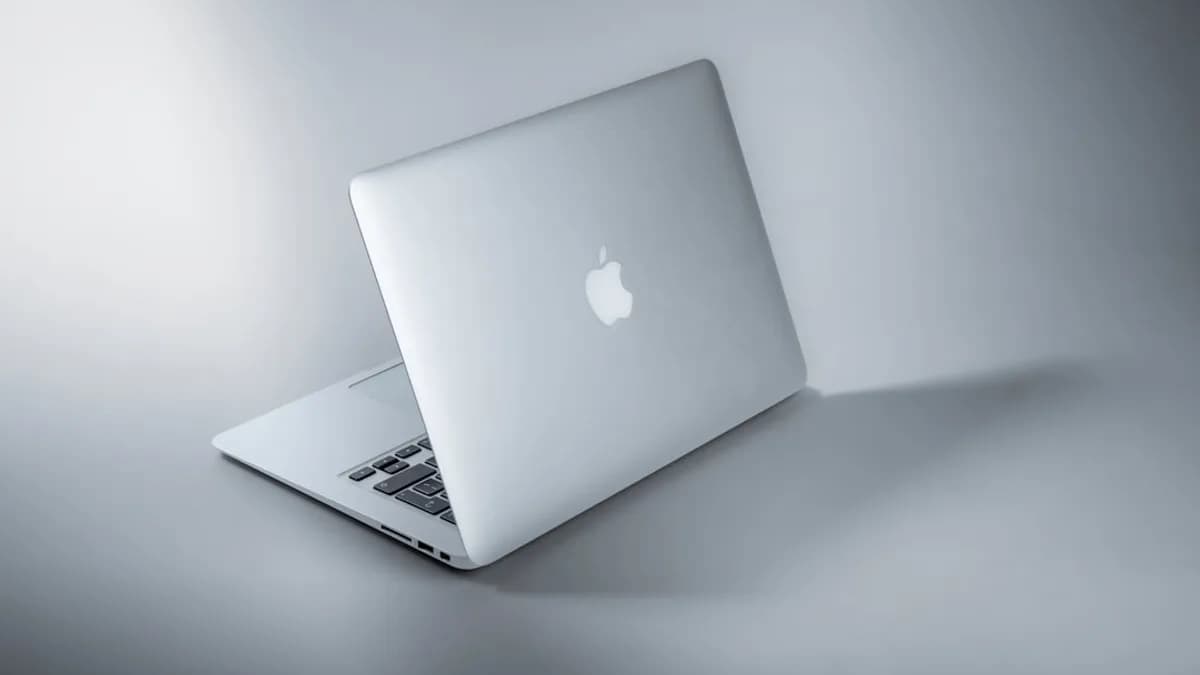
Apple’s first touchscreen Mac may arrive without next-generation pro silicon, which makes the reported launch look less like a chip event and more like Apple testing whether the Mac can absorb touch without losing its identity.
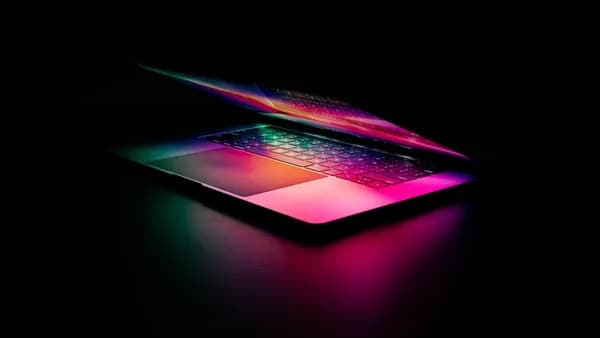
The revamped MacBook models are expected to use M5 Pro and M5 Max chips rather than M6 Pro and M6 Max, according to 9to5Mac , citing a new Bloomberg report. The machines are reportedly on track to “arrive between late this year and early next year,” with OLED screens, 14-inch and 16-inch sizes, and Dynamic Island replacing the current notch.
Apple’s touchscreen MacBook may be less about chip spectacle and more about resetting the laptop category
The surprising part is not that Apple may finally ship a touchscreen MacBook. It is that the first model may use chips already in the M5 family.
That changes the read. If the report holds, Apple is not using the touchscreen MacBook as a clean “new chip, new era” launch. It is reportedly pairing a major input and display shift with known high-end silicon. MLXIO analysis: that suggests Apple may be trying to limit the number of variables in the first generation. New display. New touch layer. New industrial design. New Mac interaction expectations. That is already a lot.
“The devices will also sport an updated industrial design, marking the first visual change to high-end MacBooks since 2021,” according to the report.
The central question is not whether M5 Pro and M5 Max are credible for a premium MacBook. They are the reported high-end chips here. The harder question is whether Apple can make touch feel natural on macOS after years of resisting the idea.
That is also why the chip choice matters. A touchscreen MacBook powered by M5 Pro and M5 Max would make the form-factor shift the story. Not benchmark theater.
M5 Pro and M5 Max make the launch timing more conservative than revolutionary
The report says the new MacBooks are expected between late this year and early next year. That timing matters because 9to5Mac says a separate Mark Gurman story reported Apple plans to skip higher-end chips in the coming M6 generation.
That would explain the mismatch. If M6 Pro and M6 Max are not coming, Apple has two choices for the first touchscreen MacBook: wait longer, or ship the new design with M5 Pro and M5 Max. The reported plan points to the second option.
MLXIO analysis: this is conservative product management. Apple would be launching a highly visible Mac redesign without also forcing a new pro-chip transition into the same window. A touch-enabled OLED MacBook with Dynamic Island is already a major hardware change. Adding an unproven pro silicon cycle on top may not be necessary for the product to feel new.
The sizes also signal positioning. The reported 14-inch and 16-inch models align with the high-end MacBook tier, not a broad mainstream rollout. That supports the idea that touch may arrive first as a premium MacBook Pro evolution, rather than as a MacBook Air-style feature for the whole lineup.
For readers tracking the buying-timing issue around Apple’s current M5 machines, this report adds sharper context to Touchscreen Mac Rumor Turns Apple’s M5 Macs Into a Trap: the risk is not just whether a touch Mac is coming, but whether its first generation lands before the next major pro-chip jump.
The hard numbers are dates, sizes, and chip generations — not confirmed pricing
The source material gives several concrete markers:
| Reported detail | What it signals |
|---|---|
| M5 Pro and M5 Max | Apple may use current high-end silicon for the first touchscreen MacBook |
| Late this year to early next year | The launch window appears closer than an M7-based redesign |
| 14-inch and 16-inch | The device is being framed around high-end MacBook sizes |
| OLED | The Mac would get its first OLED screen |
| Dynamic Island | Apple would replace the existing notch design |
| M7 Pro and M7 Max as early as the end of 2027 | A more advanced follow-up is already reportedly in advanced testing |
Pricing is not confirmed in the supplied 9to5Mac source. Margins are not confirmed either. Any claim that Apple is choosing M5 Pro and M5 Max for margin protection would be speculation.
Still, the product architecture tells us something. MLXIO analysis: using existing M5-family chips may simplify launch planning compared with waiting for an unreported M6 Pro/Max tier that Bloomberg says Apple is skipping. The touchscreen MacBook would then compete on screen, input, and design — not on being the fastest Mac silicon Apple can possibly ship at that moment.
That creates a cleaner upgrade pitch for some buyers. Owners of older MacBooks may care more about the first OLED touchscreen Mac and the new chassis than about a one-generation chip label. But buyers who prioritize silicon cadence may look past the first model and wait for the reported M7 Pro and M7 Max update.
Apple’s long resistance makes this reported M5 model a sharp reversal
9to5Mac describes the touchscreen Mac as “an idea that the company has refuted for years.” That is the real break from Apple’s past posture.
For years, Apple kept the Mac and iPad separated by input model: Mac for keyboard and pointer, iPad for direct touch. A touchscreen MacBook would not erase that line by itself, but it would weaken the old certainty behind it.
The reported use of Dynamic Island also matters. That design element is already associated with Apple’s smaller touch-first devices, but the report says it would replace the MacBook notch for the first time. If accurate, Apple is not just adding a touch panel. It is importing a visible interface idea into the Mac hardware design.
MLXIO analysis: Apple appears to be testing convergence at the top of the Mac line, where customers are already used to paying for premium screens and design changes. That limits risk. It also avoids making every Mac buyer participate in the experiment on day one.
Mac users, iPad buyers, developers, and investors will read the report differently
Different groups will focus on different risks.
- Mac power users: The appeal is obvious if touch is optional and the keyboard-trackpad model remains intact. The risk is whether the new screen and design introduce tradeoffs the report does not yet detail.
- iPad buyers: A touch MacBook could raise harder questions about where the iPad ends and the Mac begins. The source does not say Apple plans to reposition the iPad, so this remains an implication, not a reported fact.
- Developers: The key issue is software behavior. The report does not say whether Apple will change macOS controls, gestures, or app guidelines for touch.
- Investors: The reported strategy could refresh the Mac story without waiting for a new pro-chip generation. But the source does not provide demand forecasts, sales targets, or margin data.
That uncertainty is the point. The hardware report is specific. The software consequences are still opaque.
Related Apple hardware coverage, including iPhone 18 Pro Camera Bets on DSLR Control—No Menu Maze, shows the same broader tension across Apple rumors: more direct controls, more premium segmentation, and more pressure on Apple to justify high-end device differentiation.
An M5 Pro touchscreen MacBook would validate premium touch Macs before it disrupts the lineup
A touchscreen MacBook Pro would not automatically remake the Mac lineup. Based on the report, it would arrive first in 14-inch and 16-inch forms with M5 Pro and M5 Max chips. That points to a controlled premium launch.
The more important effect may be validation. If Apple ships touch on a high-end MacBook, it effectively says the old no-touch Mac stance no longer holds in absolute terms. That alone would reset expectations for future Mac hardware.
MLXIO analysis: the first version does not need to be perfect to matter. It needs to prove that touch can exist on a Mac without making the Mac feel like a compromised iPad or a confused laptop. That is a narrow target, but Apple appears to be aiming at it with hardware changes substantial enough to stand apart from a routine refresh.
The next proof point is M7, not M6
The report says Apple is already in “advanced testing” of follow-up MacBook models powered by M7 Pro and M7 Max chips, planned for “as early as the end of 2027.” That makes the first touchscreen MacBook look like the opening move, not the final form.
The watch item is simple: whether Apple presents the M5 Pro and M5 Max touchscreen MacBook as a new premium Mac category, a redesigned MacBook Pro, or something with different branding. 9to5Mac’s Chance Miller says he is especially interested in that branding question and suggests MacBook Ultra as a leading candidate if he had to bet.
Evidence that would strengthen the thesis: Apple emphasizes display, touch, industrial design, and Dynamic Island more than raw chip gains. Evidence that would weaken it: Apple frames the device mainly as a standard MacBook Pro refresh with touch added on.
Either way, the reported chip decision points to a pragmatic Apple move: make the MacBook more tactile first, then let the next pro-chip generation carry the performance narrative later.
The Bottom Line
- Apple’s first touchscreen MacBook could mark a major shift in how macOS laptops are designed and used.
- Using M5 Pro and M5 Max would make the redesign and touch experience the focus rather than chip benchmarks.
- OLED screens, Dynamic Island, and new 14-inch and 16-inch models could make this the biggest MacBook Pro design change since 2021.