If SteamOS can run the handheld, the desktop, and a living-room box, why should Valve keep treating it like Steam Deck firmware?
That is the question SteamOS 3.8 raises. My read: this is not a routine operating-system update. It is Valve testing whether SteamOS can become a broader PC gaming platform across handhelds, TVs, and future hardware. Valve officially released the update on June 18, 2026, after months of beta testing, according to Notebookcheck. The sharpest clue is small but loud: the release includes early support for Steam Machine hardware.
That matters because operating systems telegraph strategy before product launches do. A line in patch notes can say more than a press event.
Is SteamOS still a Steam Deck update, or is Valve building a multi-device platform?
The obvious answer is that Steam Deck owners get a better machine. Faster updates. Better Wi-Fi reliability. Improved HDMI audio detection. Mono audio as an accessibility feature. Fixes for games including Star Wars Jedi: Survivor, Starfield, and SpongeBob SquarePants: Titans of the Tide.
But that is only the surface.
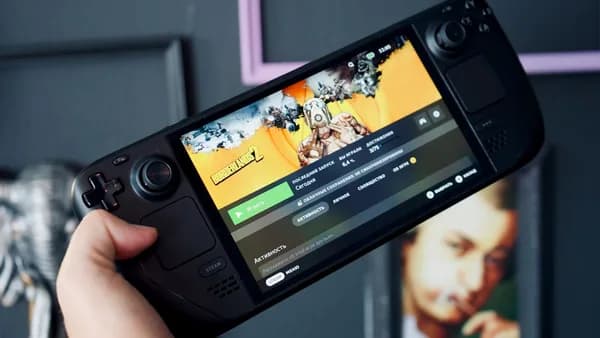
The harder answer is that Valve is turning SteamOS from a product-specific OS into a base layer for multiple categories. The update expands support for third-party handhelds from the Lenovo Legion Go, ASUS ROG Ally, MSI Claw, GPD, and OneXPlayer families. It also improves controller support, gyro controls, automatic screen rotation, SD card stability, Bluetooth compatibility, GPU stability, and power management.
That is not glamorous. It is plumbing. But platform shifts are built on plumbing.
The same logic applies to Valve’s Steam Machine price hints and its 4K promise uncertainty. As PC Guide summarized from the stable SteamOS 3.8.10 release notes, one general update is blunt:
“Initial support for upcoming Steam Machine hardware”
That single line is why the update deserves more attention than a normal patch cycle.
Why does a new Linux kernel matter more than a flashy feature?
Because broad hardware support is where gaming platforms either work or collapse.
SteamOS 3.8 moves to a modernized Arch Linux base and Linux kernel 6.16. Valve also updated graphics drivers, improved stability, and targeted more efficient power management. Those are not features that sell themselves in a trailer. They are the conditions required for SteamOS to behave predictably across more than one Valve-designed device.
Desktop mode also gets a serious rebuild. Valve upgraded it to KDE Plasma 6.4.3 and made Wayland the default display protocol. The stated goal, per the supplied source material, is to bring desktop mode closer to the responsiveness and performance of Gaming Mode.
That matters if SteamOS is supposed to live beyond the Steam Deck. A handheld can hide many desktop shortcomings behind a console-style interface. A living-room PC, a docked handheld, or a broader PC install cannot. Users will expect external displays, TV scaling, HDR, VRR, screen casting, Remote Play, and game recording to behave cleanly.
Here is the strategic split:
| SteamOS role | SteamOS 3.8 change that supports it | Why it matters |
|---|---|---|
| Steam Deck OS | Faster updates, game fixes, Wi-Fi and HDMI audio improvements | Keeps the existing device sharper |
| Third-party handheld OS | Better controls, gyro, rotation, SD card, Bluetooth, GPU stability | Makes non-Valve handhelds feel less like patched-together PCs |
| Living-room gaming OS | Steam Machine support, TV scaling, external display improvements | Points toward a console-like PC experience |
| Desktop-adjacent OS | KDE Plasma 6.4.3, Wayland default, HDR and VRR work | Makes SteamOS more credible outside Gaming Mode |
That table is the story. Valve is not just polishing one product. It is preparing one OS for several hardware shapes.
Do the Steam Machine references mean the living-room PC idea is real again?
They do not confirm a product launch. They do confirm preparation.
Valve has not provided further details about the living-room PC. That absence matters. Readers tracking the rumor cycle around Steam Machine Hype Hits a Wall: No Price, No Date Yet should keep that caution front and center. Support in an OS is not the same thing as a shipping box on a shelf.
Still, the wording has already reignited speculation. Notebookcheck reports that users on Reddit see SteamOS 3.8 as another preparatory step toward a Steam Machine launch, with recent SteamDB updates to Steam Machine-related package entries adding fuel. The same source says a leaker claims Valve could officially unveil the Steam Machine as early as June 23, 2026.
That last point should be treated exactly as what it is: a leak claim, not confirmation.
The stronger argument does not require believing the date. It rests on the update itself. SteamOS 3.8 adds Steam Machine support while improving TV scaling, external displays, HDR, VRR, HDMI audio detection, and waking from sleep via a connected Steam Controller, per PC Guide’s summary of the release. Those are living-room concerns.
If Valve is not preparing for a broader hardware push, it is doing a very good impression of a company preparing for one.
Can handheld PC makers keep selling Windows machines with console expectations?
They can. But SteamOS 3.8 makes the alternative harder to ignore.
The source material puts the problem plainly: many Windows-based handhelds offer plenty of power but can feel more like miniature gaming PCs than true consoles in daily use. That is the gap SteamOS attacks. Turn on the device. Launch a game. Play. Fewer desktop chores. Fewer driver interruptions. Less friction between intent and action.
This is where Valve’s advantage is not just software design. It is distribution gravity. Steam’s storefront power shows up even in smaller stories like 80% Off Everything? Steam Deal Hides a $2.99 Catch, but OS control is deeper. If more handhelds boot into SteamOS, Steam becomes not just the store users open. It becomes the environment they inhabit.
That is why third-party handheld support may matter as much as Steam Machine support. Valve does not need to manufacture every device if SteamOS becomes the preferred layer on devices from Lenovo, ASUS, MSI, GPD, and OneXPlayer families.
The risk for those manufacturers is also clear. If they ship powerful hardware with clumsy handheld software, SteamOS starts to look less like an option and more like the missing piece.
What can still break Valve’s plan before it becomes a real category?
Plenty.
The counterargument is strong: patch-note hints do not make a platform. Initial Steam Machine support does not guarantee a launch. Broader handheld compatibility does not mean every device will behave well. SteamOS still has to escape the Steam Deck bubble in practice, not just in release notes.
There are also compatibility limits. IGN’s SteamOS installation guide says Valve does not guarantee support for every PC yet, and SteamOS works best on many AMD-powered systems. It also notes that apps available only on Windows will not run on it, and that most games requiring kernel-level anti-cheat are not compatible.
That is not a minor footnote. It is one of the biggest constraints on any attempt to make SteamOS feel like a default PC gaming OS.
Driver edge cases also remain a real concern. Valve can improve GPU stability, Bluetooth, SD card handling, external displays, and power management, but supporting a wide spread of hardware is a different challenge from supporting one Steam Deck configuration. The update shows progress. It does not prove completion.
And the Steam Machine name itself creates pressure. If Valve uses it, buyers will expect clarity: what hardware, what performance target, what launch plan, what support model, and how far SteamOS compatibility reaches beyond Valve-approved devices.
Should Valve clarify the roadmap now or keep letting patch notes do the talking?
Valve should clarify it.
SteamOS 3.8 gives the company a credible technical base for a wider push: Linux kernel 6.16, KDE Plasma 6.4.3, Wayland by default, third-party handheld improvements, and explicit Steam Machine support. That is enough smoke to justify asking for fire.
But Valve should not let speculation define the product. If a Steam Machine is coming, say what role it plays. If third-party handheld support is becoming a formal strategy, say which devices matter and how support will be maintained. If SteamOS is still mostly for Steam Deck, stop letting the update trail imply something larger.
My position is simple: SteamOS 3.8 is the moment Valve should stop acting like SteamOS is only an operating system update and start treating it like a platform declaration.
The next few months will show whether this release was preparation for real hardware expansion or another tantalizing technical breadcrumb. Valve has built the runway. Now it has to tell gamers what is supposed to take off.
The Bottom Line
- SteamOS 3.8 suggests Valve wants its OS to grow beyond the Steam Deck into a broader PC gaming platform.
- Support for more handhelds could make SteamOS a stronger alternative to Windows on portable gaming PCs.
- Early Steam Machine support points to possible future Valve hardware for living-room or desktop gaming.