What if Verbatim’s Cool ’n’ Go Aqua Breeze is more revealing than half the flashier hardware people usually chase at trade shows?
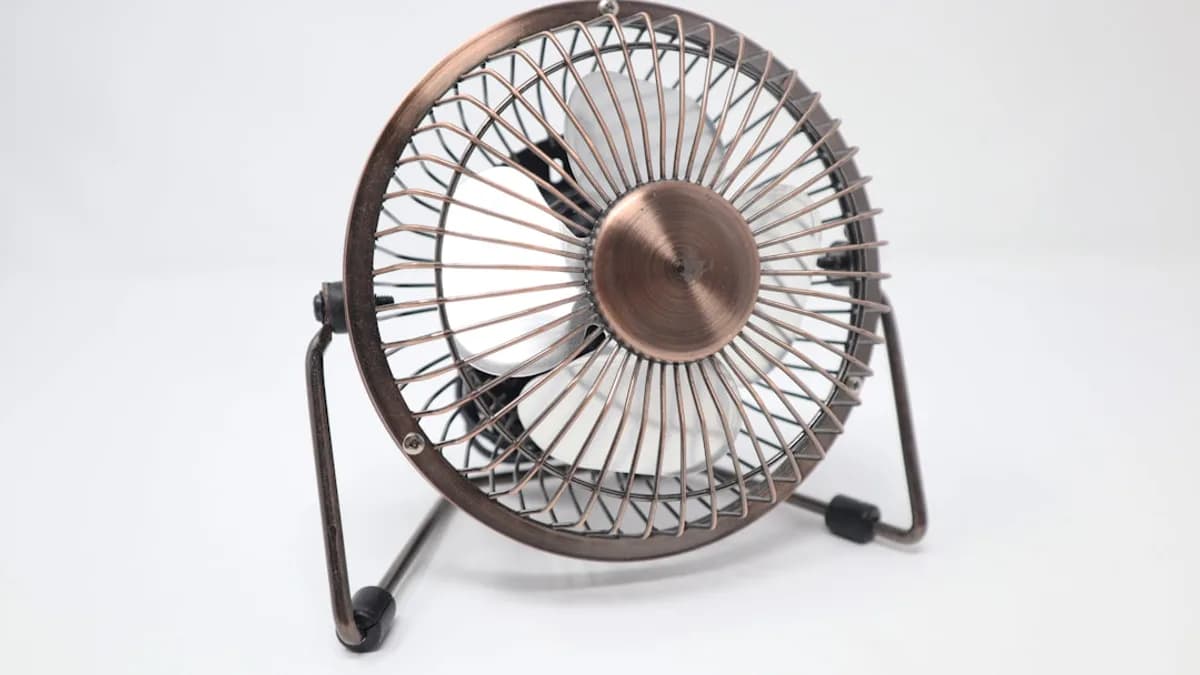
That is the question this small portable battery-powered fan raises. The product is not exciting because it has a display, a USB-C port, and a 50 ml water tank. It is interesting because those features answer a basic problem without asking the user to join a platform, install an app, or carry a strange cable—a practicality-first instinct that also shows up in RedMagic wired earphones. Verbatim showed the fan at Computex Taipei, and Notebookcheck reports that the company was surprised by demand for its earlier portable fans after announcing an expansion at IFA 2025. By the end of that season, the first products were “practically sold out.”
My view: this is exactly where small consumer tech should go. Not louder. Not smarter for its own sake. More useful.
Is the Aqua Breeze a novelty fan, or a useful answer to heat people actually feel?
The Cool ’n’ Go Aqua Breeze looks like a seasonal accessory. That is the easy read. The better read is that Verbatim has found a category where tiny improvements matter because the discomfort is immediate.
Notebookcheck was able to try the device at Computex Taipei, including with water in the tank. The reporter could not fairly judge noise in the hall, which matters; trade-show floors are bad places to make firm claims about acoustics. Still, the hands-on notes are useful. The fan has many speed settings controlled through a slider, with the status visible on the display. In a direct comparison with the Nitecore Izzcool 10 Pro, the Verbatim model seemed slightly quieter while producing comparable airflow.
That is not a laboratory verdict. It is a practical first impression. For this kind of product, practical impressions count.
The bigger signal is Verbatim’s own behavior. The company is not treating portable fans as a one-off. It has several new products in this segment, and the new fans are reportedly on their way to the European warehouse, with availability expected in June 2026. Price has not been announced.
That missing price matters. A fan like this only works commercially if the value is obvious at checkout.
Why does USB-C make this more than a seasonal drawer gadget?
USB-C charging is the feature that turns the Aqua Breeze from “summer thing” into something people may actually pack.
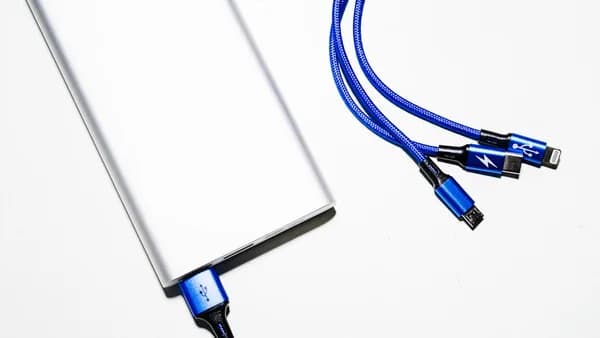
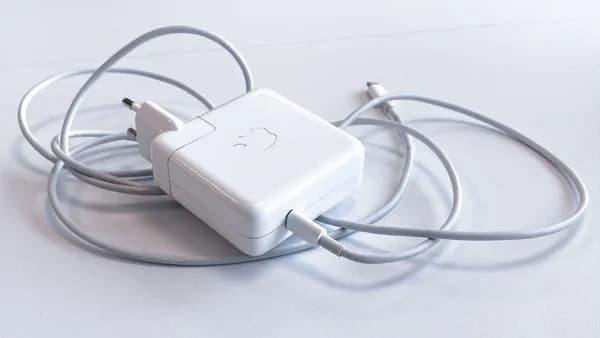
A portable fan charged through a proprietary connector is one more object that becomes useless when the cable disappears. A USB-C fan can be charged from the same pool of chargers people already carry for laptops, power banks, wall adapters, and travel setups. That does not make the product glamorous. It makes it less annoying.
That is the point.
Verbatim already sells related Cool ’n’ Go models with USB-C charging through a USB-A-to-USB-C cable. The Cool ’n’ Go AirJet is listed with four speed settings up to 20000 rpm max., a 4000 mAh / 14.8 Wh battery, an LED display, and a product weight of 166g. The Cool ’n’ Go Ice Touch is listed with an active cooling disc, adjustable speeds up to 7000 rpm max., a 3600 mAh / 13.32 Wh battery, and a product weight of 203g.
The Aqua Breeze adds misting to that idea, but it also exposes the tradeoff: Verbatim has not yet provided battery-life information for the new model. That is the number buyers should wait for.
| Model | Main cooling idea | Known power/display details |
|---|---|---|
| Cool ’n’ Go AirJet | High-speed handheld airflow | 4000 mAh / 14.8 Wh, LED display, USB-C charging via supplied cable |
| Cool ’n’ Go Ice Touch | Airflow plus active cooling disc | 3600 mAh / 13.32 Wh, LED display, USB-C charging via supplied cable |
| Cool ’n’ Go Aqua Breeze | Airflow plus mist from 50 ml tank | USB-C port on back, display shows speed status, battery life not yet disclosed |
Does the display and water tank add real value, or just another failure point?
The display is useful if it prevents guessing. That is the bar. If it shows speed status clearly, as Notebookcheck observed, it gives users control without forcing them to interpret vague button presses or tiny LEDs.
The water tank is the more important feature. Verbatim has placed the tank around the fan, and Notebookcheck says this design improves water supply because gravity assists the process. That is a small design choice with real consequences. If a misting fan sputters, leaks, or only works when held at the right angle, users stop trusting it.
But the 50 ml tank also sets a hard limit. Verbatim specifies 60 minutes of runtime for misting in continuous mode. Notebookcheck reasonably notes that the mist spray is unlikely to last very long, especially if used continuously. A pulsating mode is also available, similar to the Nitecore model, and the source says experience has shown that this can be more effective because evaporation works better during short pauses.
That is the kind of feature choice that matters more than adding “smart” branding. The device should cool better, waste less water, and remain simple.
Why should tech coverage take a small battery fan seriously?
Because useful hardware does not have to be expensive, speculative, or aimed at power users to say something about consumer behavior.
MLXIO spends plenty of time on high-performance hardware and future-facing computing, from Nvidia’s RTX Spark push into AI PCs to launch-watch stories like Valve’s Steam Machine leak. Those categories matter. But the Aqua Breeze points in the opposite direction: a product that people can understand in five seconds.
You are hot. You want airflow. Maybe mist. You want to charge it with the cable already in your bag.
That clarity is underrated. The Aqua Breeze does not need a long pitch. Its value is felt at a desk, in a hotel room, during travel, in a queue, or anywhere air conditioning is absent or weak. This is analysis, not a claim from Verbatim: the best version of this product wins by disappearing into routine. Pick it up, charge it, fill it, use it.
No onboarding. No account. No drama.
Where could Verbatim still get this wrong?
The strongest criticism is obvious: portable misting fans can become disposable plastic if brands chase volume instead of durability.
The Aqua Breeze has a battery, display, fan motor, water tank, misting system, slider controls, and USB-C charging. Each added part can improve comfort. Each added part can also fail. Water near electronics raises questions about sealing and long-term reliability. A tank raises cleaning and hygiene questions. A compact fan raises noise questions. A built-in battery raises lifespan questions.
Notebookcheck could not judge noise properly in the Computex hall. Verbatim has not disclosed battery life. Price is still pending. Those are not minor footnotes. They are the difference between a clever summer product and a gadget that ends up forgotten after one season.
Verbatim’s opportunity is to be boring in the best way:
- Battery life: Publish realistic runtimes across fan speeds and misting modes.
- Noise: Give buyers clear expectations outside a trade-show floor.
- Water handling: Make filling, cleaning, and leak resistance obvious.
- Durability: Avoid flimsy moving parts and vague care instructions.
- Charging: Keep USB-C standard and fast enough for daily use.
What should buyers and Verbatim watch before June 2026?
The next test is not whether the Cool ’n’ Go Aqua Breeze can impress someone for a few minutes at Computex. It is whether it can survive normal use after the novelty fades.
Consumers should wait for the missing details: battery life, price, cleaning guidance, and real-world noise. Verbatim should resist the temptation to make future Cool ’n’ Go fans more complicated than they need to be. Stable airflow, quiet operation, leak-resistant misting, clear display information, and dependable USB-C charging are enough.
That is the lesson here. The future of consumer tech does not always need to be bigger or smarter. Sometimes it just needs to keep people cool and charge with the cable they already carry.
Key Takeaways
- The fan focuses on practical features like USB-C, a display, and a 50 ml water tank instead of unnecessary app connectivity.
- Verbatim’s earlier portable fans reportedly sold out, suggesting real demand for simple cooling gadgets.
- The hands-on comparison indicates small usability improvements can matter in everyday consumer tech.