Can a mainstream 14-inch Windows laptop make storage flexibility feel as central to the buying decision as battery life?
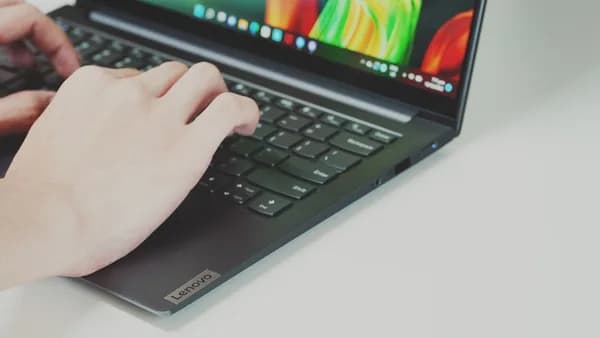
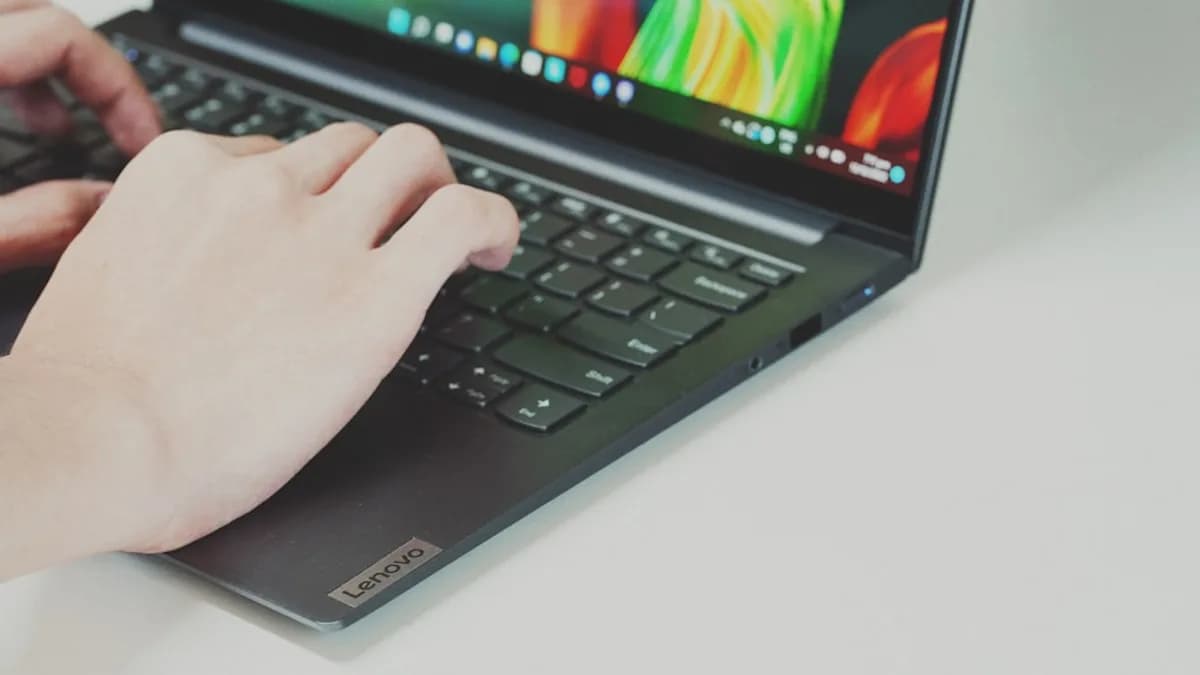
That is the real question behind Lenovo’s international release of the IdeaPad Slim 5 Ultra 14ILL11, which is now available after its MWC 2026 debut in March, according to Notebookcheck. The headline spec is the battery claim: up to 23.3 hours of local 1080p video playback at 150 nits from a 65 Wh pack. The more interesting spec may be the one Lenovo is pairing with that endurance pitch: dual SSD slots in a machine described as lighter than the MacBook Air 13.
That combination matters because thin-and-light laptops usually force a trade: portability first, flexibility later. Lenovo is testing whether buyers will care about a 14-inch laptop that promises long runtime, a high-refresh display, and more storage headroom without moving into a heavier performance class.
Is Lenovo challenging the MacBook Air formula with expandability rather than pure thinness?
The IdeaPad Slim 5 Ultra is not being framed as a workstation, gaming laptop, or flagship business machine. It is an IdeaPad. That makes the feature mix more pointed.
Lenovo has built this release around three traits that normally sell ultraportables: low weight, long battery life, and a compact 14-inch footprint. The source says the laptop is lighter than the MacBook Air 13, while also carrying a larger-sounding ownership pitch through dual SSD slots.
That is the tension. Apple’s notebook comparison appears in the source only on weight, not features. But MLXIO analysis: Lenovo’s more provocative move is not simply chasing Apple-style portability. It is bundling that portability with internal storage flexibility, a feature that matters after checkout rather than during a demo.
This also fits with Lenovo’s recent pattern of placing dual-drive options into compact laptops. We covered a nearby example in our ThinkBook 14x coverage, and the IdeaPad angle appeared earlier in our IdeaPad Slim Ultra dual-SSD report. The theme is clear enough: Lenovo is making internal expansion a selling point in sizes where buyers may not expect it.
Which specs carry the launch, and which ones need careful reading?
The launch configuration starts with an Intel Core Ultra 5 226V, 8 cores, an Arc 130V iGPU, and 16 GB of LPDDR5X-8533 RAM. Lenovo lists starting prices of AUD 1,799 in Australia, HKD 10,288 in Hong Kong, and SGD 1,299 (~$1,000) in Singapore, a regional rollout approach also seen with the ThinkPad L14 Gen 7.
The display and battery story needs precision. The standard configuration cited by Notebookcheck uses a 1600p IPS display with 100% sRGB coverage, 400 nits peak brightness, and a 120 Hz refresh rate. Lenovo also offers a 1200p/60 Hz OLED option.
| Feature | IPS configuration | OLED configuration |
|---|---|---|
| Resolution / refresh | 1600p / 120 Hz | 1200p / 60 Hz |
| Color / brightness cited | 100% sRGB, 400 nits | Not specified in source |
| Official battery estimate | 23.3 hours local 1080p video at 150 nits | 19.5 hours |
| Battery impact | Highest official estimate | Drops by over 15% |
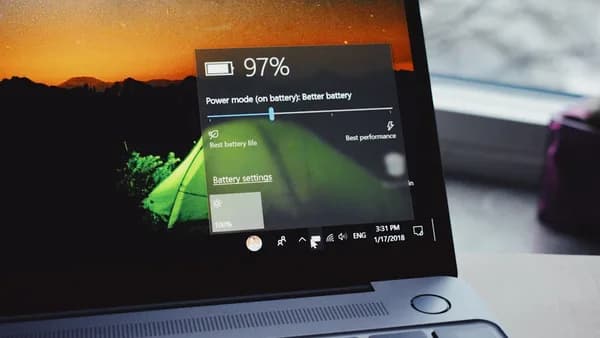
Lenovo’s official battery estimate reaches 23.3 hours for local 1080p video playback at 150 nits, but choosing the OLED panel cuts that estimate to 19.5 hours.
That drop is not a footnote. It tells buyers the display choice can change the whole value equation.
The 120 Hz IPS panel should also not be dismissed as a gamer-only spec. MLXIO analysis: on a productivity laptop, higher refresh can make scrolling and UI motion feel faster even when CPU performance is unchanged. But it can also affect battery life depending on settings and workload. The source does not say whether Lenovo offers dynamic refresh behavior on this model.
Is the dual-SSD design the quiet feature buyers should care about most?
The dual SSD slots are the sharpest ownership feature here, but the practical value depends on details Lenovo has not fully exposed in the supplied material.
Notebookcheck says the laptop combines Intel Lunar Lake processors with dual SSD slots and can be configured with up to 1 TB of M.2 2242 storage. That gives the machine more theoretical storage flexibility than many compact laptops, but the key buying questions remain open:
- Slot access: Is the second slot easily reachable after purchase?
- Regional configuration: Is it empty in all markets, or only in some SKUs?
- Warranty terms: Does opening the chassis affect coverage in a given country?
- Thermals: Can two drives run without heat becoming a constraint?
- Drive format: The source cites M.2 2242 storage, so buyers should confirm supported drive sizes before buying upgrades.
MLXIO analysis: if Lenovo leaves one slot free and warranty terms are friendly, this could let buyers avoid paying heavily at checkout for storage they may not need immediately. But that is conditional. The source confirms the slots; it does not confirm upgrade policy, ease of access, or second-slot performance.
Does the Core Ultra 7 option change the pitch or just the price?
In Australia, Lenovo offers a Core Ultra 7 256V option. Notebookcheck says it surpasses the Core Ultra 5 226V by about 6% in CPU benchmarks and over 25% in GPU workloads, while Lenovo charges 13% more.
That makes the upgrade a targeted choice rather than an automatic one.
For buyers focused on documents, browser work, streaming, and battery life, the base Core Ultra 5 226V configuration already carries the main appeal: 16 GB RAM, the 120 Hz IPS display, the 65 Wh battery, and dual-drive support. For buyers who care more about GPU-side performance, the cited over 25% GPU advantage is more meaningful than the CPU gap.
The catch is that the source gives benchmark deltas, not real-world heat, fan noise, or sustained performance. A thin chassis can make short benchmark wins less relevant if sustained loads pull back. That is not a claim about this Lenovo model specifically; it is the test reviewers will need to run.
Can Lenovo’s 20-plus-hour battery claim survive real use?
The battery claim is powerful because it is specific: 23.3 hours, local 1080p video, 150 nits. It is also narrow.
That test condition is not the same as mixed daily use. Browser-heavy multitasking, video calls, higher brightness, 120 Hz operation, external displays, and sustained processor loads can all change runtime. The source does not provide those scenarios.
Buyers should read the battery line as a ceiling under controlled conditions, not a guaranteed daily number. The more useful comparison will come from independent reviews that test:
- Brightness: runtime at higher levels than 150 nits
- Refresh rate: battery behavior at 120 Hz versus lower settings, if adjustable
- Display type: IPS versus OLED under the same workload
- Standby drain: whether the laptop holds charge when closed
- Sustained load: how the Lunar Lake configuration behaves beyond light playback
The OLED option already shows how sensitive the platform is to configuration. Official battery life drops from 23.3 hours to 19.5 hours when that display is selected.
Which buyers get the clearest value from this 14-inch configuration?
The strongest case is for buyers who want a portable Windows laptop and care about long-term storage flexibility. That includes students, hybrid workers, and power users only as MLXIO interpretation — the source does not identify target customer groups.
For those buyers, the most practical checklist is simple:
- Choose the display deliberately: The 1600p/120 Hz IPS panel carries the best official battery estimate. The 1200p/60 Hz OLED option cuts that estimate to 19.5 hours.
- Confirm storage access: Dual slots matter only if buyers can use them without warranty or service friction.
- Check the wireless SKU: The source cites Wi-Fi 6 as included, with Wi-Fi 7 available as a configuration option.
- Do not overbuy CPU blindly: The Core Ultra 7 256V brings bigger cited GPU gains than CPU gains, at a 13% price increase in Australia.
- Watch port needs: Notebookcheck describes the machine as “slim on ports,” so buyers who rely on wired accessories should inspect the exact port list before ordering.
Lenovo says it will release the laptop in other markets later this month. The success case is not just wider availability. It is whether real-world reviews show the 65 Wh battery, Lunar Lake efficiency, display choices, thermals, and dual-SSD design working together rather than competing with each other.
If independent testing lands close to Lenovo’s official endurance claims while the second SSD slot proves genuinely usable, the IdeaPad Slim 5 Ultra becomes more than another thin 14-inch laptop. If battery life collapses under normal workloads or the storage design is hard to access, the headline feature mix will look better on a spec sheet than in a backpack.
The Bottom Line
- Lenovo is pushing storage expandability as a selling point in a lightweight 14-inch laptop.
- The claimed 23.3-hour battery life makes endurance central to the device’s appeal.
- The release suggests mainstream ultraportables may compete more on long-term flexibility, not just thinness and weight.