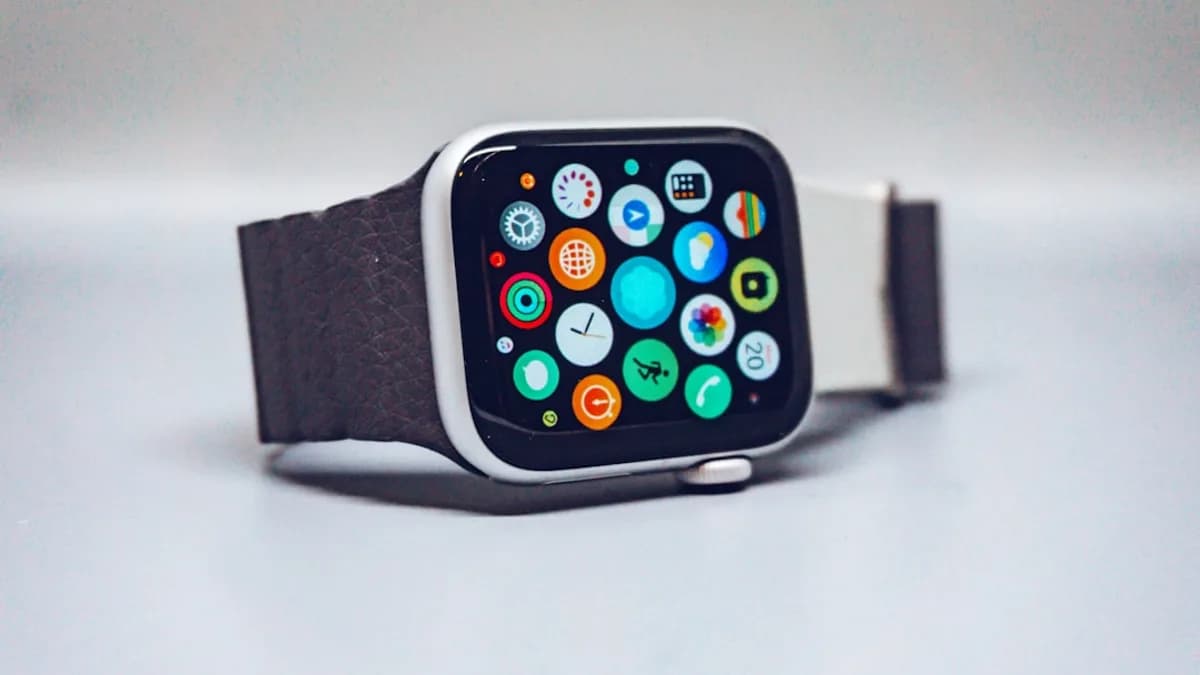
On May 25, 2026, Honor pushed the Watch 6 Plus into the smartwatch fight with a blunt proposition: charge it less, read it outdoors, and pay far below flagship territory.
That timing matters because the device is launching first in China, with sales reported to begin on May 29, while Honor has not yet confirmed an international rollout, a regional-availability issue that also surrounds the G-Shock x GR sale. The launch details, reported by Notebookcheck, show a watch built around two headline numbers: 35 days of claimed battery life and a 3,000-nit AMOLED display.
May 25 launch: Honor turns endurance into the main product argument
The Honor Watch 6 Plus does not try to look strange. It uses a round display, a narrow printed bezel, a button, and a digital crown on the right side. The case is stainless steel, and the bezel is either aluminum or stainless steel depending on the color.
The more aggressive move is inside. Honor has fitted the watch with a 1,000 mAh battery, which Notebookcheck describes as larger than most competitors, a battery-first angle that also defines the Honor 600 Super Edition and the Xiaomi Smart Band 10 Pro. That gives Honor a clean sales pitch: this is not primarily a mini phone on the wrist. It is a smartwatch that wants to remove charging friction.
Honor rates the Watch 6 Plus for 35 days in energy-saving mode, 17 days with normal use, or 42 hours with continuous GPS use.
MLXIO analysis: that split is the real story. The 35-day figure will get the attention, but the 17-day normal-use claim is the number that matters more for most buyers. It suggests Honor is pitching endurance as a default experience, not only as a low-power emergency mode.
That hardware-first framing, also visible in the MagicPad 4 speaker push, contrasts with software-first smartwatch upgrades, from the interface changes we covered in Wear OS 7 Widgets Kill Taps on Samsung Galaxy Watch to Amazfit’s Strava strength data. Honor’s launch message is simpler: battery, brightness, GPS, NFC, and price.
May 25 spec sheet: the 3,000-nit screen is not just a marketing number
The Watch 6 Plus uses a 1.46-inch round AMOLED display rated at 3,000 nits. Honor says that level of brightness should keep the screen legible in sunlight.
That matters for use cases where smartwatch screens often become annoying: outdoor runs, cycling, hiking, and turn-by-turn navigation. A bright display is not just about visual punch. It affects whether a user can glance at pace, route, heart rate, or notifications without stopping.
The watch also includes:
| Feature | Honor Watch 6 Plus detail |
|---|---|
| Display | 1.46-inch AMOLED, 3,000 nits peak brightness |
| Battery | 1,000 mAh |
| Battery modes | 35 days energy-saving, 17 days normal use, 42 hours continuous GPS |
| Durability | 5 ATM waterproof rating |
| Health sensors | Heart rate and SpO2 |
| Fitness | 120 sports modes, AI Coach, AI running analysis |
| Smart features | NFC, GPS navigation, speaker and microphones for calls via connected smartphone |
| China price | CNY 1,199 yuan ($177) to CNY 1,599 ($235) |
The caveat is obvious but important: real battery life will depend on settings. Always-on display behavior, GPS frequency, health tracking, notifications, calls, and navigation can all cut into endurance. Honor’s own mode breakdown already shows that GPS changes the battery equation sharply.
May 29 China sale: the price keeps the claims aggressive
The Watch 6 Plus costs between CNY 1,199 yuan ($177) and CNY 1,599 ($235) in China, depending on case variant and strap. That pricing gives Honor room to argue that endurance and outdoor readability should not require a premium-tier spend.
MLXIO analysis: the product is aimed at buyers who want the core smartwatch bundle — fitness tracking, calls through a paired phone, payments, GPS navigation, and a bright screen — without paying mainly for a deeper app platform. The supplied launch materials do not describe a major third-party app push. They emphasize hardware and built-in functions.
That could be enough for users who treat a smartwatch as a health, sports, payment, and notification device. It may be less persuasive for buyers who want richer integrations, broad app support, or advanced medical-grade features.
The NFC feature deserves particular caution for international readers. Honor lists NFC for contactless payment, but regional payment support can vary. Since Honor has not announced an international launch, buyers outside China do not yet have the details needed to judge local payment compatibility.
Battery-led positioning is not limited to smartwatches. The same consumer pull appears in simpler wearable stories such as £45 Casio W-738H Grabs Europe With 10-Year Battery, where endurance itself becomes the main product message.
After launch: health claims stop short of real blood pressure measurement
Honor includes a heart rate sensor and an SpO2 sensor. The company also says the Watch 6 Plus can determine the risk of high blood pressure.
That wording needs careful reading. Notebookcheck notes that a real blood pressure measurement is not possible. So this is not a replacement for a cuff or clinical measurement. It is a risk-related feature, not a direct blood pressure reading.
The sports package is broader. Honor lists 120 sports modes, plus an AI Coach and AI running analysis. Additional launch coverage says the watch includes specific tracking features for badminton and football, including badminton data such as swing speed and rally count, while football mode records sprint speeds and creates movement heatmaps.
MLXIO analysis: that sports mix shows Honor trying to make the Watch 6 Plus feel more serious than a basic activity tracker. But sensor accuracy, GPS performance, and coaching quality will need independent testing. A long feature list is not the same as reliable training data.
The first ripple: buyers will judge hardware claims before app depth
For consumers, the purchase checklist is straightforward.
- Battery: Does normal use really approach Honor’s 17-day claim?
- Display: Is the 3,000-nit AMOLED readable in harsh sunlight without destroying battery life?
- GPS: Does continuous tracking stay stable across longer workouts?
- NFC: Do payments work in the buyer’s region and bank setup?
- Health: Are heart rate, SpO2, sleep, and risk alerts consistent enough to trust?
- Comfort: Does the stainless steel case and large battery still wear well every day?
For rivals in the value-focused smartwatch segment, the pressure is also clear. If Honor can ship a bright AMOLED screen, large battery, GPS, NFC, and sports tracking at this price range, competing watches may have to defend weaker battery life or dimmer displays more directly.
For developers and power users, the open question is software depth. The source material names a maps app, phone calling through a connected smartphone, NFC, and built-in sports tools. It does not establish a broad app platform. That may not matter for many buyers. But it will matter for users who want music services, productivity tools, smart-home controls, or deep phone integration from the wrist.
Next decision point: international launch and real-world endurance tests
Honor has not said whether the Watch 6 Plus will launch internationally. Notebookcheck notes that the older Honor Watch 5 was offered outside China, but that is not a confirmation for this model.
The next evidence that would strengthen Honor’s case is simple: independent tests showing that the Watch 6 Plus can get close to 17 days of normal use while keeping GPS, notifications, health monitoring, and the bright display useful. The evidence that would weaken it would be just as clear: limited payment support, weak GPS accuracy, unreliable health tracking, or battery life that only looks impressive in restricted modes.
For now, Honor has produced a smartwatch with a disciplined message. The Watch 6 Plus is not trying to win every software argument. It is betting that a 1,000 mAh battery, 3,000-nit AMOLED panel, GPS, NFC, and sub-CNY 1,599 pricing can solve the daily complaints that make many wearables feel more demanding than helpful.
Key Takeaways
- Honor is making battery life the Watch 6 Plus’s main selling point, with a 17-day normal-use claim.
- The 3,000-nit AMOLED display targets better outdoor readability, a key smartwatch pain point.
- The China-first launch leaves global buyers waiting for confirmation of wider availability.