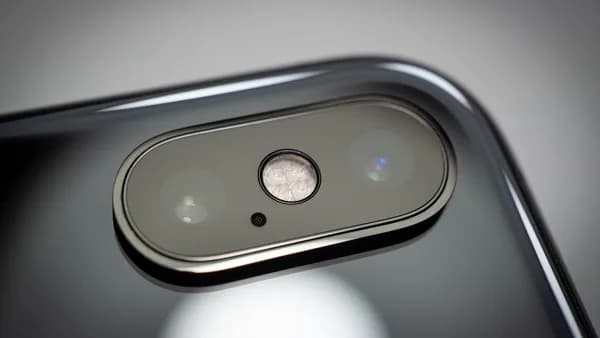
Honor’s Robot Phone will launch on August 12 with two 200MP rear cameras, a 50MP ultra-wide, a miniaturized three-axis gimbal, and a dedicated Yuguang H1 imaging chip.
That is not just a spec dump. It signals a camera-first flagship where the moving hardware, image pipeline, and ARRI video tools are the product pitch. Honor detailed the system at an imaging technology event in Hengdian, Zhejiang province, while announcing a partnership with ARRI, according to Notebookcheck.
Honor’s camera bump is becoming the Robot Phone’s main argument
The Robot Phone name now makes more sense. Honor is not only pushing sensor resolution. It is building the device around motion control, stabilization, and machine-assisted imaging.
The rear camera stack is unusually aggressive:
| Camera | Announced specification | Strategic role |
|---|---|---|
| Main camera | 200MP, 1/1.28-inch sensor, f/1.6 aperture | Primary stills and video capture |
| Ultra-wide | 50MP | Wider framing and secondary perspective |
| Periscope telephoto | 200MP | Long-range capture and cropping flexibility |
| Stabilization hardware | Miniaturized three-axis gimbal | Physical movement compensation |
| Imaging silicon | Honor Yuguang H1 | Dedicated image processing layer |
MLXIO analysis: Honor is trying to shift the buying argument away from the usual flagship checklist. The pitch is not “this phone has a better camera.” It is closer to “this phone is a camera system with a phone attached.”
That is a sharper claim, but also a riskier one. A 200MP main camera and a 200MP periscope lens create expectations that ordinary point-and-shoot performance may not satisfy if color, focus, stabilization, and processing vary between lenses.
For readers tracking how high-resolution camera modules are becoming a recurring premium-phone battleground, our earlier coverage of a possible 200MP camera shift in the Galaxy Z Fold9 Ultra gives useful context. Honor’s version is more mechanical: it pairs the sensor count with a gimbal and custom imaging silicon.
Two 200MP sensors raise the ceiling, but the pipeline has to keep up
The headline number is obvious. Two 200MP cameras give Honor room for high-detail captures, cropping, and cleaner digital zoom assists when lighting and processing cooperate.
That matters most on the periscope telephoto. Long-range phone photography exposes shake, softness, and processing artifacts quickly. A high-resolution telephoto sensor gives the system more image data to work with, but the result still depends on stabilization, focus, exposure control, and how aggressively the phone sharpens the final frame.
The main camera is built around a 1/1.28-inch sensor with an f/1.6 aperture. Those are the most concrete clues Honor has given about its primary imaging intent: gather enough light, then physically stabilize the module to preserve detail.
Huawei Central also reported the same camera configuration from Honor’s imaging event, including the 200MP primary sensor, 50MP ultra-wide, 200MP periscope telephoto, and Yuguang H1 chip.
MLXIO analysis: the trade-off is that this hardware only looks impressive if the phone can make the three cameras feel like one coherent system. High-resolution capture can increase the demands on image processing, especially when the phone is handling exposure, tone, glare reduction, detail enhancement, and stabilization in real time. Honor says the device includes an on-device image processing system for exactly those controls.
The question is not whether Honor can print “200MP” twice on a spec sheet. It is whether the Robot Phone can deliver consistent output when a user jumps from ultra-wide to main to periscope in the same scene.
The three-axis gimbal may be the real differentiator
Honor says the 200MP main sensor sits on a miniaturized three-axis gimbal. That is the more interesting claim than the megapixel count.
Conventional optical image stabilization typically moves lens or sensor elements to counter small hand movements. A three-axis gimbal is designed to compensate across more physical movement directions. In a phone, that can matter for walking video, handheld night shots, and long focal-length capture where tiny shakes become obvious.
Honor says the gimbal motor weighs 2.6 grams. It also claims the motor is 65 percent smaller and offers 35 percent higher torque density than typical gimbal motors currently available.
Honor states that the custom gimbal motor is 65 percent smaller and offers 35 percent higher torque density than typical gimbal motors currently available.
The company also says the hardware design is covered by over 100 patents. That number does not prove image quality. It does suggest Honor sees the mechanical package as proprietary, not a generic camera-module upgrade.
MLXIO analysis: this is where the Robot Phone could either earn its name or expose the limits of moving parts in a slab device. A gimbal can create a visible improvement for video and low-light shooting, but the source material does not yet answer durability, thickness, dust resistance, battery draw, calibration, or repair questions.
That matters because moving imaging hardware is only valuable if users can trust it every day. A camera system that feels delicate may appeal to mobile creators but worry ordinary buyers.
Yuguang H1 is the layer between big sensors and usable photos
Honor’s Yuguang H1 is described as a new in-house image signal processor powering the camera system. The source does not state that the chip controls the gimbal itself, so the cleanest read is narrower: this is Honor’s dedicated silicon layer for image processing.
The Robot Phone also includes a real-time on-device imaging system that controls:
- White balance: keeping color temperature stable across shots.
- Exposure: balancing brightness across scenes.
- Tone: shaping contrast and rendering.
- Glare reduction: suppressing harsh light artifacts.
- Detail enhancement: preserving or emphasizing fine texture across the three cameras.
Honor also includes AIMAGE 2.0, described as a stabilization engine designed to steady footage during movement. That sits alongside the physical gimbal in the broader imaging stack.
MLXIO analysis: the Yuguang H1 matters because flagship camera quality is no longer just optics plus sensor size. The output depends on how quickly the phone reads data, merges frames, controls motion, and renders the final image. If Honor’s processing is inconsistent, the Robot Phone’s hardware advantage will shrink fast.
This is the same reason raw camera specifications can mislead. A high-resolution sensor can capture more data, but the phone still decides what the final photo looks like.
ARRI gives Honor a creator pitch, not just a smartphone pitch
The ARRI partnership is the clearest sign Honor wants the Robot Phone to appeal beyond casual photography. The integration brings native Log-C video encoding and LUT color grading files directly to the phone.
Log-C is ARRI’s logarithmic video profile, used to preserve more grading flexibility before the final look is applied. A LUT, or Look-Up Table, maps color values into a chosen output style. In practical terms, Honor is giving users a phone-based path closer to professional color workflows.
The Robot Phone will also allow users to manually lock focus, white balance, and exposure. Honor says the system supports the transfer of camera movement data similar to professional film workflows.
That last detail is niche, but important. It suggests the ARRI collaboration is not only a branding badge. Honor is trying to bring pieces of cinema production behavior into a mobile interface.
For comparison with a different flagship camera trade-off, see our report on how the Galaxy Z Fold 8 drops a 200MP camera but keeps a top price. Honor is taking the opposite route here: more resolution, more moving hardware, and more specialized imaging tools.
August 12 has to answer the practical questions
Honor says this camera technology will appear in future Honor phones, including the upcoming Magic 9 series. Honor and ARRI also plan to open a joint imaging lab to research and develop future mobile camera technologies.
That gives the Robot Phone a larger role. It may be a launch product, but it also looks like a test bed for Honor’s next imaging stack.
The August 12 launch still needs to fill major gaps. The supplied material does not give pricing, battery capacity, chipset, device dimensions, global availability, full video specifications, zoom range, or durability ratings. Those details will decide whether the Robot Phone is a serious flagship contender or a camera concept pushed into retail form.
MLXIO analysis: the evidence that would confirm Honor’s bet is straightforward. Look for stable handheld video, clean transitions between all three rear cameras, fast capture, reliable focus, restrained sharpening, and consistent color. The evidence that would weaken it is just as clear: visible lens mismatch, slow processing, fragile-feeling hardware, or ARRI tools that only a narrow group of users touches.
The Robot Phone points toward a future where flagship camera competition is less about one sensor number and more about integrated imaging systems: optics, moving hardware, dedicated silicon, and creator-grade software working as one chain. On August 12, Honor has to prove that chain holds.
Key Takeaways
- Honor is positioning the Robot Phone as a camera-first flagship rather than a standard spec-driven phone.
- Dual 200MP rear cameras raise expectations for image quality, zoom, stabilization, and processing consistency.
- The ARRI partnership and dedicated Yuguang H1 chip suggest Honor is targeting serious mobile video creators.