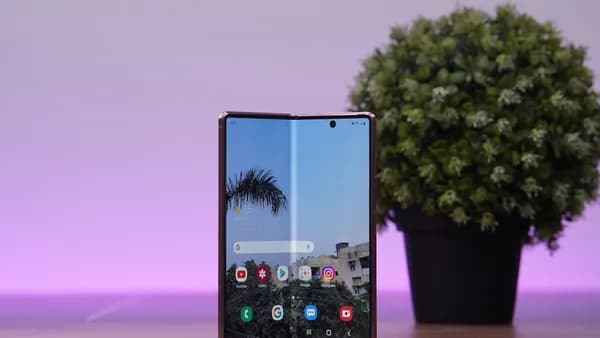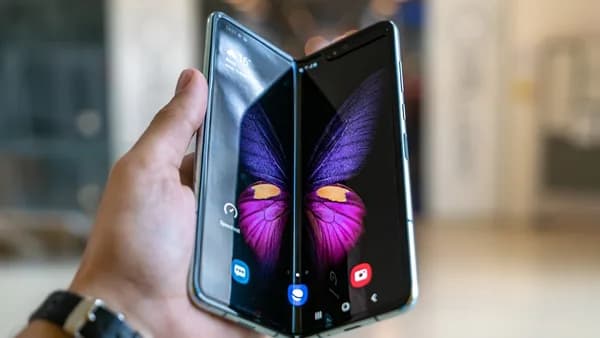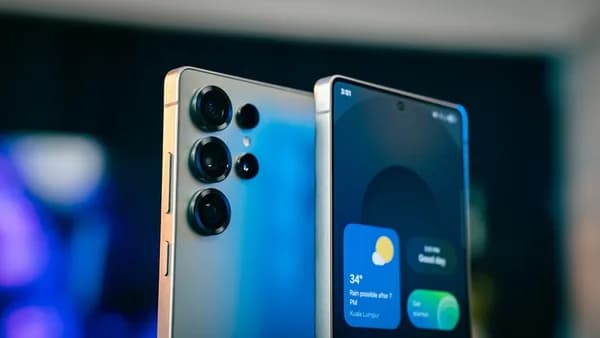
If Samsung’s compact Galaxy Z Fold 8 really drops the 200-megapixel main camera, is Samsung selling foldable refinement at the cost of its flagship-camera story?
That is the sharper read from the latest leak. A new report from Notebookcheck says Samsung is expected to unveil three new foldables at Galaxy Unpacked on July 22, including a more compact model aimed at Apple’s iPhone Ultra foldable, expected in September.
The headline details are prices, colors, and sensors. The bigger signal is product discipline. Samsung appears to be deciding where the foldable experience must improve — size, layout, positioning — and where it can still accept compromise.
Is Samsung trading camera ambition for a more compact Fold 8 body?
The reported camera downgrade is the most revealing part of the leak.
According to Notebookcheck, the 200-megapixel sensor used in the Galaxy Z Fold7 is not expected to fit inside the more compact Galaxy Z Fold 8. The replacement, per leaker @reptalicant on X, is said to be a 1/1.56-inch ISOCELL GNG sensor. That would be substantially smaller than the 1/1.3-inch ISOCELL HP2.
That matters because Fold buyers already pay at the top of Samsung’s phone range. If the Fold 8 arrives with a lower-resolution, smaller main camera sensor than the Fold7, Samsung will need to argue that the device is better in other ways.
MLXIO analysis: this is the core tension in modern foldables. The category wants to feel less experimental and more normal in the hand. But a foldable body has less freedom than a slab phone. Camera hardware competes with hinge architecture, battery placement, display layers, and internal reinforcement. The leak suggests Samsung may be protecting the compact foldable form factor first, then fitting camera hardware around it.
That is not automatically the wrong trade. It is, however, a trade Samsung will have to sell clearly.
Do the leaked Australian prices show Samsung testing the foldable ceiling?
The leaked pricing reportedly comes from what looks like an internal Harvey Norman presentation slide. Notebookcheck says the slide lists starting prices for Samsung’s next foldables in Australia.
“The Galaxy Z Flip8 will be available from $1,949, the Galaxy Z Fold8 from $2,699 and the Galaxy Z Fold8 Ultra from $2,999, indicating a substantial price increase similar to other regions of the world.”
| Reported model | Leaked starting price in Australia | Storage tiers shown in supplied source |
|---|---|---|
| Galaxy Z Flip8 | $1,949 | Not specified |
| Galaxy Z Fold8 | $2,699 | Not specified |
| Galaxy Z Fold8 Ultra | $2,999 | Not specified |
The source material does not provide prior Australian launch prices or storage-by-storage pricing, so a precise generational comparison is not possible from this leak alone. Notebookcheck does characterize the new figures as a “substantial price increase” similar to other regions.
That leaves one practical read: Samsung may be building a clearer upsell ladder.
The Galaxy Z Flip8 remains the entry point. The Galaxy Z Fold8 sits as the standard book-style foldable. The Galaxy Z Fold8 Ultra becomes the aspirational model at the top. If that segmentation is accurate, the standard Fold 8 could risk looking intentionally constrained unless Samsung gives it enough advantages beyond price.
For readers following Samsung’s pre-launch positioning, this pricing leak fits the same cycle as our coverage of Samsung Wipes Instagram for Galaxy Z Fold 8 Shape Twist and the separate timing-focused report, August 5 Leak Puts Galaxy Z Fold 8 Buyers on Clock.
Why could the ISOCELL GNG matter more than the megapixel count?
The rumored move from ISOCELL HP2 to ISOCELL GNG is not just a resolution story.
Here is the reported camera picture from the source:
| Camera item | Reported detail |
|---|---|
| Galaxy Z Fold7 main camera | 200-megapixel ISOCELL HP2, 1/1.3-inch sensor |
| Compact Galaxy Z Fold 8 main camera | 50-megapixel ISOCELL GNG, 1/1.56-inch sensor, per @reptalicant |
| Ultra-wide camera | Roughly 1/2.5-inch 50-megapixel Sony sensor, if the leak is correct |
A smaller sensor can still produce strong images if Samsung improves the surrounding stack: lens tuning, readout speed, HDR behavior, stabilization, and image processing. The supplied source does not claim any of those improvements. They are the obvious places Samsung would need to compensate.
MLXIO analysis: the megapixel drop will be easier to defend if Samsung can show better real-world output. Faster capture, cleaner low light, stronger HDR, and fewer motion artifacts matter more to many users than the number printed on a spec sheet. But if launch messaging avoids camera comparisons, that will tell its own story.
This also keeps the Fold line in a different lane from Samsung’s camera-first devices. Based on this leak, the compact Fold 8 looks less like a no-compromise camera flagship and more like a productivity-first foldable built around form factor.
Are Samsung-exclusive colors becoming a sales channel strategy?
The color leak is narrower than the price leak, but still useful.
Notebookcheck says the slide appears to show all planned color options, with one Samsung online-exclusive color per foldable. The three widely available colors were reportedly already shown in official renders, but the supplied source text does not name them.
| Model | Samsung online-exclusive color reported | Description from source |
|---|---|---|
| Galaxy Z Fold 8 Ultra | Violet Green | Very dark green tone |
| Galaxy Z Fold 8 | Pistachio | Significantly brighter |
| Galaxy Z Flip 8 | Mint | More pastel-like appearance |
The slide image was reportedly AI-upscaled, with Notebookcheck noting that the original version on X is much blurrier. That matters for confidence. The leak may be directionally useful, but color naming and finish details should still be treated as unofficial until Samsung confirms them.
MLXIO analysis: online-exclusive colors are not just cosmetic. They give Samsung a reason to pull buyers toward its own storefront instead of leaving every purchase decision to retailers and carriers. That can matter for bundles, trade-in offers, accessory attachment, and direct customer relationships.
The Flip 8 color strategy may carry more lifestyle weight, while the Fold 8 colors likely serve a subtler role: making an expensive productivity device feel more personal without changing the hardware.
Does Fold 8 Ultra make the standard Fold 8 feel premium or compromised?
The reported Galaxy Z Fold8 Ultra is the most important segmentation clue.
Samsung already appears to be splitting its foldable lineup into clearer tiers: Flip, Fold, Fold Ultra. If the leaked Australian prices are accurate, the gap between the standard Fold 8 and Fold 8 Ultra starts at $300 AUD. That is small enough to tempt buyers upward, but large enough to preserve a visible tier structure.
The risk is perception. If the standard Fold 8 has the more compact design and the downgraded main camera, buyers may ask whether the Ultra is the “real” Fold while the regular Fold absorbs the packaging compromises.
Samsung can counter that only with specifics. Display quality. Durability. Multitasking. Battery behavior. Software polish. If the compact Fold 8 feels meaningfully easier to carry, the camera downgrade may be accepted. If not, the price will make the compromise harder to ignore.
Which launch details would prove this is refinement-first, not compromise-first?
The July 22 launch needs to answer four questions the leak cannot settle.
- Camera proof: Does the rumored 50-megapixel ISOCELL GNG deliver better real-world results than the spec sheet suggests?
- Model split: What exactly separates Galaxy Z Fold8 from Galaxy Z Fold8 Ultra beyond price and color?
- Color availability: Are Violet Green, Pistachio, and Mint final names, and are they truly Samsung online exclusives?
- Price defense: What does Samsung offer to justify leaked starting prices of $1,949, $2,699, and $2,999 in Australia?
The thesis to test is simple: Samsung may be pushing the Fold line toward refinement first and camera parity later. Launch evidence that strengthens that thesis would include heavy emphasis on compact design, displays, durability, AI features, and multitasking, with limited focus on camera hardware. Evidence that weakens it would be Samsung showing clear imaging gains despite the smaller reported sensor.
Until then, this leak reads less like a routine spec dump and more like a map of Samsung’s foldable priorities. The Fold 8 generation may ask buyers to accept a familiar bargain: a more polished foldable, but not yet a true camera-first flagship.
The Bottom Line
- Samsung may prioritize a thinner, more compact foldable design over keeping its top camera hardware.
- A camera downgrade could make the Galaxy Z Fold 8 harder to justify at premium pricing.
- The rumored launch comes as Samsung prepares for stronger foldable competition from Apple.